


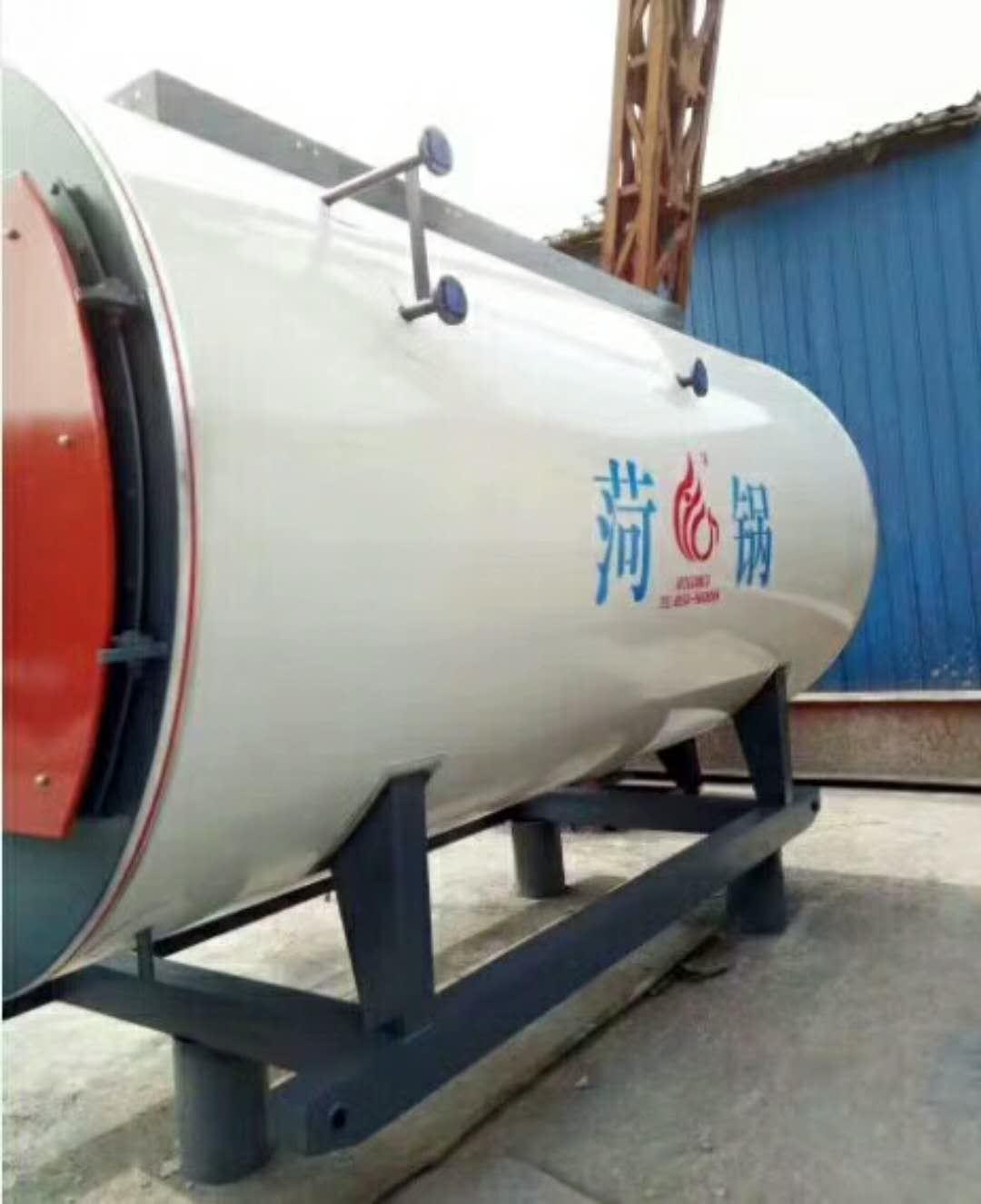



















Shandong Zhongjie Special Equipment Co., Ltd. (formerly Heze Boiler Factory Co., Ltd.) was established in 2001, located at No. 2218 Jinnan Road, Economic and Technological Development Zone, Heze City, with a registered capital of 50 million yuan and total assets of 500 million yuan. The company has 7 business centers: boilers, deep-freezing containers, pressure vessels, central air conditioning, engineering installation, international trade, and Internet of Things. It has three factory sites on Jinnan Road, East Changjiang Road, and Bohai Road, covering a total area of 200,000 square meters, with the main workshop spanning 83,000 square meters. It currently employs 710 people, including 247 engineers and technicians and 82 intermediate-level technical personnel. In December 2016, it was recognized as a "High-Tech Enterprise" by the Science and Technology Department. In June 2021, it was identified as a "Specialized and New Enterprise in Shandong Province" by the Ministry of Industry and Information Technology. In June 2022, it was recognized as a "Gazelle Enterprise in Shandong Province" and in August 2022, as a "Specialized and New Small Giant Enterprise" by the Ministry of Industry and Information Technology.
The liquid level in a carbon dioxide tank varies depending on specific design and operational requirements. Generally, the liquid level in a liquid carbon dioxide tank is typically maintained between 80% and 95%. Keeping the tank level within this range serves several purposes:
- Space Reserve: Maintaining a certain level of liquid space provides steam space inside the tank to prevent over-pressurization and the risk of tank explosion.
- Storage Capacity: Keeping a higher level maximizes the tank's capacity, allowing for more carbon dioxide storage.
- Stable Supply: Maintaining an appropriate level ensures a stable supply of carbon dioxide to meet operational needs.
However, specific level requirements may vary based on different applications and industries. When using a carbon dioxide tank, it is essential to follow the manufacturer's recommendations and relevant regulations and standards to ensure the tank's level is controlled within a safe and appropriate range.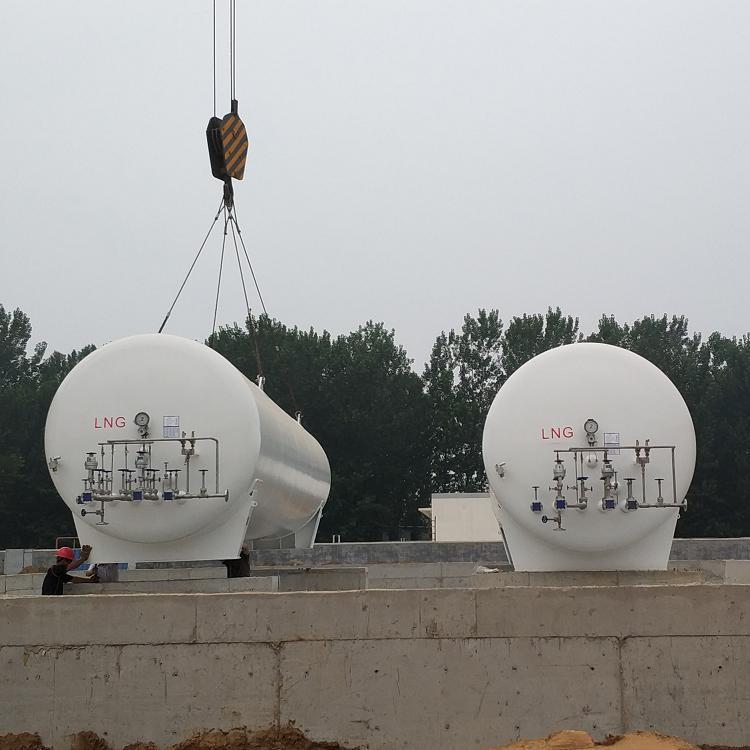
The internal structure of a carbon dioxide storage tank typically includes the following main components:
- Tank Shell: The tank shell is the primary container for storing carbon dioxide and is usually made of carbon steel or stainless steel. It has sufficient strength and密封性 to withstand the pressure and loads within the tank.
- Lining Layer: To prevent direct contact between carbon dioxide and the tank shell, avoiding corrosion and contamination, the interior of the tank is often coated with a lining layer. This lining is typically made of corrosion-resistant materials such as glass fiber reinforced plastic, polyester resin, etc.
- Support Structure: To support the weight of the tank and maintain stability, the interior of the tank usually features a support structure, which can be in the form of supports, frames, etc., used to support the bottom and side walls of the tank.
- Internal Accessories: The tank is also equipped with some important accessories such as level gauges, pressure sensors, temperature sensors, and safety valves. These accessories are used to monitor and control the liquid level, pressure, and temperature within the tank to ensure safe operation.
- Pressure Relief Device: To prevent excessive internal pressure in the tank, it is usually equipped with a pressure relief device, such as a safety valve. When the internal pressure of the tank exceeds the set value, the pressure relief device will automatically open to release pressure, protecting the safety of the tank.
- Inlet and Outlet Pipes: The tank also has inlet and outlet pipes for injecting and discharging carbon dioxide. These pipes are typically connected to external supply or consumption systems to facilitate the storage and use of carbon dioxide.
- The above is a general description of the internal structure of carbon dioxide storage tanks. Specific structural design and configuration may vary depending on the tank's purpose and specifications. When using and maintaining the tank, it is necessary to...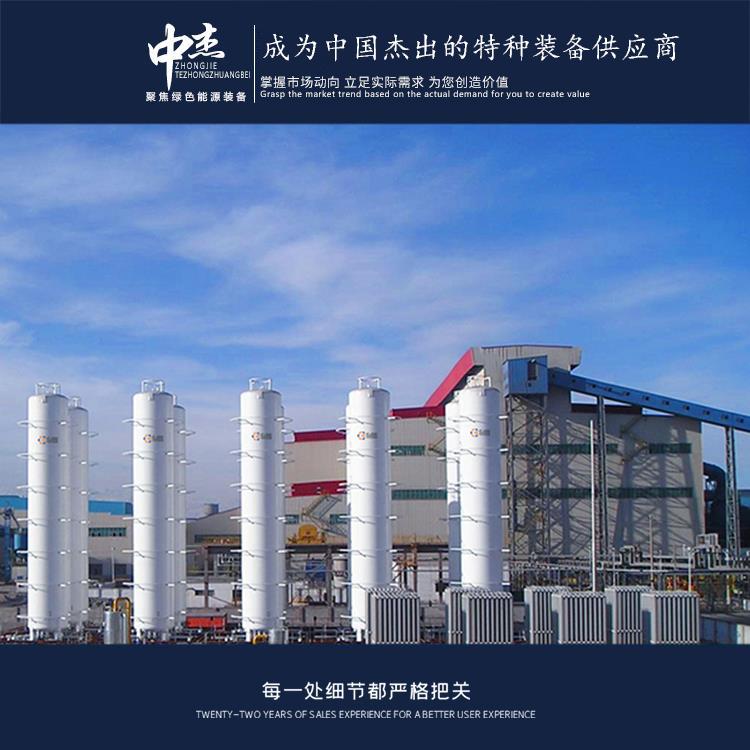
If a leak in the CO2 storage tank is detected, the following steps should be taken promptly:
Confirm the leak location: First, determine the exact location of the leak, which can be done through auditory detection, observation, or using gas detection equipment.
Emergency action: Upon discovering a leak, immediate emergency measures should be taken to ensure personnel safety. Evacuate personnel to a safe area and notify relevant personnel and emergency services.
Cut off the gas source: As quickly as possible, shut off the CO2 supply source by closing valves or cutting power to stop the CO2 flow.
Locate the leak: In a safe manner, use gas detection equipment or visual inspection to find the leak. Apply soap solution or other leak detection agents to potential leak areas and observe for bubbles.
Seal the leak: Once the leak location is confirmed, temporary sealing measures can be taken, such as using tape, sealant, or other reliable sealing materials for temporary repair. Ensure that the sealing is firm and reliable, capable of effectively preventing gas leakage.
Maintenance and repair: Under safe conditions, further maintenance and repair work can be conducted. Depending on the specific situation of the leak, it may be necessary to replace gaskets, repair or replace valves, etc. Maintenance and repair work should be carried out by trained personnel.
Inspection and testing: After maintenance and repair, perform leak detection and testing to ensure that the leak has been fully repaired and the tank's safety performance has returned to normal.
It is important to note that handling CO2 storage tank leaks requires careful operation and adherence to relevant safety standards and procedures. If you lack the necessary knowledge and skills, contact a professional immediately for assistance.
Carbon dioxide storage tanks are categorized into different types and structures based on their design and application:
- Vertical Tanks: Commonly used carbon dioxide tanks, these are cylindrical in shape and are placed vertically. Vertical tanks generally have larger capacities and are used for large-scale storage and supply of carbon dioxide.
- Horizontal Tanks: Another common type, these tanks are rectangular or cylindrical in shape and are placed horizontally. Horizontal tanks are typically used for smaller-scale storage and supply and are suitable for limited spaces.
- Spherical Tanks: A specialized type of carbon dioxide tank, spherical in shape. These tanks have high strength and pressure-bearing capacity, suitable for high-pressure storage and transportation of carbon dioxide.
- Vertical Tanks (Smaller Capacity): These are smaller carbon dioxide tanks with a cylindrical shape and are placed vertically. They are usually used for small-scale storage and supply, such as commercial and residential use.
- Underground Tanks: A unique structure where carbon dioxide tanks are buried underground. Underground tanks save space, reduce visual impact, and offer enhanced safety and environmental protection.
These tanks are typically constructed from pressure-resistant materials (such as carbon steel or stainless steel) and have certain insulating properties. They are equipped with accessories such as safety valves, pressure gauges, and level indicators. The interior usually features baffles or partitions to separate different liquids or gases. Additionally, the tanks are fitted with safety systems, including pressure maintenance systems, leak detection systems, and fire detection systems.
Shandong Zhongjie Special Equipment, welcome customers to visit our factory for business discussions.
WeChat Official Account

Scan to follow Official Account




















