


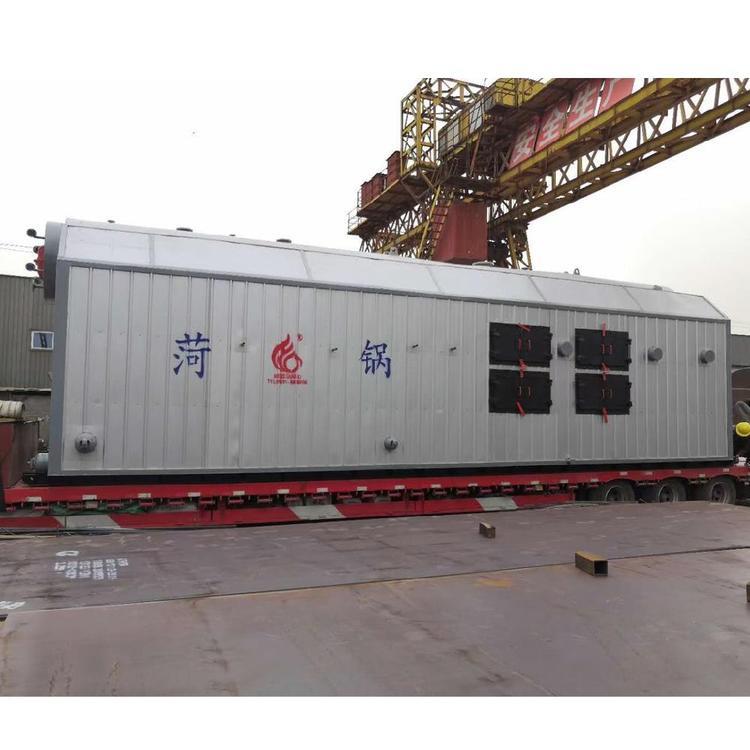



















Shandong Zhongjie Special Equipment (formerly Heze Boiler Factory Co., Ltd.) holds an A-grade boiler manufacturing license, an A2-grade pressure vessel manufacturing license, an A2-grade pressure vessel design license, a B-grade boiler installation license, and GB2/Class, GC2/Class pressure pipeline installation licenses, as well as a qualification for the installation and contracting of electromechanical equipment. It is a member of the China Boiler and Water Treatment Association, the China Chemical Equipment Association, and the director unit of the Shandong Equipment Manufacturing Association. The company has also passed certifications for the ISO9001 Quality Management System, ISO14001 Environmental Management System, OHSAS18001 Occupational Health and Safety Management System, and the American ASME/U2 certification.
The biomass boiler combustion technology refers to the process of burning biomass fuel to release thermal energy. The following are common biomass boiler combustion technologies:
Fuel Combustion Methods: Biomass boilers can utilize various combustion methods, including direct combustion, gasification combustion, and liquefaction combustion, etc. Direct combustion involves burning biomass fuel directly in the furnace; gasification combustion converts biomass fuel into combustible gases at high temperatures before burning; and liquefaction combustion involves converting biomass fuel into liquid fuel before burning.
Combustion Control: Biomass boilers require a combustion control system to regulate fuel supply, air supply, and the combustion process. By adjusting the ratio of fuel to air, control the combustion temperature and efficiency to achieve a stable combustion process.
Combustion Equipment: The combustion equipment of biomass boilers includes the furnace, grate, and combustion chamber, etc. The furnace is the main combustion area, the grate is used for supporting and burning fuel, and the combustion chamber is for providing an appropriate combustion environment.
Combustion Equipment: To enhance the combustion efficiency and environmental performance of biomass boilers, combustion equipment such as preheaters, dust collectors, and desulfurization units are often fitted. Preheaters are used to increase the combustion temperature and thermal efficiency of the fuel, dust collectors are for removing particulates from flue gases, and desulfurization units are for removing sulfur compounds.
Combustion Control and Monitoring: Biomass boilers require the installation of combustion and monitoring systems.
The phenomenon of biomass boiler economizer tube damage may include the following situations:
Pipe Corrosion: Flue gases from biomass combustion contain certain acidic substances that may lead to corrosion of economizer pipes. Long-term corrosion can result in reduced wall thickness of the pipes, the formation of holes and cracks.
Pipe Blockage: During the biomass combustion process, flue gas may contain some ash and particulate matter, which may settle and accumulate in the economizer pipe, leading to blockage. Blockage can affect the flow of flue gas and reduce the efficiency of heat exchange.
Pipe Fatigue: Due to the significant temperature and pressure fluctuations in biomass boiler operation, long-term thermal expansion and contraction can lead to fatigue damage in economizer piping, such as cracks and deformities.
In response to the above issues, the following solutions can be adopted:
Enhanced Corrosion Protection Measures: Corrosion treatment can be applied internally within economizer pipes, such as by applying a corrosion-resistant coating or manufacturing the pipes from corrosion-resistant materials, to minimize corrosion occurrence.
Regular cleaning and maintenance: Regularly clean and maintain the economizer to prevent the accumulation of ash and particulates within the pipes, which can lead to blockages. Methods such as mechanical cleaning and water flushing can be employed.
Enhanced Monitoring and Inspection: Regularly inspect economizers, including thickness measurements of pipes and crack detection, to promptly identify issues and implement repair measures.
Optimize operating parameters: Reasonably adjust the operating parameters of biomass boilers, such as combustion temperature and air flow, to minimize damage to the economizer.
Adjusting the combustion of biomass boilers can be done through the following steps:
Establish combustion parameters: Determine appropriate combustion parameters based on the biomass boiler's design and fuel characteristics, including combustion temperature, oxygen supply, and fuel feeding rate.
Adjust combustion temperature: Adjust the combustion temperature based on the fuel characteristics and combustion requirements. Excessive combustion temperature may lead to overburning of fuel and energy waste, while too low combustion temperature may result in incomplete combustion and increased emissions.
Control Oxygen Supply: Adjust the oxygen supply based on the oxygen content during the combustion process. Excessive oxygen supply can lead to incomplete fuel combustion and energy waste, while insufficient oxygen supply may result in inadequate combustion and increased emissions.
Adjust fuel supply rate: Adjust the fuel supply rate based on heat load and fuel characteristics. Excessive fuel supply rate may lead to overburning and energy waste, while an insufficient fuel supply rate may result in incomplete combustion and inadequate heating.
Monitor and Adjust: By monitoring critical parameters during the combustion process, such as combustion temperature, oxygen content, and flue gas composition, adjust combustion parameters promptly to ensure stability and efficiency.
Be mindful that adjusting the combustion of biomass boilers requires consideration of the specific kettle
Fully automatic biomass boiler systems commonly use a make-up water pump to maintain pressure, which is a common method of water supply. The specific working principle is as follows:
Make-up water pump: The fully automatic biomass boiler is equipped with a make-up water pump, which is used to pump water from the water source (such as a water tank or municipal water supply pipeline) into the boiler's water supply system.
Pressure Regulation: The feed water pump operates on a constant pressure system, which involves installing a pressure sensor or controller in the boiler water supply system to monitor the pressure. When the pressure in the water supply system falls below the set value, the feed water pump automatically starts to replenish water into the system, thereby increasing the system pressure.
Pressure Control: The feed pump will control the pressure within the set range. Once the system pressure reaches the set value, the feed pump will cease operation to prevent excessive pressure.
Automated Control: The water supply system of fully automatic biomass boilers is typically equipped with an automated control system that can intelligently manage based on the boiler's operational status and requirements. For instance, when the boiler needs to replenish water, the control system automatically activates the feed pump to ensure the stable operation of the water supply system.
By utilizing a constant-pressure supply pump, the fully automatic biomass boiler can achieve automated control of the water supply system and stable water supply, ensuring the normal operation and safety of the boiler. This method can be adjusted and optimized according to actual needs, enhancing water supply and energy utilization efficiency.
Zhongjie Special Equipment adheres to the grand vision of "realizing employees' dreams, creating value for customers, and striving for the prosperity and strength of our motherland," focusing solely on the development of green energy equipment. We dedicate high-value products and services to society!
WeChat Official Account

Scan to follow Official Account