ORC Power Generation Subsystem
The primary technology for utilizing medium and low-temperature waste heat for power generation internationally is the Organic Rankine Cycle (ORC) technology. The Organic Rankine Cycle (ORC) uses low-boiling-point organic working fluids, exchanging heat with medium and low-temperature heat sources to evaporate the latter, producing high-pressure organic steam that drives a turbine to generate electricity.
Conventional steam turbines typically operate at temperatures above 150°C, whereas ORC systems can function within a range of 80-150°C. ORC technology is an internationally industrialized mid-temperature and low-temperature power generation technique, widely applied in industrial waste heat and new energy fields such as geothermal, solar, and biomass.
The Organic Rankine Cycle (ORC) power generation system is primarily composed of an evaporator, turbine, generator, condenser, and working fluid pump. The system has a fully enclosed structure and its thermodynamic cycle characteristics are similar to the reverse operation of an air conditioning system. The ORC power generation system is structurally simpler and more compact than a steam turbine system of the same power rating.
The ORC power generation system boasts the following advantages:
Adaptable to a temperature range of medium to low temperatures (80-150℃), which is the area where ordinary steam cannot generate electricity.
No need for a power and water supply (water treatment) system, significantly reducing investment, shortening construction time, and simplifying operational procedures and maintenance costs.
The system can be manufactured using modular, standardized design and production, typically with individual units ranging from 0.02MW to 0.2MW, which can be connected in parallel in multiple sets. Each unit has a high redundancy, allowing operation within a range of +/- 30% of the rated power.
The entire system only requires some customized design in the heat collection section, with minimal on-site construction work and a very small civil engineering workload, resulting in a shorter construction period.
The system operates fully automatically with a closed-loop, allowing for unattended operation, simplified maintenance, and low operational costs. The annual running cost of the ORC waste heat recovery system is approximately 1-3% of its purchase cost.
1. Introduction to Main System Components
Turbine
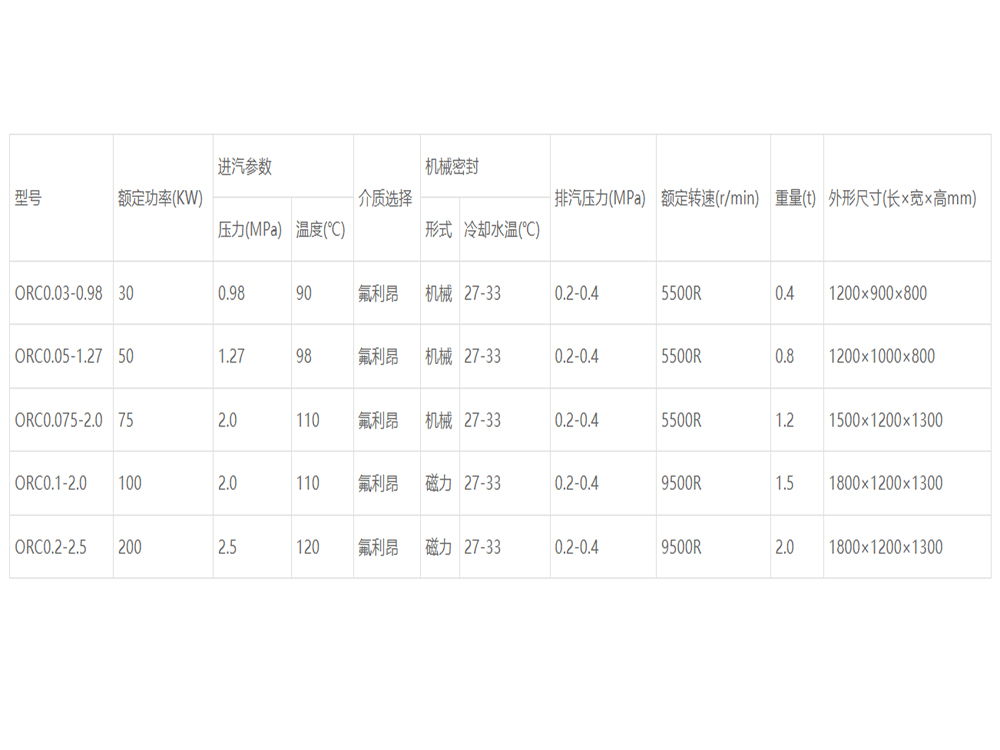
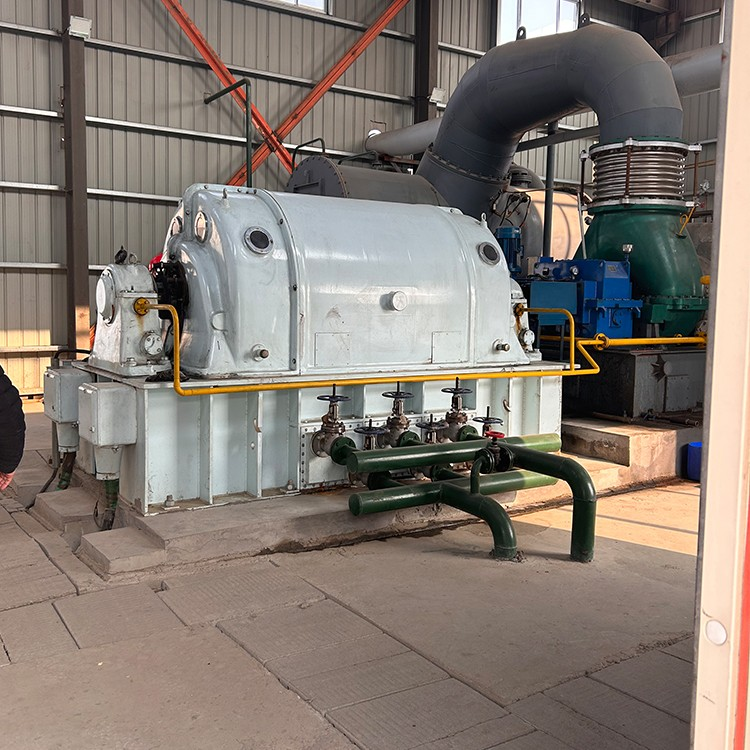
The ORC turbine is a critical component of the ORC system. This turbine boasts stable operation quality, adaptability to various operating conditions, excellent sealing, and high efficiency (typically internal efficiency of 80-90%). It employs mechanical sealing, magnetic sealing, or an integrated turbine-generator set sealing, thus ensuring superior system sealing performance. Organic Rankine Cycle (ORC) systems generally use organic working fluids, which are prone to leakage when evaporating into a gaseous state. Should leakage occur, it not only severely affects system operation and leads to shutdown but also requires frequent replenishment of the working fluid, making the operation complex and costly. Our company's ORC turbine, due to its excellent sealing, is widely adopted internationally in ORC turbine technology. It has high efficiency, generates a large amount of electricity, is directly connected, equipped with a rectifier-inverter cabinet, an automatic grid-connection cabinet, and can produce electricity even under fluctuating heat sources, resulting in a higher overall electricity output.
Control System
Based on the process flow and operational characteristics of the ORC power station, the following control methods are adopted:
1. Utilizing centralized control, variable frequency quality pump and rectifier inverter grid connection control are centrally located on-site or in a single control room. Depending on the conditions, the control room can be set up within the existing second control room by simply adding a control cabinet.
2. The system is configured with remote I/O stations. Communication is established with the PLC via communication interfaces (or hard-wired connections), allowing centralized monitoring of the system conditions within the control room.
3. Set up industrial TV monitoring systems for critical production stages or locations to facilitate direct surveillance.
The ORC system typically operates in an automated, closed-loop manner. In the event of a fault, simply address the heat source input and switch the steam heat source to bypass.
Grid connection
The power generation capacity of this system is relatively small. According to general industrial practices, you can choose a power switch station with a load greater than this system in the nearby area for self-connection. The specific connection method will be determined at a later stage during the project implementation.
Site
For safety and other considerations, a simple color steel shed can be arranged, with specific dimensions to be confirmed based on the on-site conditions.
Although the site is not in a rainy area, attention should be paid to drainage to prevent water intrusion. Additionally, as an electricity generation system, the ORC system should be appropriately isolated from unauthorized personnel, with simple isolation facilities and warning signs in place.
Electricity Supply
The auxiliary system of this system, such as the working fluid pump, condensate pump, and instruments, requires electricity and needs a power distribution system, 380V, 3-phase, 50Hz.
The system's self-consumption electricity is measured by an installed electricity meter, and additional electricity meters can also be set up according to the customer's specifications and requirements. The system's electricity use and power generation are separate and independent systems.
Project Implementation Schedule
The total working time for this system is approximately 4 months, including a preparation period of 1 month, a production period for the equipment of 2 months, and 1 month for installation and acceptance.