




















Shandong Zhongjie Special Equipment (formerly Heze Boiler Factory Co., Ltd.) was established in 2001, located at No. 2218 Jinnan Road, Development Zone, Heze City. With a registered capital of 50 million yuan and total assets of 500 million yuan, the company operates seven business centers: boilers, deep-freeze containers, pressure vessels, central air conditioning, engineering installation, international trade, and Internet of Things. It has three manufacturing sites on Jinnan Road, East Changjiang Road, and Bohai Road, covering a total of 200,000 square meters. The main workshop spans 83,000 square meters. Currently, there are 710 employees, including 247 engineers and technicians and 82 intermediate-level technical personnel. In December 2016, it was recognized as a "High-tech Enterprise" by the Science and Technology Department. In June 2021, it was identified as a "Specialized and New Enterprise in Shandong Province" by the Ministry of Industry and Information Technology. In June 2022, it was recognized as a "Gazelle Enterprise in Shandong Province" and in August 2022, it was identified as a "Specialized and New Small Giant Enterprise" by the Ministry of Industry and Information Technology.
Common deficiencies in pressure vessels during use can include corrosion. Below are some causes that may lead to corrosion in pressure vessels:
- Chemical Media: Certain chemical media are corrosive, such as acids, bases, and salts. When these media come into contact with the vessel material, corrosion may occur.
- Humidity and Moisture: High humidity environments or prolonged exposure to moisture can lead to corrosion on the vessel surface, especially when oxygen is present, which may accelerate the corrosion rate.
- Rusting: When the protective layer on the vessel surface (such as coatings or plating) is damaged or destroyed, the vessel may suffer from rusting. Rusting can damage the surface of the vessel and may lead to further corrosion.
- Electrochemical Corrosion: When different metals or metals and non-metals come into contact, electrochemical corrosion cells may form, which can lead to localized corrosion on the vessel surface.
- Welding Defects: Defects like weld pores and cracks may be introduced during the welding process. These defects can serve as starting points for corrosion.
- Corrosion weakens the structural integrity of the vessel, increasing the risk of leakage or rupture. Therefore, it is important to regularly inspect and maintain the corrosion protection layer, coating, or plating of pressure vessels. If corrosion issues are found, timely measures should be taken to repair or replace the damaged parts.
- Additionally, selecting appropriate materials and corrosion prevention measures, as well as proper operational and maintenance methods, can reduce the risk of corrosion in pressure vessels. Adhering to relevant safety operation procedures and standards ensures the safe operation of pressure vessels.
For accessories of CO2 storage tanks, such as valves, pipelines, and pressure relief devices, maintenance and protection are crucial. Here are some suggestions:
Regular Inspection: Conduct regular checks on the appearance and operational status of accessories to ensure there is no damage, looseness, or leakage. Pay special attention to the sealing performance and operational flexibility of valves.
Cleaning and Maintenance: Regularly clean the accessories, removing dirt and impurities from the surface. Use appropriate cleaning agents and tools, avoiding corrosive substances.
Lubrication Maintenance: For accessories requiring lubrication, such as the pistons and stems of valves, perform regular lubrication maintenance. Use suitable lubricants to ensure the normal operation and sealing performance of valves.
Sealing Inspection: Regularly check the sealing performance of accessories, such as the seals and sealing surfaces of valves. Replace any damaged or aging seals promptly.
Corrosion Protection: For accessories prone to corrosion, such as pipelines and valves, implement corrosion protection measures, such as coating with anti-corrosion paint or wrapping with anti-corrosion materials.
Regular Calibration: Calibrate measuring equipment such as level sensors and pressure sensors regularly to ensure their accuracy and reliability.
Regular Maintenance: Develop a regular maintenance plan based on the usage and requirements of accessories, including cleaning, lubrication, and repairs, to ensure long-term stable operation.
Storage and Transportation Caution: For spare or replacement accessories, pay attention to moisture-proof, shockproof, and damage-proof during storage and transportation to avoid affecting their normal use.
The above suggestions are for the maintenance and protection of CO2 storage tank accessories. Specific operations should be carried out according to the characteristics and requirements of the accessories and in accordance with relevant regulations.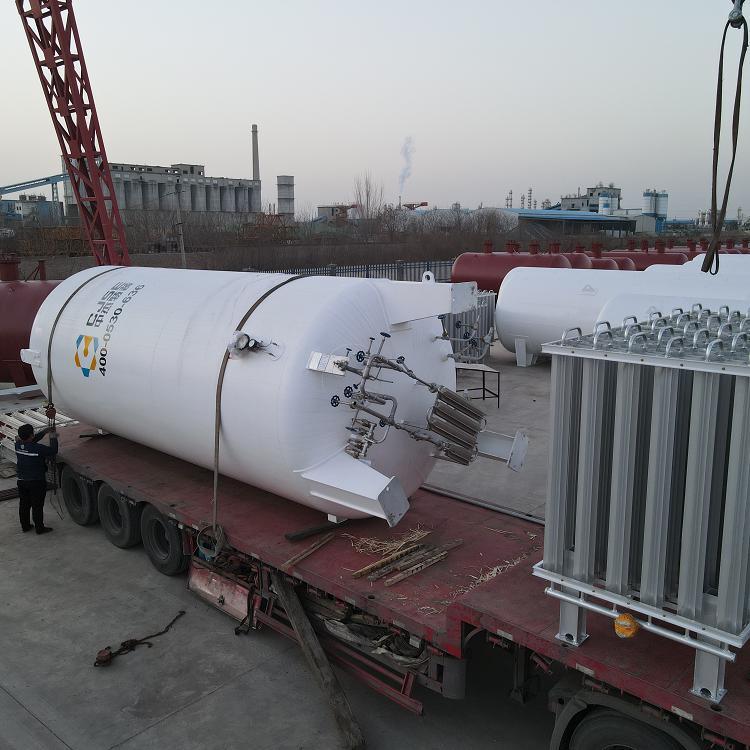
以下是一些常见的二氧化碳储罐管理守则: 安全管理:建立完善的安全管理制度,包括安全操作规程、应急预案和事故处理程序等。确保操作人员具备必要的安全知识和技能,并定期进行安全培训和演练。 储罐检查和维护:定期检查储罐的外观、阀门、连接件等,确保其完好无损。定期进行泄漏检测和压力测试,确保储罐的安全性能符合要求。 液位监测和控制:定期监测储罐内的液位,确保储罐内的二氧化碳充足。根据需要进行充填或放空操作,维持适当的液位。 废气处理:处理二氧化碳储罐产生的废气,避免对环境造成污染。采取适当的废气处理措施,如收集和处理废气。 防火防爆措施:采取防火防爆措施,确保储罐周围的环境安全。远离火源、高温区域和易燃物质,定期检查和维护防火设施。 标识和警示:储罐应明确标识,包括储存的气体类型、压力等信息。周围应设置警示标志,提醒人员注意储罐的存在和相关安全注意事项。 储存记录:记录储罐的使用情况,包括充填日期、充填量、检查记录等。定期进行储罐的检测和维护,并保留相关记录。 定期审查和改进:定期审查储罐管理制度和操作流程,及时发现问题并进行改进。根据实际情况进行风险评估和管理,提高管理水平和安全性能。 需要注意的是,具体的管理守则可能会因不同的储罐类型和应用而有所不同。在管理二氧化碳储罐时,应根据相关的规范和标准进行操作,并咨询人士以确保安全和有效性。
Low-temperature carbon dioxide storage tanks offer several advantages:
- Low-temperature storage capacity: These tanks can store carbon dioxide at low temperatures, typically between -40°C to -70°C. This low-temperature storage allows carbon dioxide to be stored in a liquid state, significantly reducing the storage space required.
- High storage density: Due to the liquid state of carbon dioxide at low temperatures, its storage density is relatively high. Compared to gaseous storage, liquid storage can hold more carbon dioxide in a smaller tank, improving storage efficiency.
- Environmental and renewable: Carbon dioxide is an environmentally friendly gas, and its storage and use do not produce harmful substances. Moreover, carbon dioxide can be reused through capture and recycling technologies, reducing environmental impact.
- High safety: Low-temperature carbon dioxide storage tanks are made from high-strength materials with good sealing and corrosion resistance. They are equipped with safety valves and pressure relief devices to effectively control internal pressure and temperature, ensuring safety during storage.
- Wide application: These tanks are widely used in various fields, such as the food and beverage industry, pharmaceutical industry, and chemical industry. They can be used for frozen food, refrigeration equipment, gas supply, and more, meeting diverse industry needs.
In summary, low-temperature carbon dioxide storage tanks offer advantages such as low-temperature storage capacity, high storage density, environmental friendliness, renewability, high safety, and wide application. These benefits make them crucial storage equipment for carbon dioxide in many industries.
Shandong Zhongjie Special Equipment, welcome customers to our factory for business discussions.
WeChat Official Account

Scan to follow Official Account




















