


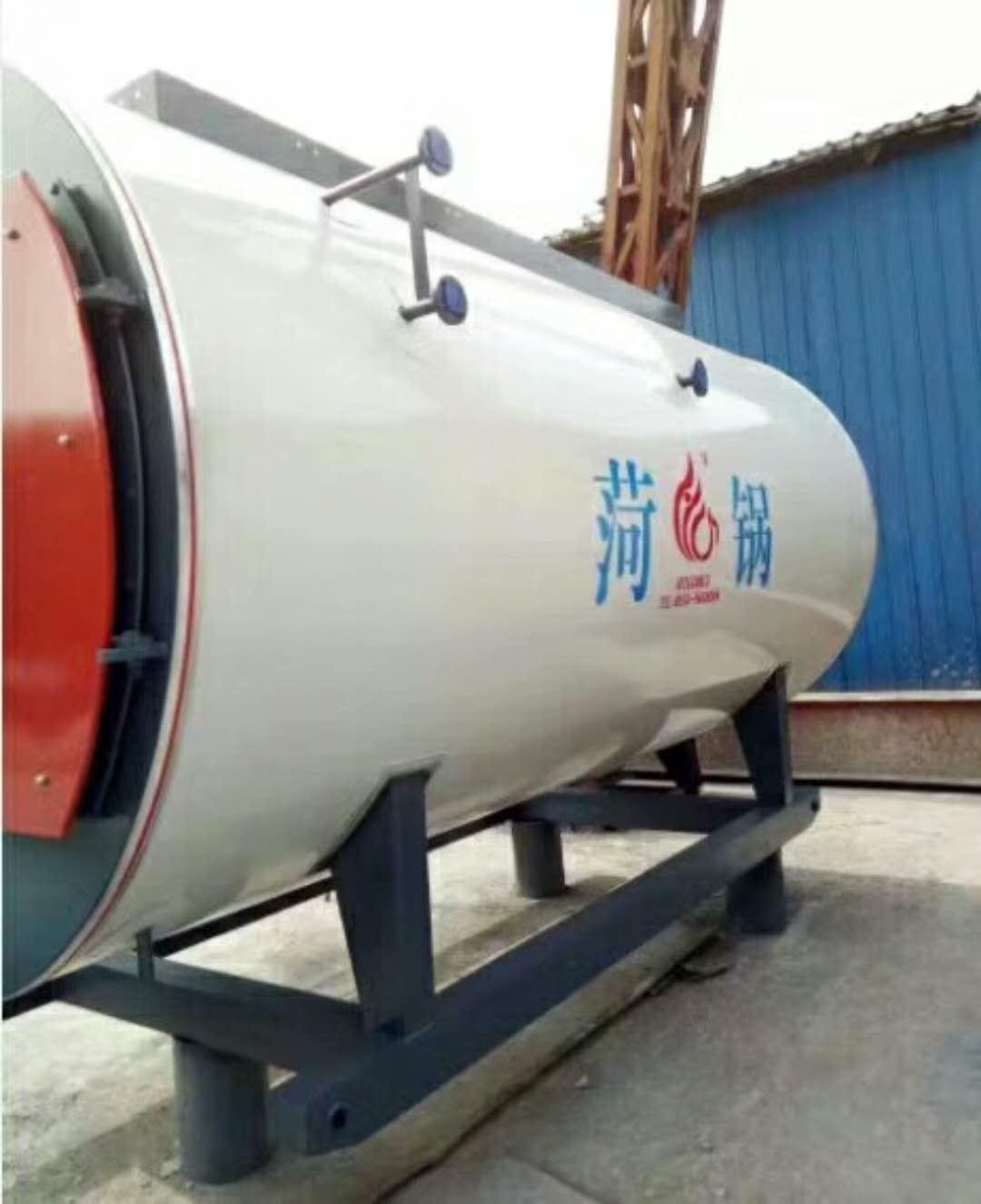



















Shandong Zhongjie Special Equipment Co., Ltd. (formerly Heze Boiler Factory Co., Ltd.) holds an A-grade boiler manufacturing license, an A2-grade pressure vessel manufacturing license, an A2-grade pressure vessel design license, B-grade boiler installation license, and GB2/Class, GC2/Class pressure pipeline installation licenses, as well as an equipment and machinery installation contracting license. It is a member of the China Boiler and Water Treatment Association, the China Chemical Equipment Association, and the理事 member of the Shandong Equipment Manufacturing Association. The company has also passed the ISO9001 Quality Management System, ISO14001 Environmental Management System, OHSAS18001 Occupational Health and Safety Management System certifications, and the American ASME/U2 certification.
The gas steam boiler's gas consumption over one year, for a 1-ton capacity, depends on various factors, including the efficiency of the boiler, load conditions, and operating hours. Generally, it can be estimated using the following formula: Gas Consumption (m) = Boiler Efficiency × Rated Thermal Power × Operating Hours. Here, boiler efficiency refers to the heat energy utilization efficiency of the boiler, typically expressed as a percentage; rated thermal power is the boiler's rated thermal output, usually in kilowatts (kW); and operating hours are the duration of the boiler's operation, commonly measured in hours. It's important to note that the boiler's efficiency and rated thermal power can be determined based on the specific model and parameters, while operating hours need to be estimated based on actual usage. Therefore, to accurately calculate the annual gas consumption for a 1-ton gas steam boiler, it is recommended to refer to the technical specifications and operating records of the boiler, or consult the boiler manufacturer or engineer.
Before ignition, the preparation of the steam boiler involves the following steps:
1. Clean the boiler: First, clean the internal and external dirt and impurities from the boiler. Remove ash, sediment, and dirt inside the boiler to ensure combustion and heat exchange efficiency.
2. Check fuel supply: Inspect the fuel supply system to ensure a smooth fuel supply. Check the fuel storage, conveyance pipelines, and filters, clearing blockages and replacing damaged parts.
3. Inspect the burner: Check the operating status and cleanliness of the burner. Clean the burner nozzles and flame detectors to ensure normal operation of the burner.
4. Check the gas system: For gas boilers, inspect the gas supply system. Check the gas pipelines, valves, and pressure regulators to ensure safe and stable gas supply.
5. Check water level and pressure: Inspect the boiler's water level and pressure. Ensure the water level is within the normal range, and pressure is stable and meets requirements. Add water and adjust pressure if necessary.
6. Check safety devices: Inspect the boiler's safety devices, such as safety valves, pressure switches, and water level controllers. Ensure these safety devices operate normally to guarantee the safe operation of the boiler.
7. Prepare ignition tools: Prepare the tools and equipment needed for ignition, such as a matchstick, igniter, etc. Ensure these tools operate normally and are safe.
When performing these preparation tasks, follow relevant operational procedures and safety requirements to ensure safety and effectiveness. If unsure about the preparation process, consult an expert or the boiler manufacturer for advice.
Fuel and gas boiler combustion safety and explosion-proofing are crucial. Here are some related safety measures:
1. Burner Selection and Adjustment: Choose burners that meet standards and specifications, and ensure they are installed correctly. The burner's parameters and adjustments should align with design requirements to ensure a stable and safe combustion process.
2. Fuel Supply System: The fuel supply system of fuel and gas boilers should possess safe and reliable characteristics. Equipment such as fuel storage tanks, conveyance pipelines, and filters should be regularly inspected and maintained to prevent leaks and blockages.
3. Combustion Control System: The combustion control system of fuel and gas boilers should have the capability to control. The control system should be able to monitor and adjust combustion parameters, such as fuel supply quantity and combustion air volume, to ensure a stable and safe combustion process.
4. Safety Valves and Pressure Switches: Safety valves and pressure switches should be installed on fuel and gas boilers to protect their safe operation. Safety valves can automatically open when exceeding the set pressure, releasing excess pressure gas or steam to prevent boiler explosion.
5. Gas Leak Detection: For gas boilers, gas leak detection devices should be installed. These devices can detect gas leaks in a timely manner and trigger alarms to prevent gas accumulation and explosion.
6. Regular Inspection and Maintenance: Regularly inspect and maintain fuel and gas boilers, including cleaning burners, checking the combustion system, and adjusting combustion parameters. Promptly repair and replace damaged parts to ensure the normal operation and safety performance of the equipment.
7. Training and Operating Procedures: Train operators to...
The management system for gas heat transfer oil furnace equipment incidents primarily includes the following aspects:
1. Equipment Safety Management System: Establish and improve the safety management system for gas heat transfer oil furnace equipment, clarify responsibilities and authorities, and ensure the safe operation of the equipment. This includes safety operation procedures, emergency response plans, equipment inspection and maintenance schedules, etc.
2. Equipment Maintenance Management System: Establish an equipment maintenance management system, clarify maintenance responsibilities and plans. This includes regular equipment inspections, maintenance, and repairs to ensure the normal and safe operation of the equipment.
3. Equipment Operation Management System: Establish an equipment operation management system, clarify operation procedures and requirements. This includes start-up, shutdown, adjustment, and monitoring processes to ensure the safety and operation of the equipment.
4. Equipment Incident Management System: Establish an equipment incident management system, clarify reporting, investigation, and handling procedures for incidents. This includes incident reporting requirements, responsibility追究, cause analysis, and improvement measures to reduce incidents and minimize losses.
5. Equipment Training and Assessment System: Establish a training and assessment system for equipment operators to ensure they possess the necessary skills and knowledge. This includes equipment operation training, safety training, and technical training, as well as regular assessments and evaluations of operators.
6. Equipment Inventory and Record Management System: Establish an equipment inventory and record management system to record equipment operation, maintenance, and incident records. This includes inventory management, maintenance record completion and preservation, and incident record organization and analysis for equipment management and issue traceability.
The above are some basic contents of the management system for gas heat transfer oil furnace equipment incidents. Specific management systems should be formulated and improved based on actual conditions. At the same time, relevant laws, regulations, and standards must be adhered to to ensure the safety and environmental performance of the equipment.
Our company highly values technological innovation and research and development, boasting 1 municipal-level enterprise technology center in Heze City. We have established testing facilities for non-destructive testing, physical and chemical testing, welding testing, hydrostatic testing, etc., and are equipped with over 600 various instruments and equipment such as CNC machine tools, X-ray flaw detectors, digital ultrasonic flaw detectors, mechanical property testing machines, chemical analyzers, spectrometers, tensile testing machines, and plasma welding machines. The key products and technologies we have developed, such as welding of temperature and pressure vessels, emission reduction of biomass boilers, and waste heat utilization, have successively been shortlisted for multiple Shandong Provincial Department of Industry and Information Technology Science and Technology Innovation Projects, Shandong Provincial Key Projects, and Heze City Innovation and Excellence Projects. We have cumulatively obtained 27 authorized utility model patents, 16 authorized invention patents, participated in drafting 2 standards, 2 industry standards, and registered 15 trademarks. The technical team of our company, in collaboration with Professor Li Yajiang of Shandong University, has jointly developed deep cryogenic container processing technology, utilizing the international plasma arc + wire feeding argon arc welding (PAW-GTAW) technology, and has been appraised at the provincial level for its scientific and technological achievements, reaching international standards in the field of deep cryogenic container manufacturing.
Choose ZJET's customized solutions, let's create brilliance together!
WeChat Official Account

Scan to follow Official Account




















