


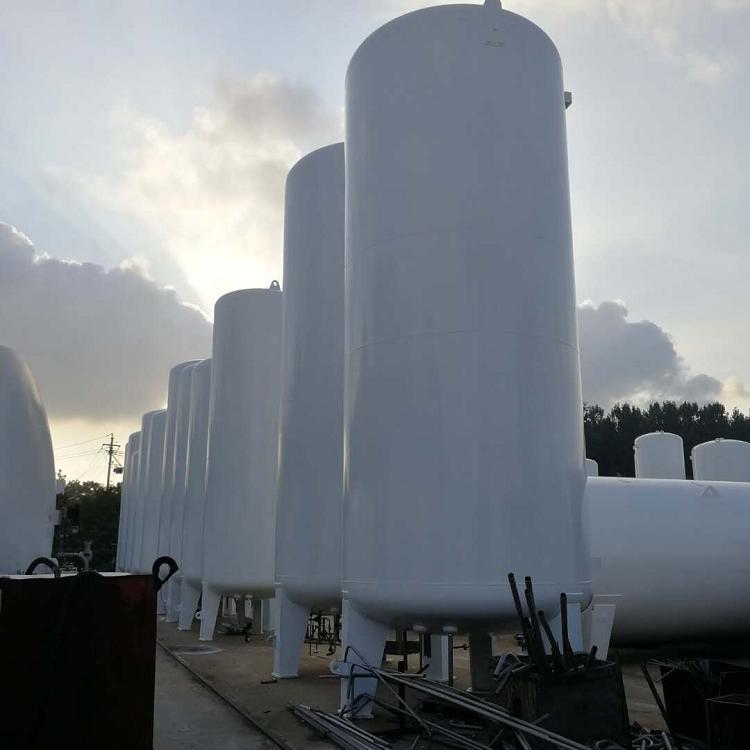

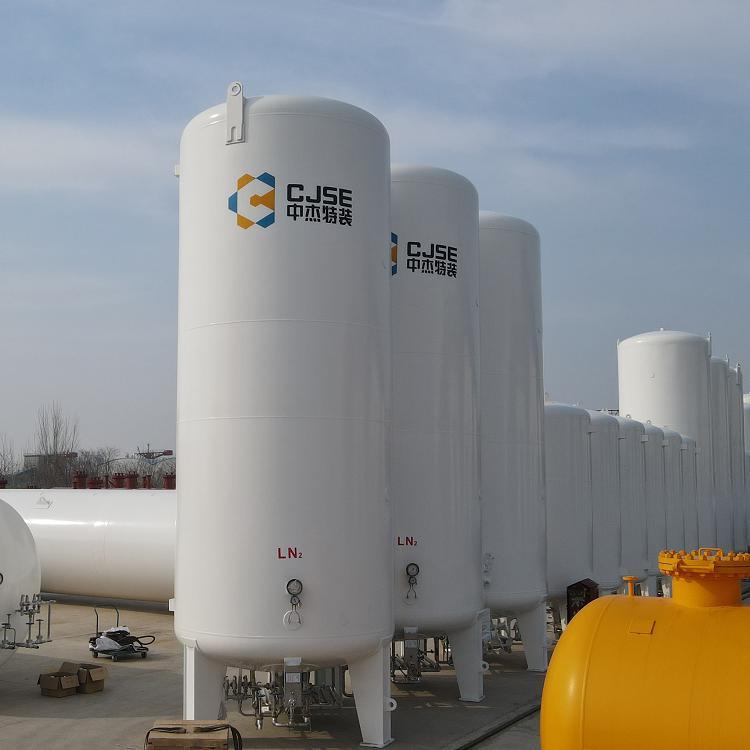
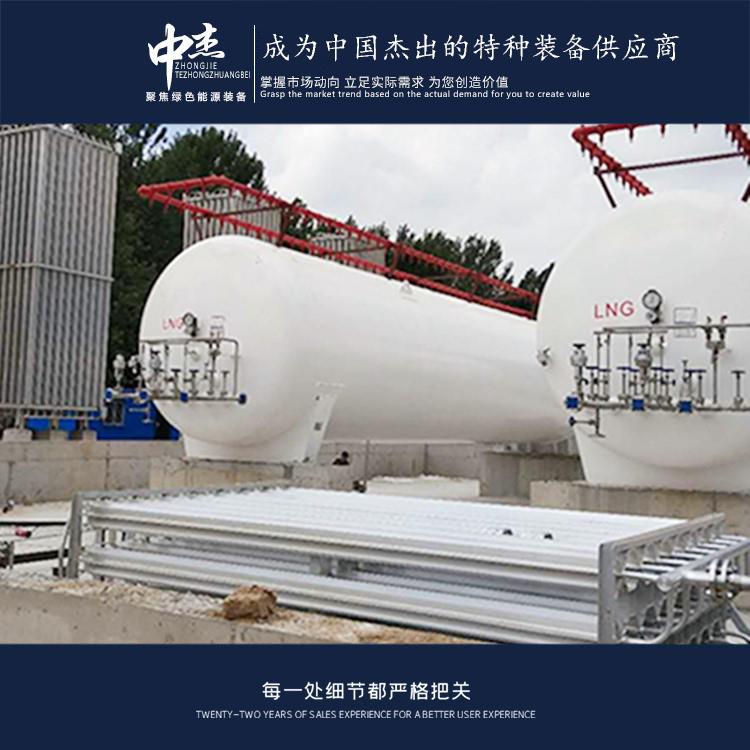



















Shandong Zhongjie Special Equipment Co., Ltd. specializes in the following main products: fuel (gas) boilers, organic heat carrier boilers, biomass boilers, waste heat recovery boilers, and other boiler products; vacuum insulation cryogenic pressure vessels such as LNG storage tanks, oxygen/nitrogen/argon storage tanks, and CO2 storage tanks; pressure vessel products including denitrification engineering equipment, heat storage and energy storage equipment, and complete chemical equipment; central air conditioning and ventilation equipment such as ground (water) source heat pumps, air source units, water-cooled screw units, and air-cooled modular units. Planned products include large-scale energy centers, LNG transport vehicles, LNG tank containers, and other green energy equipment.
When spraying a CO2 storage tank, attention should be paid to the following issues:
- Surface Preparation: Prior to spraying, thorough surface preparation of the tank is required. This includes cleaning the surface, removing grease, dirt, and old coatings to ensure the adhesion and quality of the spray.
- Paint Selection: Choosing the right paint for the CO2 storage tank is crucial. The paint should have corrosion-resistant, high-temperature-resistant, and chemical-resistant properties to protect the tank surface from corrosion and damage.
- Spraying Technique: The choice and operation of the spraying technique are vital for the quality and uniformity of the coating. Appropriate spraying equipment and methods should be selected to ensure the paint is evenly applied to the entire tank surface and to avoid drips and runs.
- Coating Thickness: The thickness of the coating is critical for the protective effect of the tank. The thickness should be controlled according to the paint requirements and the tank's operating environment to ensure the protective performance and lifespan of the coating.
- Drying and Curing: After the coating is completed, sufficient time for drying and curing must be allowed. Follow the correct drying time and conditions as required by the paint to ensure the quality and performance of the coating.
- Safety Measures: Appropriate safety measures must be taken during the spraying process, including wearing protective eyewear, respirators, and protective clothing to ensure the safety of the operators.
- Quality Inspection: After spraying, a quality inspection should be conducted, including the appearance, adhesion, and thickness of the coating. If any issues or defects are found, they should be repaired and addressed promptly.
It should be noted that spraying CO2 storage tanks should be carried out by professionals.
Charging a CO2 storage tank involves injecting liquid CO2 into the tank. Here are some considerations for CO2 storage tank charging: Safety Operations: When charging a CO2 storage tank, it is essential to adhere to relevant safety protocols. Operators should be trained and aware of the tank's characteristics and safety concerns to ensure safe operation. Tank Capacity Control: During the charging process, ensure that the tank is not exceeded its rated capacity. Exceeding capacity can lead to excessive pressure and increased safety risks. Charging Speed Control: The charging speed should be moderate, avoiding too fast or too slow. Excessive speed may cause high internal tank pressure, while slow speed may lead to extended filling times. Temperature Control: Monitor the temperature of the liquid CO2 during charging. High temperatures can cause rapid evaporation, and low temperatures can lead to solidification. Pressure Control: Control the internal tank pressure during charging. Excessive pressure can cause tank rupture or leakage, while low pressure may result in inadequate filling. Level Monitoring: Regularly monitor the tank's level during charging. Ensure accurate level readings to avoid overfilling or underfilling. Pressure Relief Devices: The tank should be equipped with pressure relief devices, such as safety valves, to control internal pressure. The set pressure should meet relevant requirements and be inspected and maintained regularly. Environmental Protection: Pay attention to environmental protection during charging, avoiding CO2 leakage and contamination. Take appropriate protective measures, such as using sealed connections and protective devices. These are some considerations for CO2 storage tank charging. When performing charging operations, follow relevant safety regulations and standards, and consult with experts to ensure safety and effectiveness.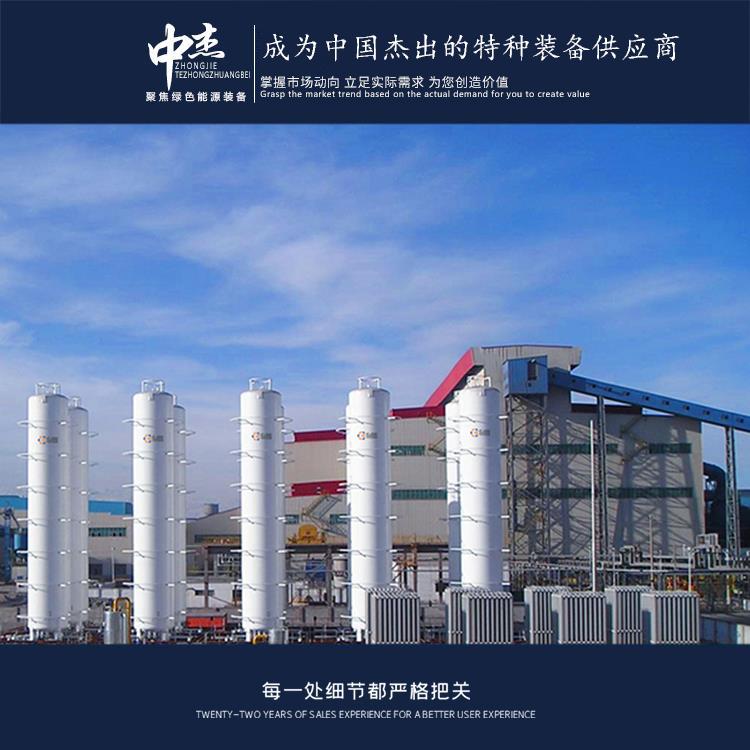
CO2 flooding is a commonly used enhanced oil recovery technique to improve the recovery rate of oil fields. It works by injecting CO2 gas into the reservoir to alter its physical and chemical properties, thereby promoting fluid flow and increasing recovery rates. The working principle of CO2 flooding is as follows:
Solubility Principle: CO2 has a high solubility in oil. When CO2 gas is injected into the reservoir, it dissolves in the oil, reducing viscosity and surface tension, making it easier to flow.
Expulsion Drive Principle: After CO2 gas is injected into the reservoir, it expands to form a gas phase, increasing the internal pressure of the reservoir and pushing the oil towards the wellbore. Additionally, CO2's high permeability can also improve the reservoir's permeability, enhancing fluid mobility.
Chemical Reaction Principle: CO2 reacts with certain components in the oil to produce soluble substances, further reducing viscosity and improving fluidity.
CO2 flooding technology offers certain advantages in oilfield development, such as:
Environmental Friendliness: CO2 is a natural, non-toxic, and renewable gas. Using CO2 flooding can reduce environmental pollution.
Economic Viability: CO2 flooding can increase the recovery rate of oil fields, boost production, and thereby enhance economic benefits.
Sustainability: CO2 can be separated from the atmosphere or captured and stored from industrial flue gases, enabling the recycling of CO2 and promoting sustainability.
It is important to note that the application of CO2 flooding technology requires consideration of reservoir characteristics, geological conditions, and economic feasibility. Prior to implementing CO2 flooding, comprehensive reservoir evaluation and engineering design must be conducted to ensure the effectiveness and safety of the technology.
In recent years, the peak development of low-temperature liquid storage tanks can be attributed to the following factors:
1. Increasing energy demand: As the economy grows and the population expands, there is a rising need for energy. Low-temperature liquid storage tanks are primarily used for storing liquefied natural gas (LNG), liquid oxygen (LOX), liquid nitrogen (LIN), and other low-temperature liquid energy sources to meet the growing energy demand.
2. Greenhouse gas emissions reduction: These tanks can store and transport liquid carbon dioxide (CO2) for carbon capture and storage (CCS) technologies, reducing greenhouse gas emissions. With growing concerns for environmental protection and climate change, the demand for low-temperature liquid storage tanks in the CCS field has also increased.
3. Industrial development needs: The application of low-temperature liquid storage tanks in the industrial sector is also on the rise. For instance, in industries such as chemicals, pharmaceuticals, food and beverages, there is a need to store and transport low-temperature liquid raw materials or products, like liquid nitrogen, liquid oxygen, and liquid ethylene. As these industries develop, the demand for low-temperature liquid storage tanks also increases accordingly.
4. Technological advancement and innovation: In recent years, there have been continuous advancements and innovations in the design, manufacturing, and transportation of low-temperature liquid storage tanks. The application of new materials, optimization of tank structures, and improvements in safety control systems have made these tanks safer and more reliable, further propelling their peak development.
In summary, factors such as increasing energy demand, greenhouse gas emissions reduction, industrial development needs, and technological advancement and innovation have collectively driven the peak development of low-temperature liquid storage tanks in recent years. As related industries and technologies continue to evolve,
Our company attaches great importance to technological innovation and research and development, with 1 municipal enterprise technology center in Heze City. We have built non-destructive testing, physical and chemical testing, welding testing, hydrostatic testing, and other testing facilities, and are equipped with over 600 types of machinery and equipment, including CNC machine tools, X-ray flaw detectors, digital ultrasonic flaw detectors, mechanical property testing machines, chemical analyzers, spectrometers, tensile testing machines, plasma welding machines, etc. The key products and technologies we have developed, such as welding for temperature-pressure vessels, emissions reduction for biomass boilers, and waste heat recovery, have successively been selected for multiple Shandong Province Industrial and Information Technology Department scientific and technological innovation projects, Shandong Province key projects, and Heze City innovative and excellent projects. We have cumulatively obtained 27 authorized utility model patents, 16 authorized invention patents, participated in drafting 2 standards, 2 industry standards, and registered 15 trademarks. Our technical team, in collaboration with Professor Li Yajiang of Shandong University, has developed deep cryogenic container processing technology, using the internationally recognized plasma arc + wire-filled tungsten inert gas arc welding (PAW-GTAW) technology. The provincial technological achievement assessment has confirmed that our technology level in the deep cryogenic container manufacturing field has reached international standards. Choose Zhongjietech for a partnership that promises brilliance together!
WeChat Official Account

Scan to follow Official Account




















