


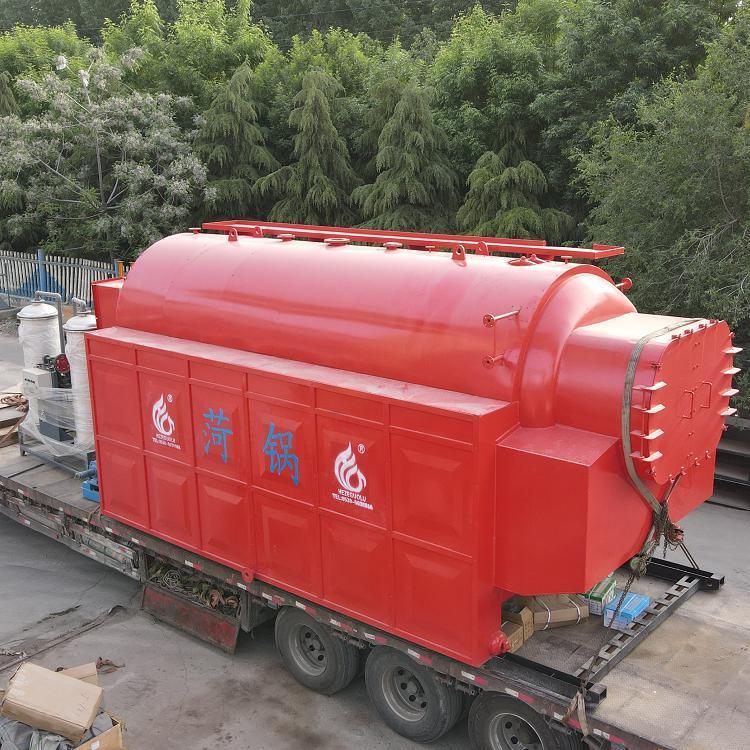

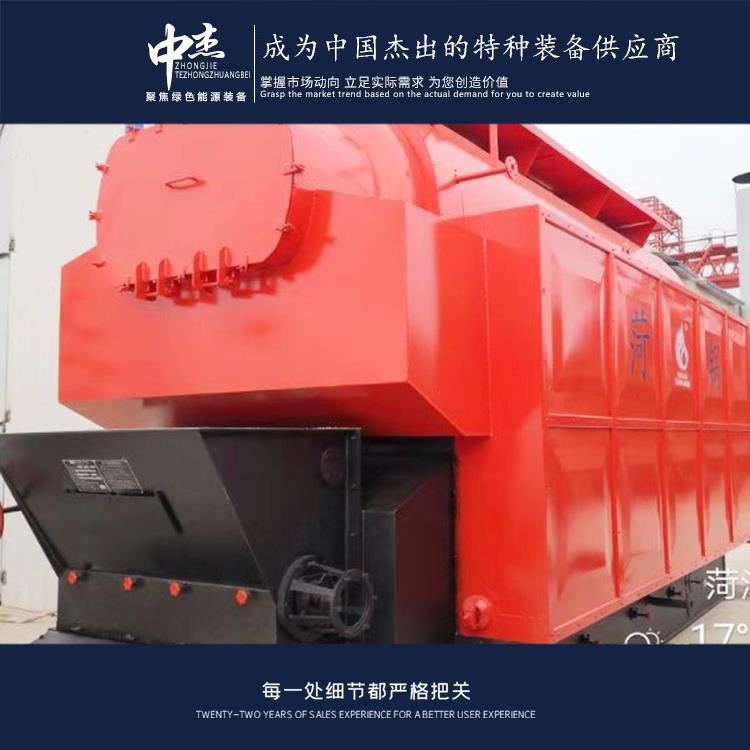



















Shandong Zhongjie Special Equipment Co., Ltd. (formerly Heze Boiler Factory Co., Ltd.) was established in 2001, located at No. 2218 Jinnan Road, Development Zone, Heze City. With a registered capital of 50 million yuan and total assets of 500 million yuan, the company has 7 business centers: boiler, deep-freezing container, pressure vessel, central air conditioning, engineering installation, international trade, and Internet of Things. It operates three factory sites on Jinnan Road, East Yangtze Road, and Bohai Road, covering a total of 200,000 square meters. The main workshop spans 83,000 square meters. The company currently employs 710 staff, including 247 engineers and technicians and 82 middle-level technical personnel. In December 2016, it was recognized as a "High-Tech Enterprise" by the Science and Technology Department. In June 2021, it was named a "Specialized and New Enterprise of Shandong Province" by the Industrial and Information Technology Department. In June 2022, it was identified as a "Gazelle Enterprise of Shandong Province" and in August 2022, as a "Specialized and New Small Giant Enterprise" by the Ministry of Industry and Information Technology.
Transforming coal-fired boilers into biomass boilers can offer the following benefits:
Environmentally Friendly: The fuel used in biomass boilers comes from organic matter such as plants, animals, and microorganisms. Compared to coal-fired boilers, biomass boilers produce lower carbon emissions during combustion, reducing greenhouse gas emissions and being more environmentally friendly.
Energy Conservation and Emission Reduction: Biomass boilers utilize combustion technology and a heat recovery system to enhance energy efficiency and minimize waste. Additionally, the combustion of biomass fuel produces less ash and pollutants, thereby reducing environmental pollution.
Energy Security: Biomass, as a local renewable energy source, can reduce dependence on imported energy and enhance energy security. In regions with scarce resources, switching to biomass boilers can provide a reliable energy supply.
Economic Benefits: Biomass fuel is relatively cost-effective and can reduce energy costs. Furthermore, the technology and equipment for biomass boilers are continually advancing and maturing, making them more economically competitive.
Waste Utilization: Transforming coal-fired boilers into biomass boilers can utilize agricultural residues like straw and wood waste, effectively utilizing waste resources and reducing resource waste.
Note that converting a coal-fired boiler to a biomass boiler requires corresponding technical upgrades and equipment updates, including the combustion system, fuel supply system, and flue gas treatment system. The conversion process must consider fuel characteristics, combustion properties, and equipment adaptability to ensure the stable operation of the biomass boiler after modification and achieve the expected energy conservation and emission reduction effects. Therefore, it is recommended to seek engineering technical support and consultation when carrying out the coal boiler conversion.
Control methods for biomass boiler combustion systems can include the following aspects:
Fuel Supply Control: Regulate the supply volume and speed of biomass fuel to ensure stable fuel supply. This can be achieved by controlling the speed of the feed machine or adjusting the opening of the feed valve.
Air Supply Control: Regulates the amount of air supplied during the combustion process to ensure complete fuel combustion. Air supply can be controlled by adjusting the fan speed or the opening degree of the air door.
Combustion Temperature Control: Monitor and control the furnace temperature during the combustion process to maintain the temperature within an appropriate range. The combustion temperature can be controlled by adjusting the combustion air volume, fuel supply, and fuel distribution.
Combustion Process Monitoring: By installing temperature sensors, pressure sensors, oxygen content sensors, and other monitoring equipment, we can real-time monitor parameters such as temperature, pressure, and oxygen content during the combustion process, promptly detect anomalies, and make adjustments.
Flue Gas Emission Control: Monitor and control pollutants in flue gas emissions to ensure environmental protection during the combustion process. This can be achieved by installing flue gas analyzers and emission control devices, adjusting combustion parameters and flue gas treatment equipment, and reducing pollutant emissions.
Automated Control System: Our system utilizes an automated control system to achieve comprehensive control and monitoring of the biomass boiler combustion process. Through PLC controllers, touchscreens, and other equipment, we facilitate automatic parameter adjustment and real-time monitoring of operational status, enhancing the stability and efficiency of the combustion system.
In summary, through reasonable fuel supply, air supply, combustion temperature control, and monitoring and automated control of the combustion process, the stable operation of the biomass boiler combustion system can be achieved.
Advantages of Biomass Fuel:
Renewable Energy: Biomass fuel is a renewable energy source with a wide range of sources, including wood, straw, and waste materials. Compared to fossil fuels, the supply of biomass fuel is more sustainable.
Environmental Low Carbon: The amount of carbon dioxide released during the combustion of biomass fuel is roughly equivalent to the amount absorbed during its growth, resulting in almost no net increase in carbon dioxide emissions, which has a positive effect on mitigating climate change.
Reduce Waste Disposal: Biomass fuel can utilize agricultural straw, wood waste, and other waste materials, thereby reducing waste disposal and emissions issues.
High energy utilization efficiency: Biomass fuel has a high calorific value and burns efficiently, effectively converting to thermal or electrical energy, providing a reliable energy supply.
Usage of biomass boilers:
Heating Systems: Biomass boilers can be used in heating systems such as heating, warm water, and steam supply, and are widely applied in residential areas, industrial factories, and commercial buildings, etc.
Industrial Production: Biomass boilers can provide thermal energy for industrial production, such as pulp and papermaking, food processing, and chemical industries, meeting the thermal energy requirements during the industrial production process.
Power Generation System: Biomass boilers can be integrated with steam turbine generating sets to convert the thermal energy from combustion into electrical power for power supply.
Hot Water Supply: Biomass boilers are suitable for hot water supply, such as for swimming pools, hot springs, hotels, and other venues.
Agricultural Utilization: Biomass boilers can utilize agricultural waste like straw from crops, addressing energy issues in rural areas and providing the required thermal energy for agricultural production.
The use of biomass boilers offers environmental friendliness, sustainability, and the ability to effectively utilize biomass resources, reduce reliance on fossil fuels, decrease carbon emissions, and promote sustainable development.
As a renewable energy boiler, biomass boilers offer several advantages:
Environmental Protection and Energy Saving: Biomass boilers utilize biomass fuels such as wood chips, straw, and husks, which are renewable. Compared to traditional fossil fuels, these fuels have lower carbon emissions and are more environmentally friendly. The emissions produced during the combustion process of biomass boilers are relatively low, causing minimal environmental impact. Additionally, by optimizing the combustion process and heat recovery, biomass boilers can achieve high energy utilization efficiency, saving energy.
Diverse Fuel Options: Biomass boilers are adaptable to various biomass fuels, such as wood chips, straw, and husks, offering strong fuel versatility. This enables widespread application of biomass boilers in different regions and industries. Moreover, the supply of biomass fuel is relatively stable, unaffected by international oil price fluctuations and other factors.
Flexible operating modes: Biomass boilers can be adjusted to meet actual requirements.
Shandong Zhongjie Special Equipment, welcome customers to our factory for business discussions.
WeChat Official Account

Scan to follow Official Account




















