


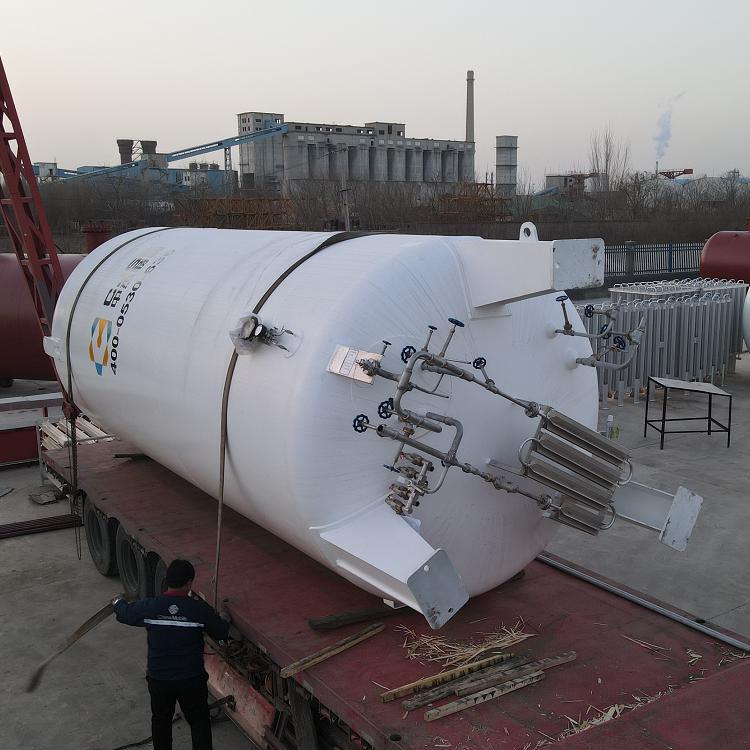

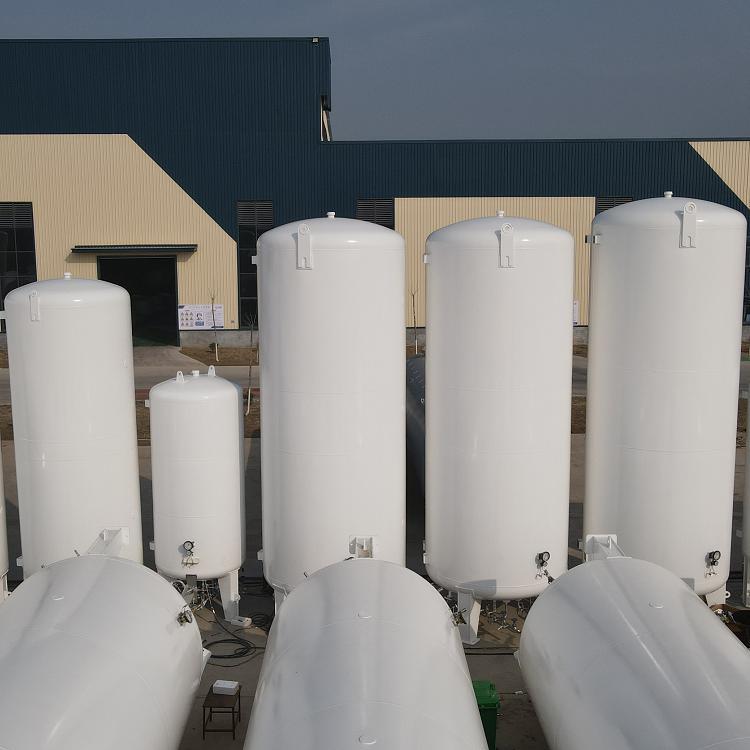



















Shandong Zhongjie Special Equipment's main products include: fuel (gas) boilers, organic heat carrier boilers, biomass boilers, waste heat boilers, and other boiler products; vacuum insulation cryogenic pressure vessels such as LNG tanks, oxygen/nitrogen/argon tanks, CO2 tanks; pressure vessel products like denitrification engineering equipment, heat storage and energy storage equipment, complete chemical equipment sets; central air conditioning and HVAC equipment such as ground (water) source heat pumps, air source units, water-cooled screw units, and air-cooled modular units. Planned products include large-scale energy centers, LNG transport vehicles, LNG tank containers, and other green energy equipment.
The safety distance between liquid oxygen storage tanks and buildings is typically governed by relevant safety standards and regulations to ensure the safe distance and fire separation between them. The following is a reference for the general safety distance between liquid oxygen storage tanks and buildings:
Horizontal Clearance: The horizontal clearance between the liquid oxygen storage tank and the structure is typically required to maintain a certain distance to prevent any danger to the structure in case of tank leakage or accidents. The specific clearance distance should be determined based on factors such as the tank's capacity, pressure, and the nature of the structure, with a general recommendation to maintain a safe distance.
Vertical Clearance: The vertical clearance between the liquid oxygen storage tank and the building must also comply with relevant safety requirements. This is to prevent any danger to the building in the event of a tank leak or accident. Specific clearance requirements will be determined based on factors such as the tank's capacity, pressure, and the height of the building, with a general recommendation to maintain a safe distance.
Fire-Protection Distance: Liquid oxygen has a high oxygen content and is highly flammable. In the event of a leak or accident, it may cause a fire. Therefore, a certain fire-protection distance must be maintained between the liquid oxygen storage tank and the building to ensure that the fire does not spread or pose a danger to the building. Specific fire-protection distance requirements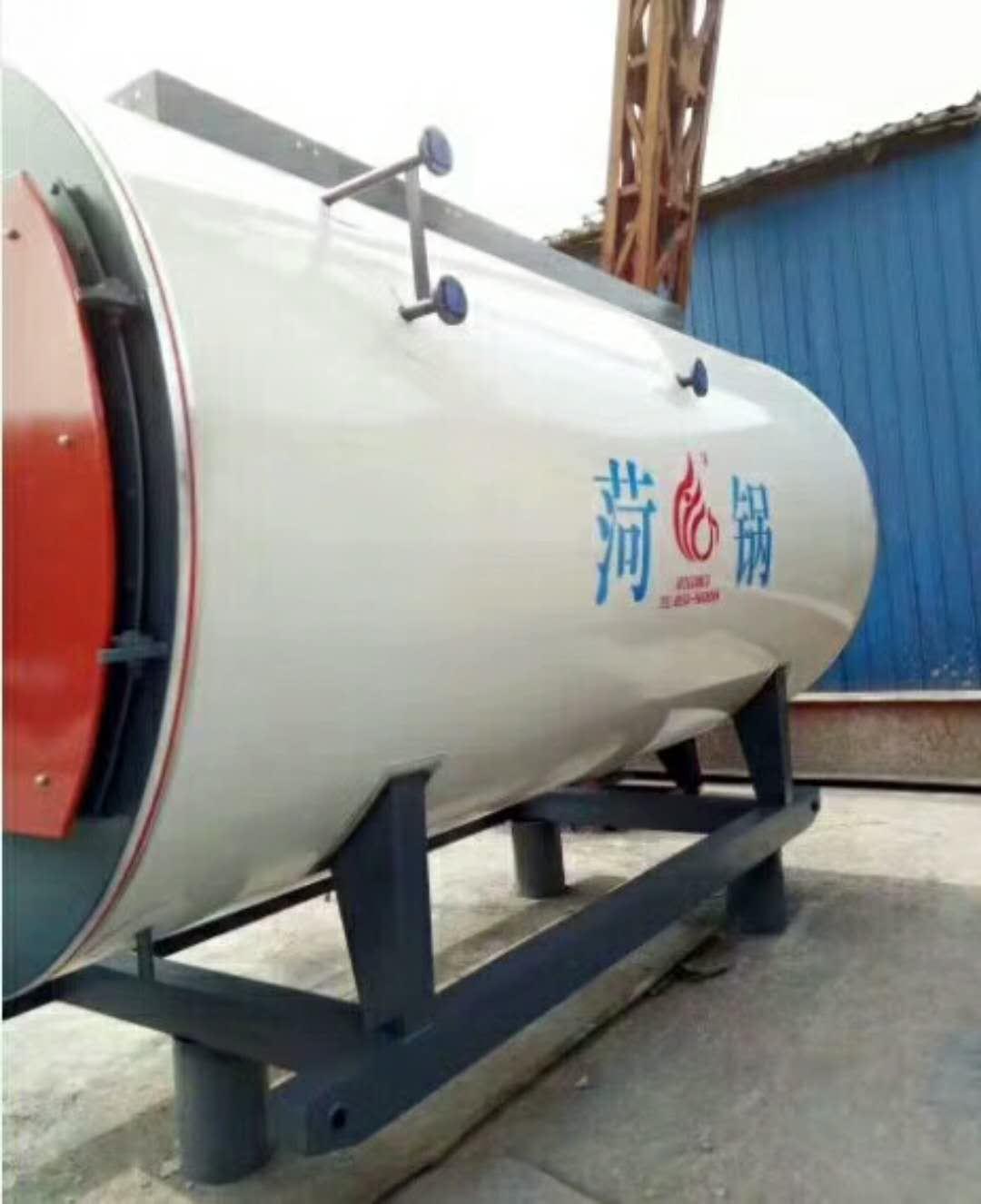
Safety guidelines and considerations for the handling and transportation of liquid oxygen tanks include:
Safe Usage Instructions:
Tanks Selection: Choose liquid oxygen tanks that comply with regulations and standards, ensuring their quality and safety performance.
Tank Installation: Tanks should be installed on a solid foundation to ensure stability. Additionally, good ventilation should be maintained around the tank, and it should be kept away from flammable materials and heat sources.
Seal Integrity Inspection: Regularly check the sealing performance of storage tanks to ensure there are no leaks at valve and pipeline connections.
Pressure Control: Tanks should be equipped with pressure gauges and safety valves, and undergo regular inspections and maintenance to ensure pressure remains within safe limits.
Fire precautions: Liquid oxygen has a high oxygen content, which is highly flammable. Establish fire barriers around storage tanks, ban smoking and open flames, and ensure safety.
Static protection: During the transportation and use of liquid oxygen, static electricity may cause sparks, increasing the risk of fire. Measures such as using static-conductive materials and anti-static equipment should be taken to reduce the accumulation and release of static electricity.
Shipment Precautions:
Transportation Vehicle Selection: Choose a transportation vehicle that meets the requirements for liquid oxygen transport, ensuring the vehicle's safety and sealing.
Loading and Unloading: During the transportation of liquid oxygen, the following loading and unloading procedures should be adopted: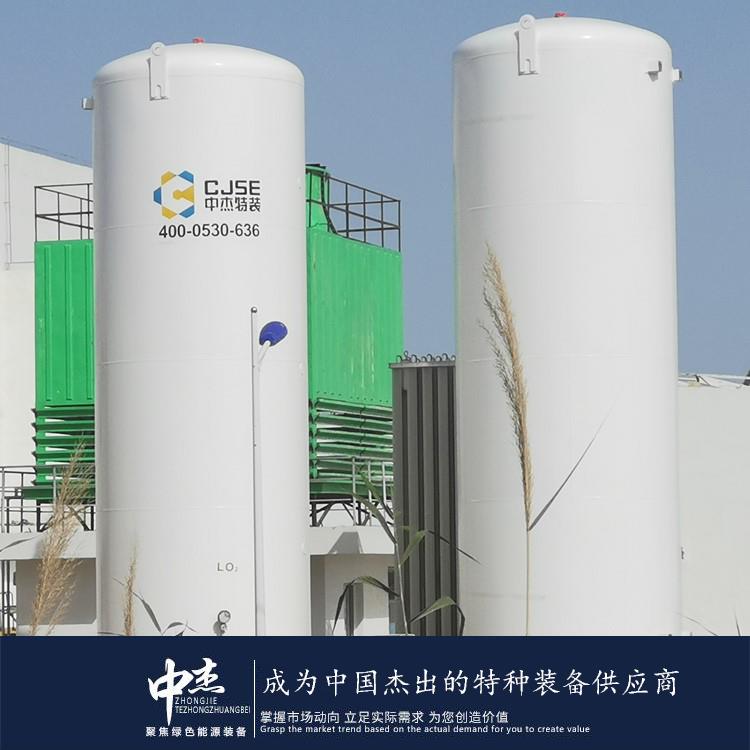
The liquid oxygen tank features the following safety technical characteristics:
High-pressure Vessel: Liquid oxygen storage tanks are high-pressure vessels capable of withstanding high pressures. Their design and manufacture must comply with relevant standards and regulations to ensure the tank's strength and sealability.
Low-Temperature Storage: Liquid oxygen tanks are used for storing liquid oxygen, with operating temperatures typically around -183 degrees Celsius. The materials and insulation of the tank must be able to withstand low-temperature environments to prevent evaporation of the liquid oxygen and the penetration of external heat.
Fireproof Design: Liquid oxygen has a high oxygen content, which is prone to cause fires. The design of liquid oxygen storage tanks must consider fire prevention measures, such as setting up firewalls and using fire-resistant coatings, to prevent the occurrence and spread of fires.
Leakage Control: A leak in a liquid oxygen storage tank can lead to increased oxygen concentration, heightening the risk of fire and explosion. Tanks must be equipped with leak detection and alarm systems to promptly identify and control leaks, and to implement corresponding emergency measures.
Electrostatic Protection: The accumulation of static electricity in liquid oxygen tanks can cause sparks, increasing the risk of fire. Tanks must employ measures such as electrostatic conductive materials and anti-static equipment to reduce the buildup and release of static electricity.
Safety valves and pressure control: Liquid oxygen storage tanks must be equipped with safety valves and pressure control devices to ensure the internal pressure of the tank remains within a safe range. When the pressure exceeds the set value, the safety valve will automatically release the pressure, protecting the tank's safety.
Regular inspections and maintenance: Liquid oxygen tanks require regular inspections and maintenance.
The dimensions and structures of liquid oxygen storage tanks can vary according to specific requirements and applications. The following are common sizes and structures of liquid oxygen storage tanks:
Dimensions: The size of liquid oxygen tanks is typically determined by the storage or transportation capacity of liquid oxygen. Common capacities range from a few thousand to several tens of thousands of liters.
Structure: The structure of the liquid oxygen tank mainly includes the inner shell, outer shell, insulation layer, and supporting structure, etc.
Inner Shell: The inner shell of the liquid oxygen tank is the part designed to store liquid oxygen, typically made of materials like stainless steel or aluminum alloy, which offer excellent corrosion resistance and sealing properties.
Shell: The shell of a liquid oxygen tank is the external structure that protects the inner lining, typically made of carbon steel or stainless steel, and boasts sufficient strength and corrosion resistance.
Insulation Layer: The insulation layer of the liquid oxygen tank is used to reduce heat conduction and loss, maintaining the low-temperature state of the liquid oxygen. Common insulation materials include polyethylene foam, glass fiber, and aerogel, etc.
Support Structure: The support structure of the liquid oxygen tank is designed to support and secure the inner and outer shells of the tank. Typically made of steel, it boasts adequate strength and stability.
The dimensions and structural design of liquid oxygen storage tanks must consider the properties of liquid oxygen, storage or transportation requirements, safety standards, and other factors. When using liquid oxygen storage tanks, strict adherence to relevant operational specifications and safety requirements is necessary to ensure safe use.
Zhongjie Special Equipment adheres to the great vision of "realizing employees' dreams, creating customer value, and striving for the prosperity and strength of our motherland," focusing solely on the development of green energy equipment. We dedicate high-value products and services to society!
WeChat Official Account

Scan to follow Official Account




















