


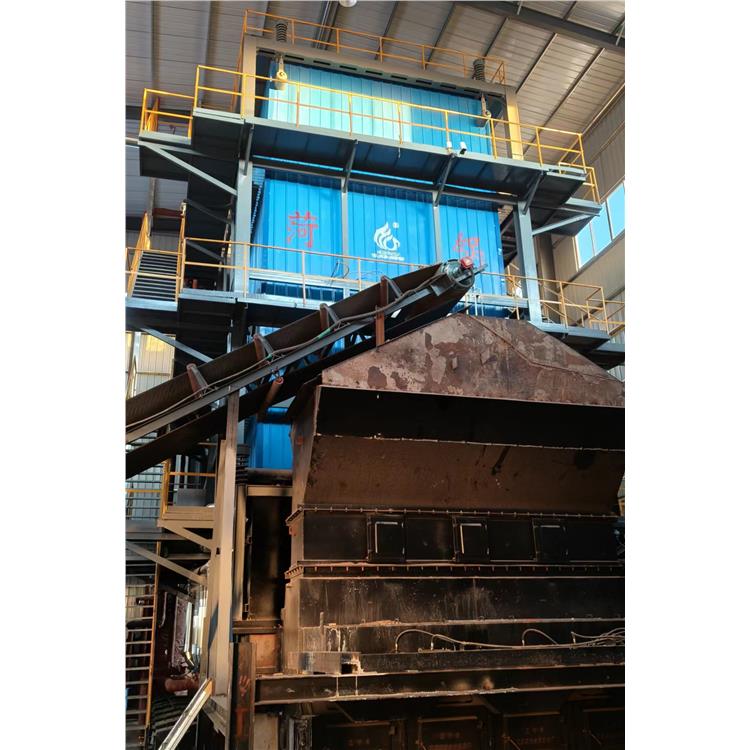


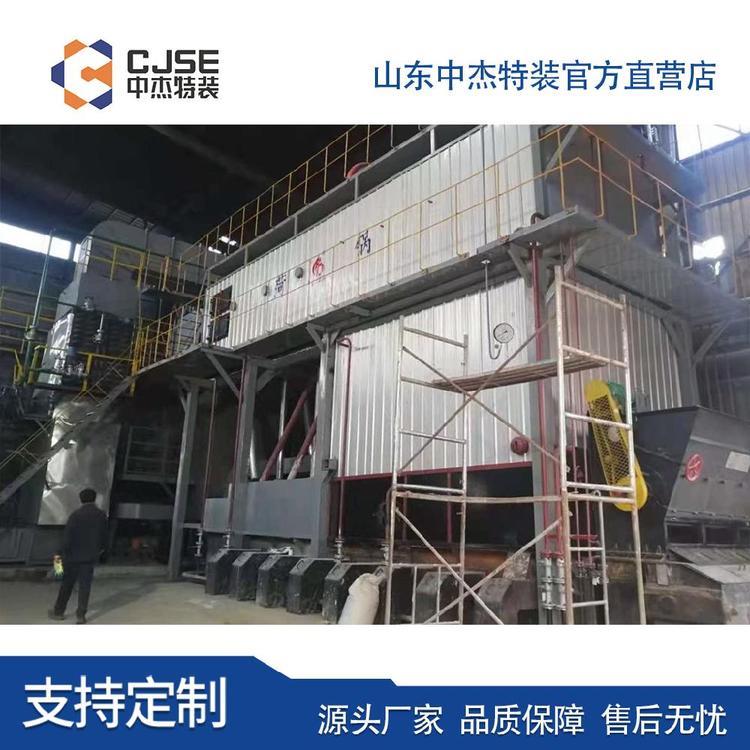



















Shandong Zhongjie Special Equipment Co., Ltd. specializes in the following products: fuel (gas) boilers, organic heat carrier boilers, biomass boilers, waste heat recovery boilers, and other boiler products; vacuum insulated cryogenic pressure vessels such as LNG storage tanks, oxygen/nitrogen/argon storage tanks, and CO2 storage tanks; pressure vessel products including denitrification engineering equipment, heat storage and energy storage equipment, and complete chemical equipment; central air conditioning and HVAC equipment such as ground (water) source heat pumps, air source units, water-cooled screw units, and air-cooled modular units. Planned products include large-scale energy centers, LNG transport vehicles, LNG tank containers, and other green energy equipment.
Controlling slagging in biomass boilers is a crucial measure to ensure the normal operation of the boiler and extend its lifespan. Here are some common methods for controlling slagging in biomass boilers:
Choose fuel wisely: Opt for high-quality, appropriately moist biomass fuel, avoiding fuel that is too wet or contains excessive impurities to minimize coking possibilities.
Control combustion temperature: Reasonably control the combustion temperature of biomass boilers to avoid excessively high temperatures, reducing the fuel's residence time in the furnace and lowering the risk of slagging.
Enhanced furnace cleaning: Regularly clean the furnace to remove ash and accumulated dust, maintaining its openness and reducing the likelihood of slagging.
Regulate Excessive Air: Properly control the air supply during the combustion process of biomass boilers to prevent excessive air from entering the furnace, thereby reducing the risk of fuel oxidation and coking.
Regular Ash Blowing: Conduct regular ash blowing on biomass boiler components such as economizers and superheaters to remove ash and slag, maintaining heat exchange efficiency and reducing the likelihood of fouling.
Enhanced Monitoring and Inspection: Regularly monitor and inspect biomass boilers, including parameters such as furnace temperature, flue gas composition, and furnace pressure, to promptly identify any anomalies and take appropriate actions.
These measures can help control the fouling issue in biomass boilers, maintain normal boiler operation, and extend the service life of the boiler. Additionally, based on specific circumstances, other appropriate measures can be taken in conjunction with actual operating experience and technical requirements.
Biomass steam boilers offer several advantages:
Renewable Energy: Biomass steam boilers utilize biomass fuels such as wood chips, straw, and husks. These fuels are renewable and, compared to traditional fossil fuels, offer lower carbon emissions and environmental friendliness.
Diverse Fuel Options: Biomass steam boilers are suitable for various biomass fuels such as wood chips, straw, husks, etc., and possess strong adaptability to different fuels. This allows for widespread application of biomass steam boilers in various regions and industries.
Energy Utilization: Biomass steam boilers employ advanced combustion technology and heat recovery systems, achieving high energy utilization efficiency. By optimizing the combustion process and heat recovery, energy utilization efficiency can be maximized, significantly reducing energy consumption.
Flexible operational modes: Biomass steam boilers can be operated flexibly to meet actual needs, including manual control, automatic control, or remote monitoring, etc. This allows biomass steam boilers to cater to various scenarios and provide a stable steam supply.
Superior environmental performance: Biomass steam boilers produce relatively fewer emissions during combustion, resulting in minimal environmental impact. Through reasonable combustion control and flue gas treatment devices, the content of emissions can be further reduced to meet higher environmental protection standards.
Alternative to Traditional Boilers: Biomass steam boilers can replace conventional coal or oil-fired boilers, reducing reliance on fossil fuels, lowering energy costs and carbon emissions. This is significant for achieving sustainable development and reducing greenhouse gas emissions.
In summary, biomass steam boilers feature renewable energy and diversity.
Fully automatic biomass boiler refers to biomass boilers equipped with a full automatic control system. Here are some important considerations:
Regular Maintenance: Although the fully automatic biomass boiler is equipped with an automatic control system, it still requires regular maintenance. This includes cleaning the combustion chamber, heat exchanger, flue, etc., inspecting and replacing worn parts, to ensure the normal operation of the boiler.
Water Treatment: The quality of water in biomass boilers is crucial for their normal operation. Regularly inspect and treat water quality, including water hardness, alkalinity, and impurities in the water. Take appropriate water treatment measures based on the water quality to prevent scale and corrosion, and protect the boiler's heat exchangers and pipes.
Fuel Quality Control: The quality of the fuel for biomass boilers is crucial for combustion efficiency and the stable operation of the boiler. Select the appropriate amount of biomass fuel and conduct proper quality control, including moisture content and particle size of the fuel. Ensure that the fuel quality meets the boiler's requirements to avoid incomplete combustion and blockages.
Regular cleaning of the combustion system: The combustion system of fully automatic biomass boilers requires regular cleaning, including the combustion chamber, burners, and burner nozzles. Accumulated soot, deposits, and dirt help maintain the system's flow, preventing issues such as incomplete combustion and unstable flames.
Regular inspection of control systems: The control system of fully automatic biomass boilers requires regular inspections and tests to ensure proper operation. This includes checking the accuracy of sensors and the stability of controllers. Promptly identify and resolve issues with the control system to ensure the stable operation of the boiler.
Maintain accurate records and monitoring: Document and monitor operating parameters and fault conditions of all active biomass boilers, and conduct analysis. Identify and resolve issues promptly to prevent faults from occurring or escalating.
The above outlines some precautions when using fully automatic biomass boilers. With proper maintenance and quality control, the stable operation and performance of the boiler can be ensured.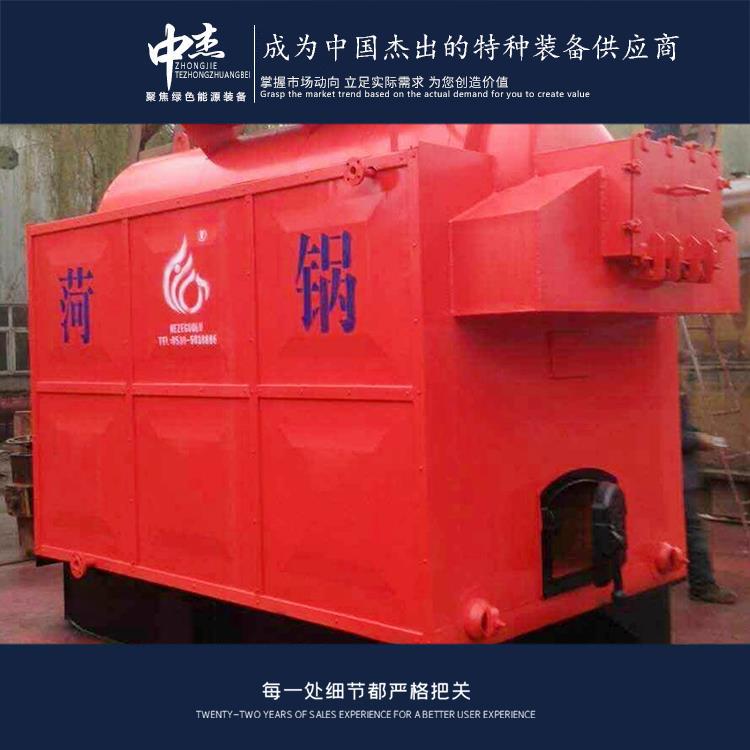
Biomass boilers offer the following environmental advantages:
Renewable Energy: The fuel used in biomass boilers is renewable, such as wood chips, straw, waste materials, etc. Compared to fossil fuels, the use of biomass fuel can reduce dependence on limited resources and lower energy consumption.
Low carbon emissions: The amount of carbon dioxide released during the combustion of biomass fuel is roughly equivalent to the amount absorbed during its growth, creating a closed carbon cycle. Compared to the combustion of fossil fuels, biomass boilers emit less carbon, contributing significantly to the reduction of greenhouse gas emissions.
Reducing Pollutant Emissions: The combustion of biomass fuel produces relatively fewer pollutants. Compared to coal combustion, biomass boilers emit lower levels of nitrogen oxides, sulfur oxides, and particulate matter, resulting in less air pollution.
Waste Utilization: Biomass boilers can use waste materials as fuel, such as crop straw and wood waste. If these wastes are not utilized, they may impact the environment. By utilizing biomass boilers, we can achieve the resourceful utilization of waste, reducing the issues of waste storage and disposal.
Heat Recovery Utilization: Biomass boiler flue gas contains a large amount of heat energy, which can be recovered and utilized through flue gas waste heat recovery units. Using the excess heat in flue gas for heating, hot water, etc., improves energy utilization efficiency and reduces energy waste.
Sustainable Development: High sustainability of biomass fuel
Our company places great importance on technological innovation and R&D, boasting one municipal-level enterprise technology center in Heze City. We have established testing facilities for non-destructive testing, physical and chemical testing, welding testing, hydrostatic testing, and more. Equipped with over 600 pieces of various equipment including CNC machine tools, X-ray flaw detectors, digital ultrasonic flaw detectors, mechanical property testing machines, chemical analyzers, spectrometers, tensile testing machines, plasma welding machines, and others, our developed key products such as temperature-pressure vessels for welding, biomass boiler emissions reduction, and waste heat recovery have successively been selected for multiple Shandong Provincial Department of Industry and Information Technology Science and Technology Innovation projects, Shandong Provincial Key Projects, and Heze City Innovation and Excellence projects. We have cumulatively obtained 27 authorized utility model patents, 16 authorized invention patents, participated in drafting 2 standards, 2 industry standards, and registered 15 trademarks. Our technical team, in collaboration with Professor Li Yajiang of Shandong University, has developed deep cryogenic vessel processing technology using the internationally recognized plasma arc + filler wire tungsten inert gas arc welding (PAW-GTAW) technology. After provincial-level scientific and technological achievement evaluation, our technology level in deep cryogenic vessel manufacturing has reached international standards. Choose Zhongjie Special Equipment, let's create brilliance together!
WeChat Official Account

Scan to follow Official Account




















