



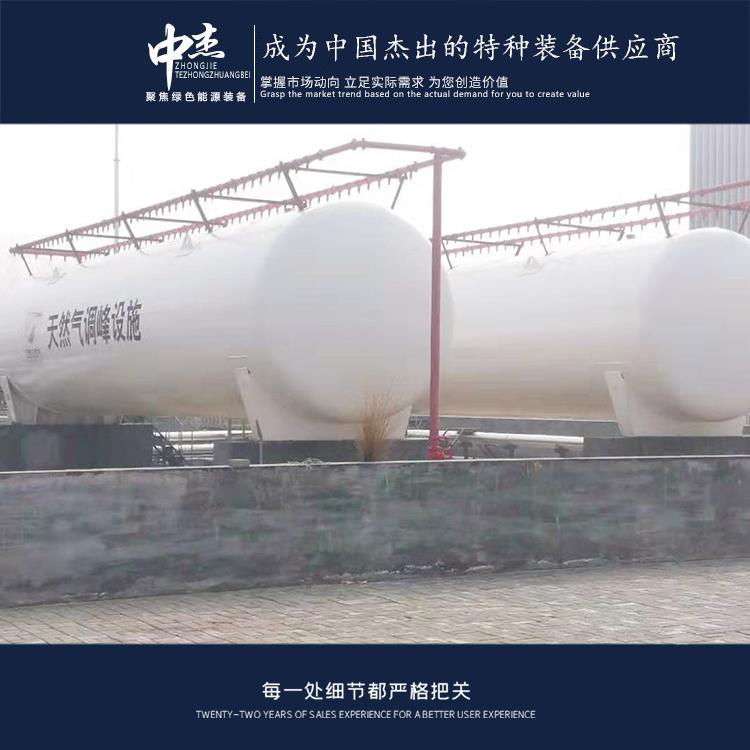



















Shandong Zhongjie Special Equipment Co., Ltd. (formerly Heze Boiler Factory Co., Ltd.) was established in 2001, located at No. 2218 Jinnan Road, Development Zone, Heze City, with a registered capital of 50 million yuan and total assets of 500 million yuan. The company has 7 business centers: boilers, deep-freeze containers, pressure vessels, central air conditioning, engineering installation, international trade, and the Internet of Things. It has three factory sites on Jinnan Road, East Changjiang Road, and Bohai Road, covering a total of 200,000 square meters, with the main workshop area at 83,000 square meters. It currently employs 710 people, including 247 engineers and technicians, and 82 intermediate-level technicians. In December 2016, it was recognized as a "High-Tech Enterprise" by the Science and Technology Department. In June 2021, it was identified as a "Specialized and New Enterprise in Shandong Province" by the Ministry of Industry and Information Technology. In June 2022, it was recognized as a "Deer Enterprise in Shandong Province" and in August 2022, as a "Specialized and New Small Giant Enterprise" by the Ministry of Industry and Information Technology.
Key measures to ensure the quality of CO2 storage tanks include the following aspects:
1. Selecting qualified suppliers: Choose suppliers with a good reputation and experience, ensuring that the tanks they provide meet relevant quality standards and specifications. This can be achieved by assessing the supplier's qualifications, referring to customer reviews, and conducting on-site inspections to select the appropriate supplier.
2. Strict quality control: Implement strict quality control measures during the manufacturing process of the tanks. This includes selecting and inspecting raw materials, controlling production processes, monitoring process parameters, product testing, and ensuring the tanks meet quality requirements.
3. Compliance with standards and regulations: The design, manufacturing, and installation of the tanks should comply with relevant standards and regulations, such as industry standards and specifications. These include the structural design of the tank, material selection, welding processes, corrosion prevention measures, safety valves, and configuration of pressure sensors.
4. Regular inspections and maintenance: Tanks require regular inspections and maintenance during use to ensure safety and reliability. This involves checking the tank's appearance, seals, valves, and pipeline connections, conducting regular pressure tests and leak detection, and addressing any abnormal situations promptly.
5. Establishing a quality management system: Establish a comprehensive quality management system, including quality control processes, documentation, quality training, and internal audits. By establishing a quality management system, tank quality control and continuous improvement can be ensured.
6. Third-party testing and certification: Delegate tank testing and certification to third-party organizations to verify quality and compliance. Third-party testing and certification agencies are typically independent and objective, providing unbiased assessment and certification results.
7. Through the implementation of these measures, the quality of CO2 storage tanks can be effectively ensured, enhancing their safety and reliability.
If a leak in the carbon dioxide storage tank is detected, the following procedures should be taken immediately:
1. Confirm the leak location: First, identify the exact location of the leak, which can be done by listening, observing, or using gas detection equipment.
2. Emergency response: If a leak is found, take immediate emergency measures to ensure personnel safety. Evacuate people to a safe area and notify relevant personnel and emergency agencies.
3. Cut off the gas supply: As soon as possible, disconnect the carbon dioxide supply source by closing relevant valves or cutting off power to stop the supply.
4. Locate the leak: In a safe environment, use gas detection equipment or inspect visually to find the leak. Apply soapy water or other leak detection agents to potential leak areas and observe for bubble formation.
5. Seal the leak: Once the leak location is identified, take temporary sealing measures, such as using tape, sealant, or other reliable sealing materials for temporary repairs. Ensure that the sealing measures are sturdy and reliable to effectively prevent gas leakage.
6. Maintenance and repair: Under safe conditions, conduct further maintenance and repair work. Depending on the specific situation of the leak, it may be necessary to replace gaskets, repair or replace valves, etc. Maintenance and repair work should be carried out by qualified personnel.
7. Inspection and testing: After maintenance and repair, conduct leak detection and testing to ensure that the leak has been completely repaired and the tank's safety performance has returned to normal.
Note that handling leaks in carbon dioxide storage tanks requires careful operation and adherence to relevant safety regulations and procedures. If you do not have the necessary knowledge and skills, contact a professional for assistance.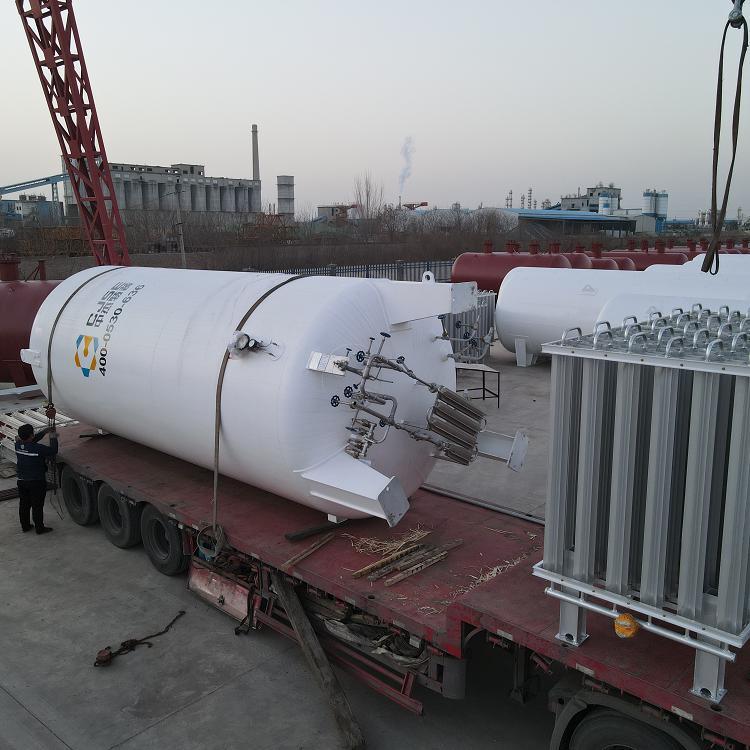
To maintain the stability of CO2 storage tanks, several details must be considered:
- Foundation Design: The tank's foundation must comply with relevant standards and regulations, possessing adequate strength and stability. The foundation should account for the tank's weight, pressure, and geological conditions to ensure the tank is securely placed on the base.
- Mats and Fastening Devices: Appropriate mats, such as rubber or steel mats, should be installed between the tank and foundation to reduce friction and vibration. Additionally, use fastening devices like bolts or welding to secure the tank to the foundation, preventing movement and tilting.
- Leveling the Site: The site where the tank is installed should be kept level with no significant incline or unevenness. If the site has an incline or unevenness, adjustments and corrections must be made to ensure tank stability.
- Seismic Measures: In regions prone to earthquakes, additional seismic measures are required, such as installing seismic supports and enhancing the tank's seismic resistance, to improve stability.
- Regular Inspections: Regularly inspect the tank's fastening devices and connection points to ensure they are intact. If loose, worn, or damaged conditions are found, repairs or replacements should be made promptly.
- Load Distribution: Uniformly distribute loads above the tank, such as platforms or pipelines, to balance the tank's weight distribution and reduce the impact of uneven loads on stability.
- Safety Distance: Tanks should maintain sufficient distance from other equipment, buildings, and fire sources to prevent accidental collisions or fires from affecting stability.
It is important to note that the installation of CO2 tanks...
The filling process for carbon dioxide storage tanks typically includes the following steps:
Preparation: Ensure the tank and filling equipment are in good working condition. Inspect the tank's appearance and valves for any damage or leaks. Check the filling equipment's connecting pipes and valves for loose or leaking connections.
Prepare liquid carbon dioxide: Extract liquid carbon dioxide from the supply source and transfer it to the tank of the filling equipment. Ensure the quality and purity of the liquid carbon dioxide meet the required standards.
Connect filling equipment: Attach the filling equipment's outlet pipes to the tank's inlet valve. Ensure the connections are secure and there are no leaks.
Open valves: Activate the corresponding valves on the filling equipment and the tank to allow liquid carbon dioxide to flow into the tank. Adjust the valves as needed to control the filling speed and pressure.
Monitor liquid level: Use a liquid level sensor or other level measuring equipment to monitor the liquid carbon dioxide level in the tank in real-time. Ensure the level is within a safe range and avoid overfilling.
Filling complete: Once the liquid level in the tank reaches the predetermined filling amount, close the corresponding valves on the filling equipment and the tank to stop the filling of liquid carbon dioxide.
Inspection and cleaning: Check the valves and pipe connections during the filling process for leaks. Clean up any remaining liquid carbon dioxide around the filling equipment and tank.
Documentation and reporting: Record relevant information about the filling process, including the filling date, amount, and level monitoring results. Submit filling reports to relevant departments or management as needed.
The above is a general carbon dioxide storage tank filling process. Specific operations should be tailored to the tank's characteristics and requirements. When performing filling operations, follow relevant safety operating procedures and have trained professionals oversee the process.
Our company attaches great importance to technological innovation and R&D, boasting 1 city-level enterprise technology center in Heze City. We have established testing facilities for non-destructive testing,理化analysis, welding tests, hydrostatic testing, and more, equipped with over 600 instruments and equipment such as CNC machines, X-ray flaw detectors, digital ultrasonic flaw detectors, mechanical property testing machines, chemical analyzers, spectrometers, tensile testing machines, and plasma welding machines. The key products and technologies we have developed, including temperature-pressure vessel welding, biomass boiler emissions reduction, and waste heat utilization, have successively been selected for multiple Shandong Province Industrial and Information Technology Department science and technology innovation projects, key provincial projects, and Heze City innovation and excellence projects. We have accumulated 27 authorized utility models, 16 authorized inventions, participated in drafting 2 standards, 2 industry standards, and registered 15 trademarks. The technical team, in collaboration with Professor Yajiang Li from Shandong University, has jointly developed deep-chill vessel processing technology, utilizing the international plasma arc + filler wire argon arc welding (PAW-GTAW) technology, which has been appraised as reaching an international level in the field of deep-chill vessel manufacturing. Choose Zhongjietech, let's create brilliance together!
WeChat Official Account

Scan to follow Official Account




















