
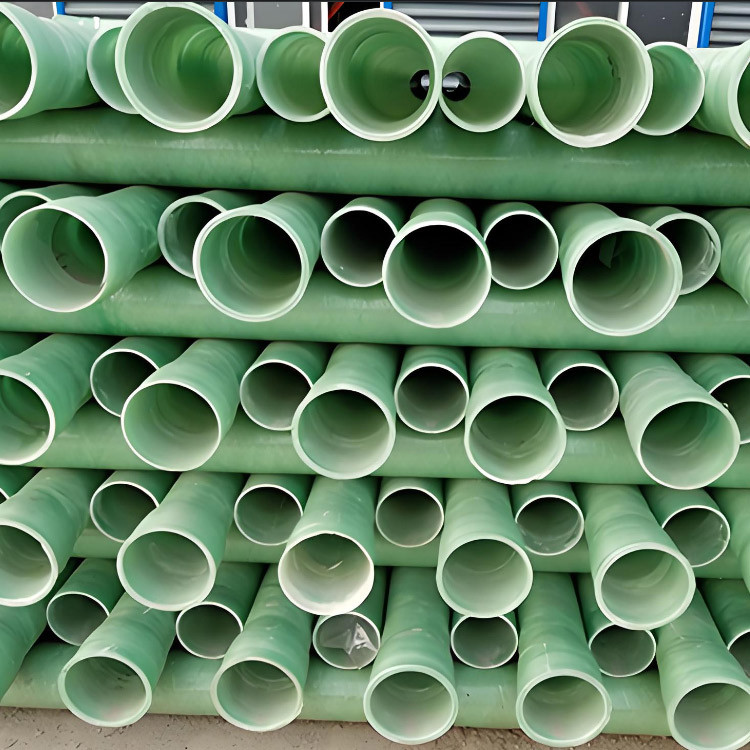









Cable protection pipes are a type of pipeline made by using unsaturated polyester resin as the matrix, with continuous glass fiber and its fabrics as reinforcing materials. They are formed through computer-controlled winding or pultrusion processes. They are highly utilized in cable laying due to their obvious advantages, such as high strength, corrosion resistance, and smooth inner walls that do not scratch cables. Common sizes: DN50-300mm, single length: 6 meters per piece.
I. Product Features:
1. High strength, suitable for direct burial under the traffic lane without the need for a concrete protective layer, which can accelerate the progress of construction work.
2. Excellent resilience, capable of withstanding external heavy pressure and foundation settlement-induced damage.
3. Excellent electrical insulation, flame-retardant, and heat-resistant properties; can be used at a high temperature of 130 degrees Celsius for a long period without deformation.
4. Corrosion-resistant with a long service life, it can withstand the erosion of various corrosive media such as acids, alkalis, salts, and organic solvents, with a service life up to 50 years.
5. Interior surface is smooth, without scratching the cables. Rubber sealing ring for plug-in joints for easy installation and connection, and accommodates thermal expansion and contraction.
6. Lightweight and easy to carry by one person, installation can be done by two, significantly reducing construction time and costs. It also avoids the prolonged exposure of road digging, minimizing disruptions to urban traffic flow.
7. Non-electrolytic corrosion, non-magnetic. Unlike steel pipes and other magnetic materials, it does not generate eddy currents that promote cable heating and damage.
II. Structural Features:
(1) Excellent corrosion resistance; no need for cathodic protection or other corrosion prevention measures; does not cause secondary pollution to water and other media. Long service life of the product.
(2) Lightweight, the pipe's weight is only 1/4 of the same size and length Ductile Iron Pipe, and 1/10 of the Cement Pipe. Easy for transportation, handling, and installation.
(3) Long pipe length per piece reduces pipeline joints, speeds up installation, and improves the overall quality of the pipeline.
(4) The inner wall of the pipe is smooth, reducing flow resistance, improving flow velocity, and lowering energy consumption. Using pipes with a smaller diameter to convey the same volume of fluid can increase flow by approximately 10% compared to pipes of the same specification; it does not scale and maintains flow velocity over long-term use. Provides good protection for cables in corrosive environments.