









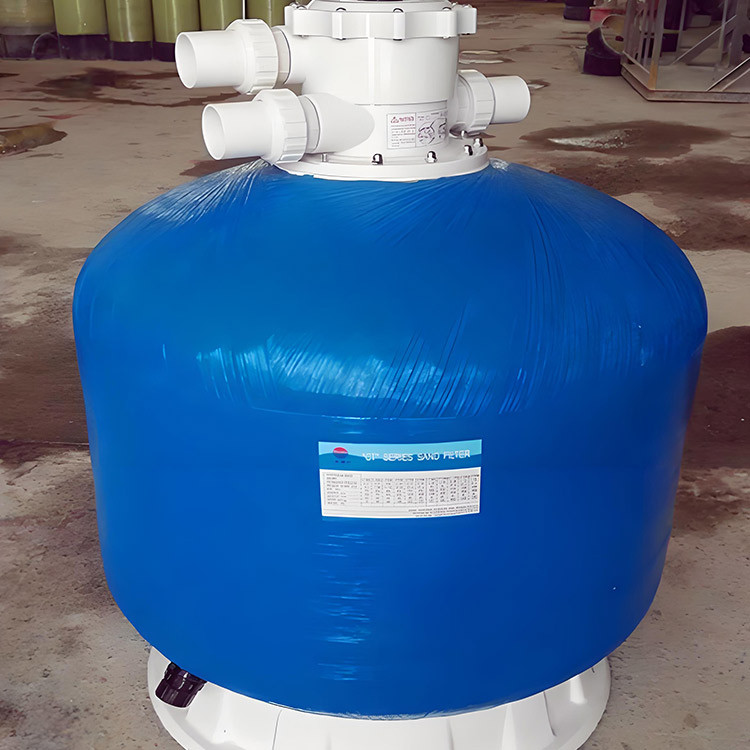
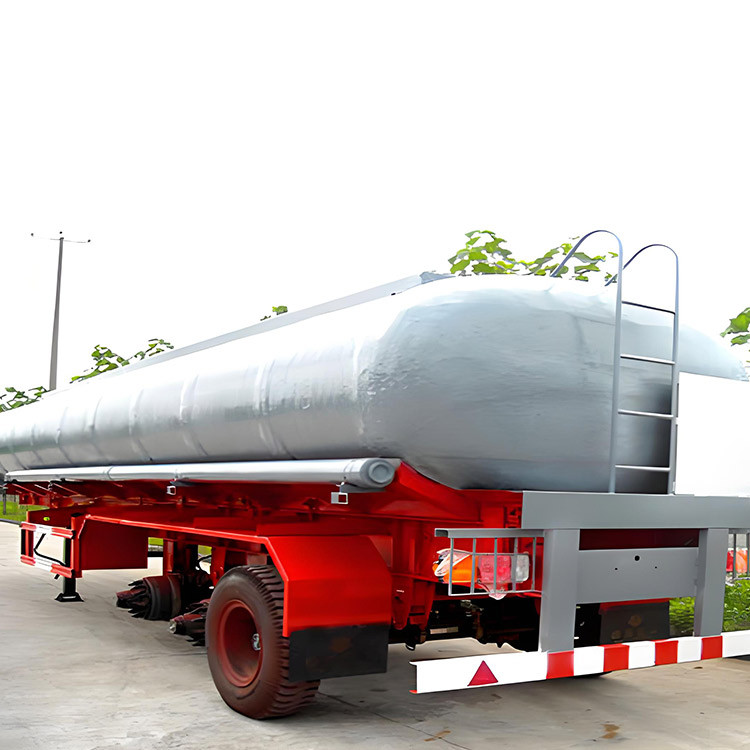
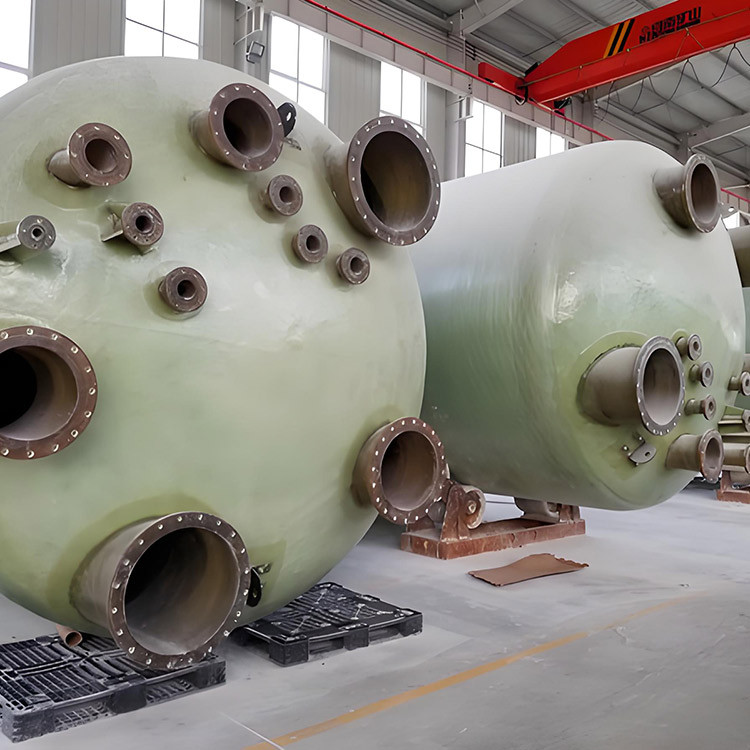
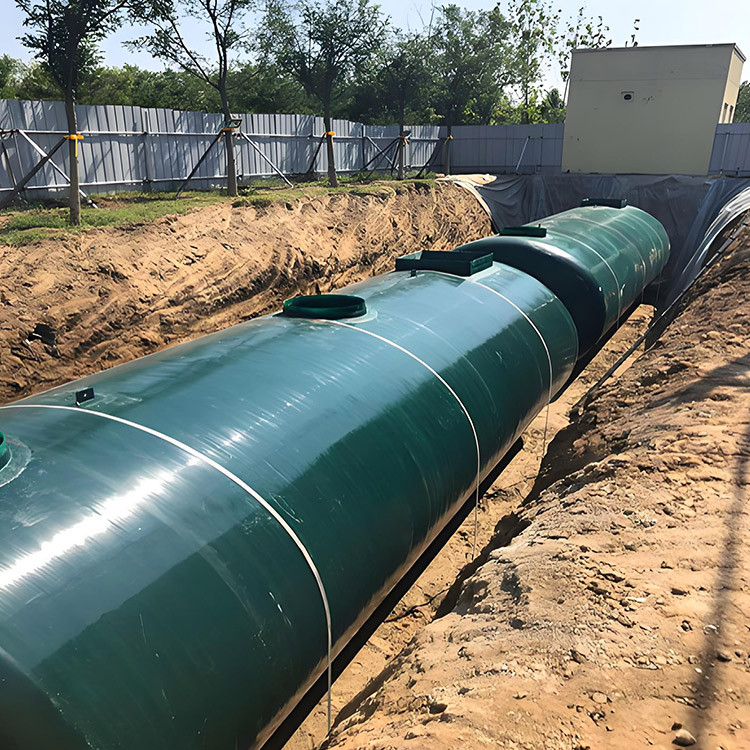
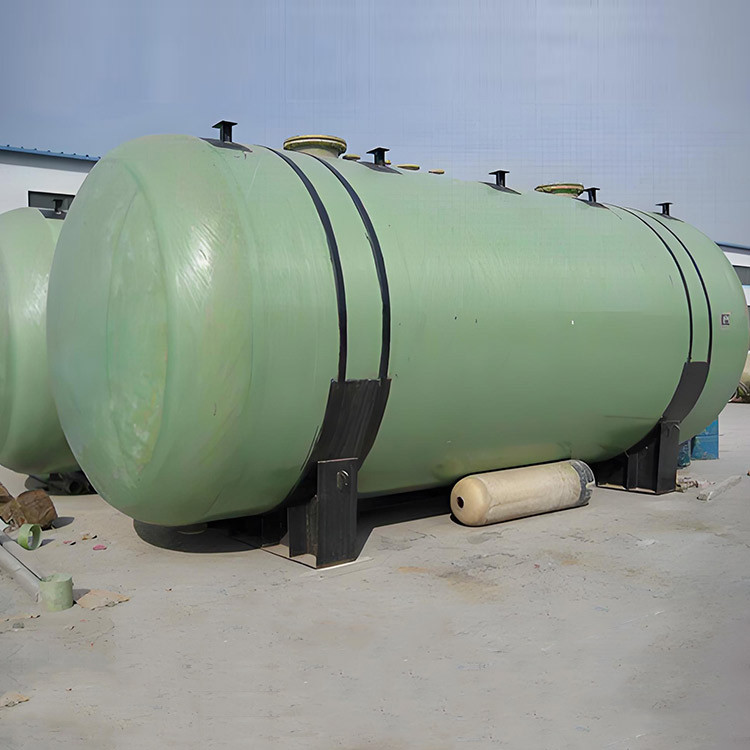


I. Product Introduction:
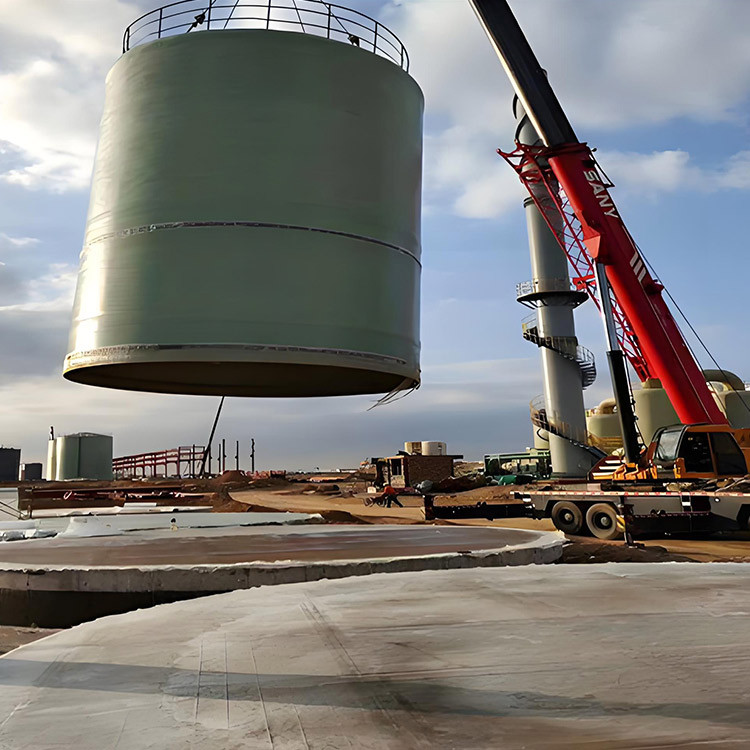
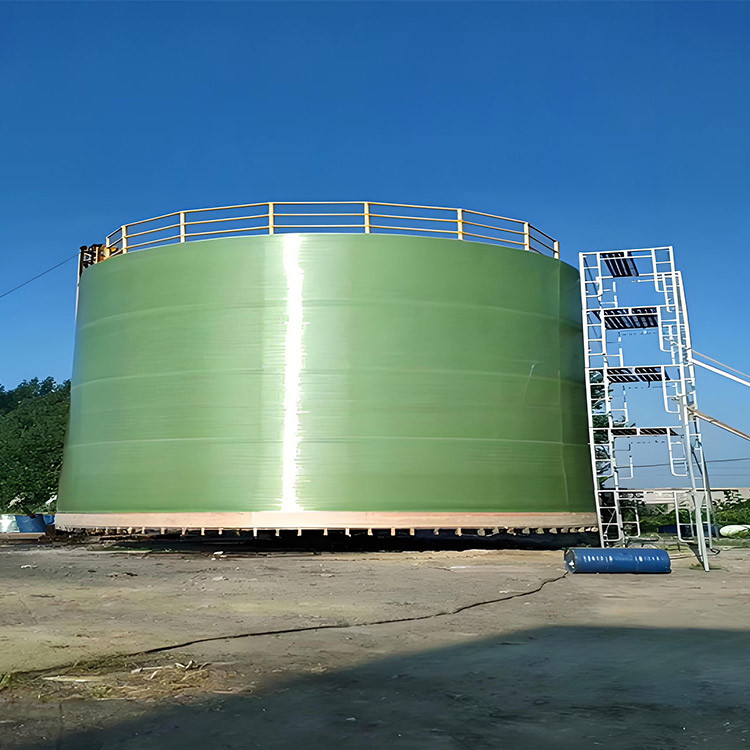
1. Field-Wound Vertical FRP Storage Tanks: Due to the height and width limitations of logistics transportation, many large vertical FRP storage tanks cannot be transported. Therefore, our company has invested two years and a significant amount of resources in developing and researching equipment that can fabricate FRP containers on-site at the customer's location. This equipment is easy to install and transport, time-saving, labor-saving, and highly efficient, thereby saving costs for our clients.
2. Excellent Physical Properties of Glass-Fiber Reinforced Plastic (FRP) Vertical Storage Tanks: The specific gravity of FRP is typically 1.8-2.1, which is 1/4 to 1/5 of steel, and its specific strength is higher than that of steel, cast iron, and plastics. The thermal coefficient of FRP is roughly equivalent to that of steel, with a thermal conductivity coefficient of only 0.5% of steel's. FRP storage tanks are resistant to chemical corrosion and have a long service life: FRP possesses unique corrosion resistance, demonstrating superior properties compared to other materials when storing corrosive media, and can withstand various acids, alkalis, salts, sulfur, nitrates, chlorine, and more.
Product.
3. Fiberglass storage tanks offer high design flexibility and excellent wall structure performance: The fiber-wound fiberglass can alter the resin or reinforcing materials to rapidly adjust the physical and chemical properties of high-speed fiberglass storage tanks and non-standard equipment to meet the requirements of different media and working conditions. By adjusting the thickness of structural layers, winding angles, and wall thickness structures, the load-bearing capacity of the tank can be achieved, creating fiberglass storage tanks and non-standard equipment with various pressure ratings or specific performance characteristics. This is unmatched by anisotropic metal materials.
4. Field-wound fiberglass storage tanks offer flexible dimensions, which can be customized to meet customer requirements. The diameter can be as large as 15 meters, with a height of up to 18 meters.
II. Common Safety Tips for Glass-Fiber Storage Tanks
1. Glass fiber storage tanks must not be loaded arbitrarily on top. Constant pressure storage tanks are strictly prohibited from being used under vacuum!
2. No loads should be applied upon take-over, and effective anti-vibration measures must be installed for takeovers with vibration sources.
Keep away from fire and heat sources.
4. Fiberglass storage tanks (fiberglass containers, fiberglass towers) cannot exceed the designed pressure values. Unless specially designed, the vibration sources (pumps, reciprocating devices) and cold/hot pipes should be isolated and supported from the tank body.
5. Atmospheric pressure fiberglass storage tanks refer to static hydraulic tanks connected to the atmosphere, particularly vertical flat-bottomed tanks. It is essential to ensure that the tank is well-ventilated with the atmosphere to prevent pressure build-up (positive or negative) due to emptying, feeding, or temperature changes.
6. The glass steel storage tank is limited to use under the design premise and the medium (including medium concentration), temperature, and operating pressure cannot be arbitrarily changed.