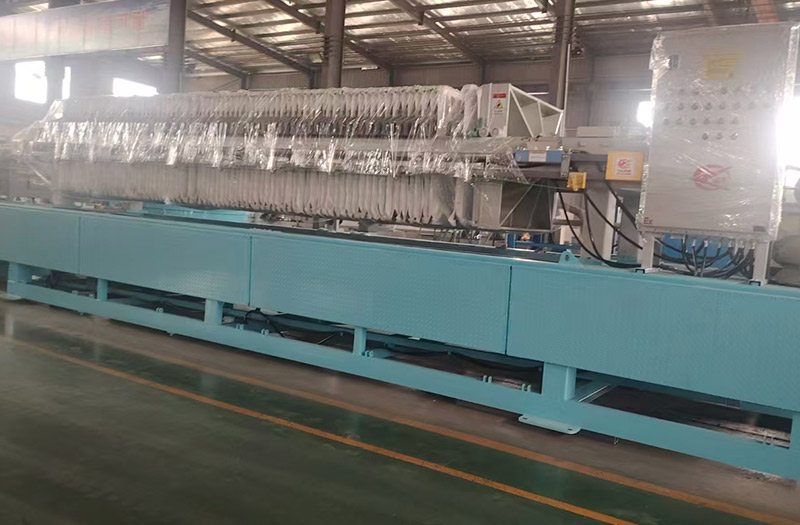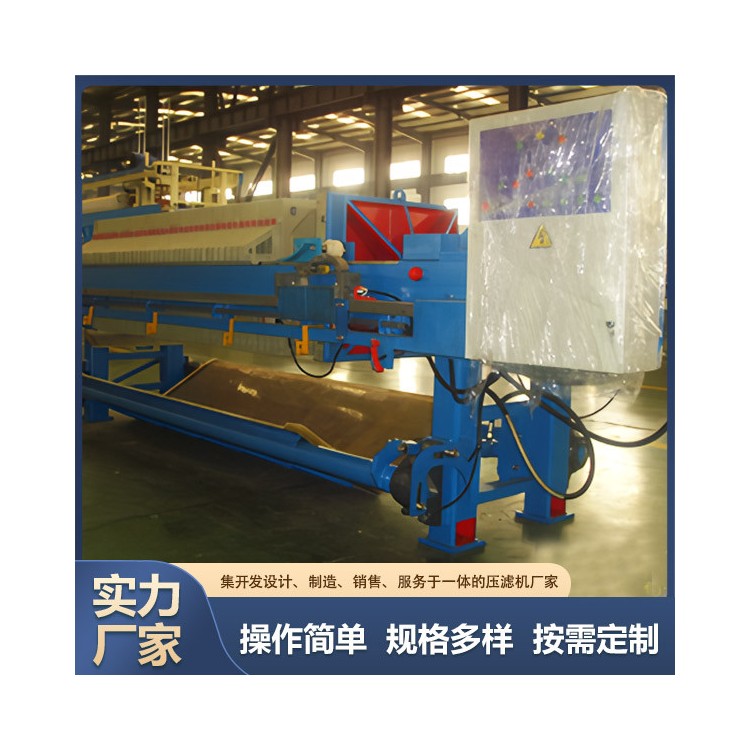














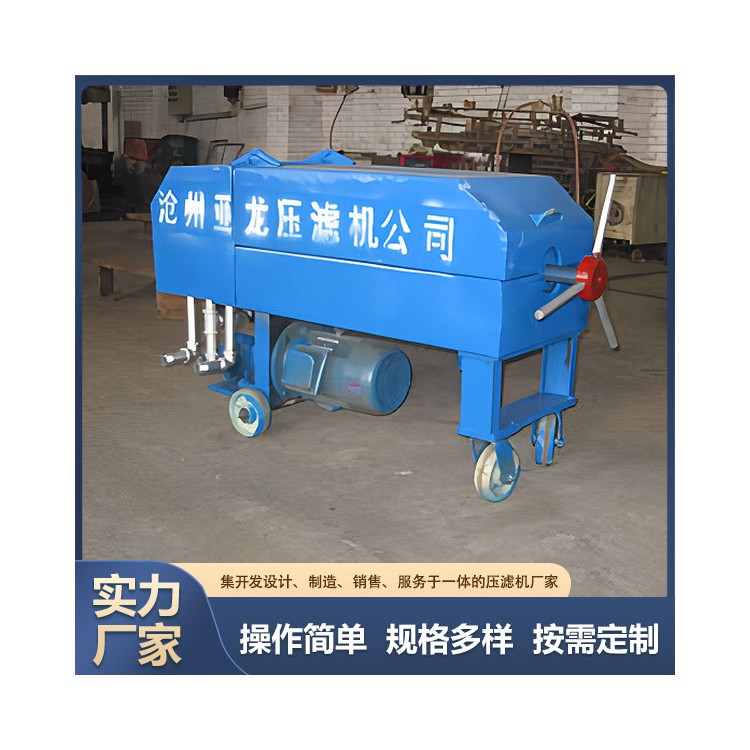
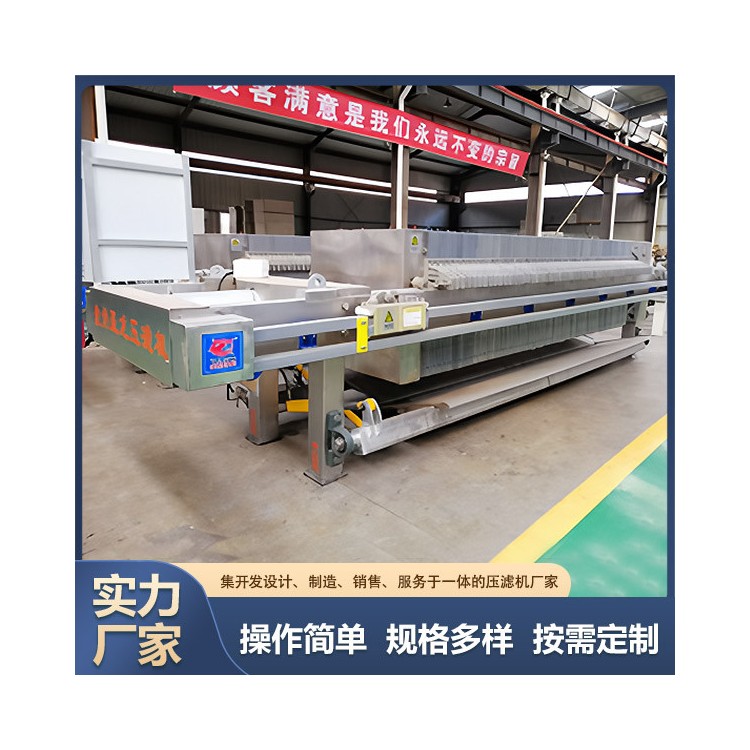
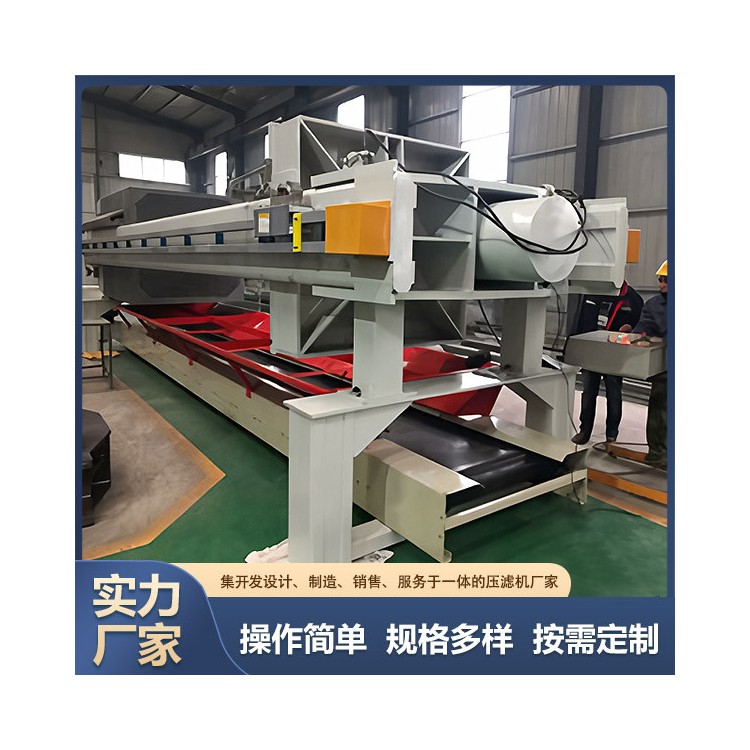
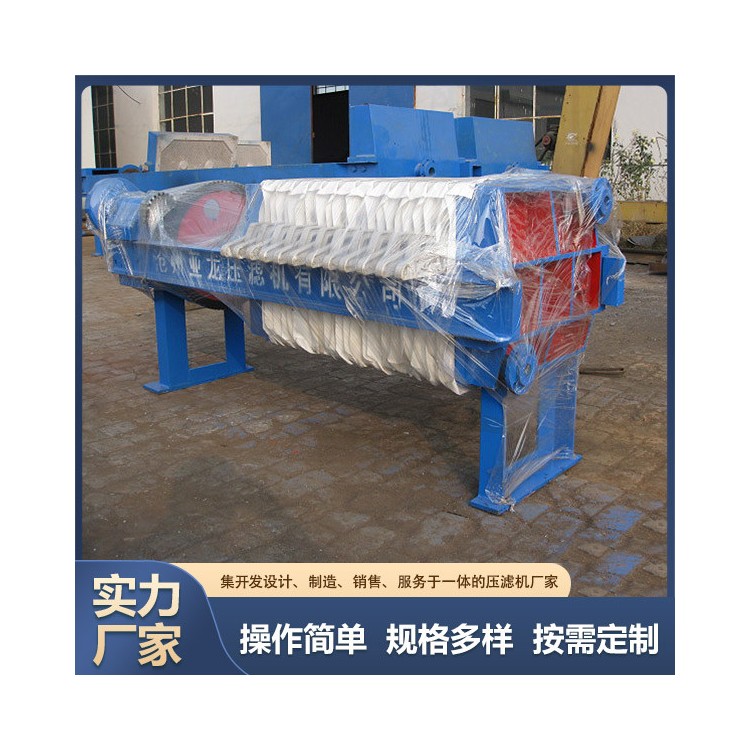
Diaphragm pressure filter, a press filter with an elastic membrane added between the filter plates and filter cloth. During operation, upon completion of the feed, a high-pressure fluid or gas medium can be injected into the diaphragm plate. At this point, the entire diaphragm will bulge and compress the filter cake, thereby achieving further dewatering of the filter cake—the process commonly referred to as squeezing filtration.
Membrane pressure filter machines are known for their high pressing pressure, excellent performance, easy maintenance, and safety, making them a preferred choice for clients in industries such as metallurgy, coal gasification, papermaking, coking, food, brewing, and fine chemicals.
Diaphragm press filters have been widely used in various fields requiring solid-liquid separation. Diaphragm press filters are considered as the alternative and upgraded equipment for the traditional box press filters. They exhibit superior performance in terms of processing capacity per unit area, reducing the moisture content of the filter cake, and adapting to the properties of the material being processed.
Diaphragm pressure filters differ from standard box type pressure filters mainly by adding two elastic membranes (composite rubber diaphragms as a whole) on both sides of the filter plates. During operation, upon completion of the feed, high-pressure fluid medium can be injected into the diaphragm plate, causing the entire diaphragm to bulge and press the filter cake, thereby achieving further dewatering of the filter cake—this is the squeezing filtration process.
Diaphragm pressure filters are used for sludge and wastewater treatment. The moisture content of the filter cake has been reduced to below 30%, and compared to traditional box pressure filters, the solid content of the filter cake can be increased by more than twice, significantly lowering the transportation costs of the filter cake. The filter cake can be directly burned in power plants, truly transforming sludge into a resource and wastewater into clear springs, replacing the box pressure filter.
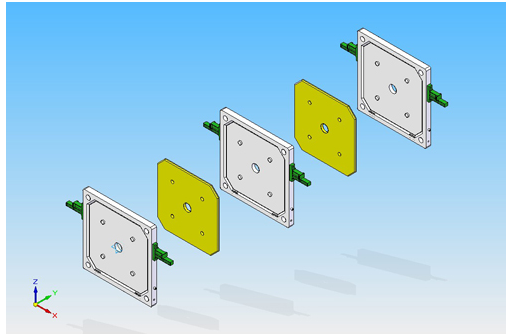
Diaphragm Classification
For different diaphragm materials, the new generation membrane press filter can be categorized into rubber diaphragm type and high polymer elastomer diaphragm type.
The rubber diaphragm filter press is ideal for filtering materials that are weakly acidic, weakly alkaline, and not organic solvents. The rubber diaphragm filter press improves upon the past's缺点 of energy consumption after feeding in a separate fixed design, with the new design ensuring that the rubber diaphragm is_ adequately inflated, and the pressure and gas volume used are_
Automatic Diaphragm Press Filter - Reinforced PP Type, smaller in size, and with the same air source gas volume, the rubber diaphragm membrane drum is three times that of the polymer diaphragm membrane drum, which can significantly reduce energy consumption.
High molecular weight elastomeric diaphragm filter presses are used for materials with strong acids, bases, and organic solvents, offering relatively ideal performance and long service life. Their pressing forms include gas (air) pressing and liquid (water) pressing, catering to the needs of various industries. The pressing components can be configured in standard and ordinary grades based on customer requirements, with control systems utilizing PLC and human-machine interfaces. For general materials, the diaphragm drumming can exert pressing and dewatering effects 3-15 minutes after the diaphragm drumming process. For some special materials, a two-stage pressing method of low-pressure pressing followed by high-pressure pressing can also be employed.
Diaphragm filter presses achieve a dehydration filtration process and enhance the filtration efficiency of the press, significantly reducing the moisture content of the filter cake. After the feeding process is completed, the overall dehydration efficiency of the machine is improved by squeezing the filter cake, increasing the dryness of the filter cake, reducing pollution, and minimizing labor, even eliminating the drying process in some processes.