





I. Product Introduction
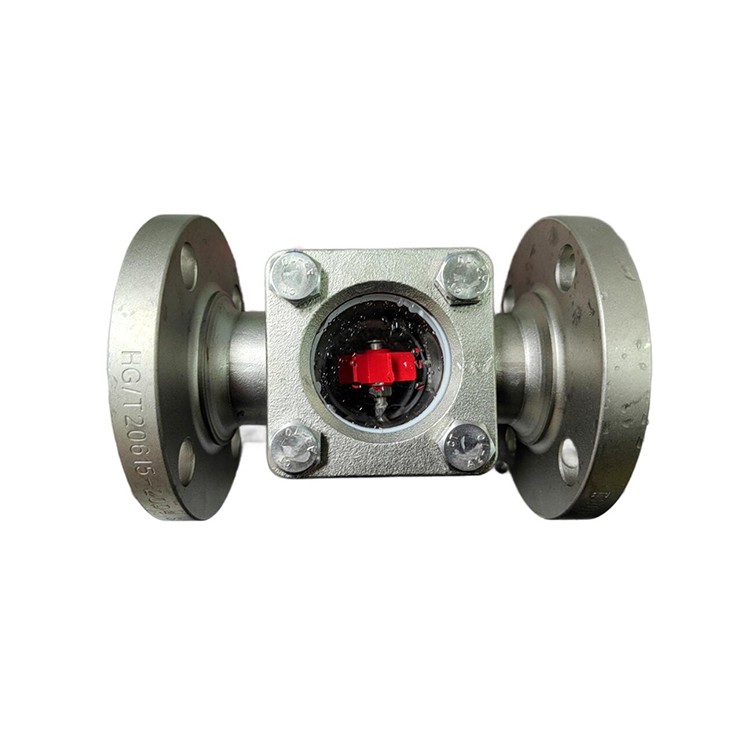
A static mixer is a blending device without moving parts. Besides being widely used in the oil refining and chemical industries, it is also extensively applied in food, metallurgy, plastic extrusion, and environmental protection sectors. Compared to traditional mixing equipment such as agitators, colloid mills, homogenizers, and Venturi tubes, it offers advantages like simple process, compact structure, low energy consumption, minimal investment, high operational flexibility, no need for maintenance, and excellent mixing performance. It can replace conventional equipment in processes involving liquid-liquid, liquid-gas, liquid-solid, gas-gas mixing, emulsification, neutralization, absorption, extraction, reactions, and enhanced heat transfer.
Static mixers are designed, manufactured, and accepted according to the industry standard JB/T7660-2016 "Static Mixers".
II. Product Categories and Detailed Descriptions
SV Type Static Mixer

The SV type static mixer unit is a cylinder assembled from specified corrugated plates, technical features: ***The degree of dispersion is 1-2μm, and the non-uniformity coefficient of liquid-liquid phase and gas-gas phase is ≤1-5%.
Suitable for liquid-liquid, liquid-gas, and gas-gas mixtures with emulsification, reactions, absorption, extraction, and enhanced heat transfer processes, with a viscosity of ≤102 centipoise. dh≤3.5 is applicable to clean media with a viscosity of ≤102 centipoise; dn≥5 for media with a small amount of non-adhesive impurities.
Typical Applications: Gasoline, diesel, fuel blending, saltwater neutralization, acid-base neutralization, gas mixing.
2. SK Type Static Mixer

The SK type static mixer unit is welded from a single-channel twisted helical blade with left and right twists. Its technical performance includes: ***dispersion ≤ 10um, coefficient of non-uniformity for liquid-liquid, liquid-solid phase ≤ 5%.
Mixing, reaction, extraction, absorption, injection molding, color matching, and heat transfer processes applicable to departments such as chemicals, petroleum, food, precision processing, plastics, environmental protection, synthetic fibers, and metallurgy. Suitable for high viscosity media with smaller flow rates and containing impurities or viscosity ≤ 106 centipoise.
3. SX Type Static Mixer

The SX static mixer unit is composed of many X-shaped units formed by intersecting strips in a certain pattern. Technical characteristics: the degree of mixing unevenness is sX ≤ 1~5%.
Ideal for medium to high viscosity liquids with a viscosity of ≤104 centipoise, suitable for liquid-liquid reactions, mixing, absorption processes, or mixing and reaction processes for high polymer fluids. Performance is enhanced with larger processing volumes.
Typical Applications: High polymer blending, light paraffin naphthenic dewaxing oil, pulp chlorination bleaching, crude oil alkalinization process.
4. SL Type Static Mixer

The SL type static mixer unit is composed of single X-shaped units arranged in a regular pattern by intersecting strips, featuring technical characteristics of liquid-liquid and liquid-solid phase mixing with a non-uniformity coefficient ≤5%.
Heat exchangers suitable for industries such as chemicals, oil, and fats, for mixtures with viscosity ≤ 106 centipoise or accompanied by high polymer media, which also perform heat transfer, mixing, and heat transfer reactions; as well as unit operations for heating or cooling viscous products.
5. SH Type Static Mixer

The SH type static mixer unit consists of dual channels, with spiral blades placed inside the channels. Adjacent unit dual channels are offset by 90°, and fluid redistribution chambers are provided between units. Technical specifications include: ***The degree of dispersion is 1-2mm, and the unevenness of liquid-liquid phase is 1-5%.
Ideal for blending, emulsifying, coloring, injection molding spinning, and heat transfer processes in sectors such as precision processing, plastics, synthetic fibers, and metallurgy. Particularly suitable for clean mediums with low flow rates and high mixing requirements, featuring medium to high viscosity (≤106 centipoise).
II. Cautionary Notes
1. Engineering designs typically use a single or series static mixer to achieve mixing. When operating two static mixers in parallel, the piping design should ensure even fluid distribution.
2. When using the small-scale SV type, if the medium contains impurities, two parallel switching filters should be set before the mixer. The filter mesh specifications are generally 40-20 mesh stainless steel filters.
3. Avoid installing flow, temperature, and pressure indicators and detection points on static mixers as much as possible. If special requirements are needed, please provide a drawing with the order.
4. Please specify when ordering if heat exchange jacket tubes need to be set on the mixer housing.
5. For SH type static mixers, due to their high processing accuracy and difficulty in maintenance, the medium used must be clean or capable of being inverted to clean with solvent, or the medium must be able to melt at high temperatures.
6. In the case of SV type static mixers, if blockage occurs due to impure fluid, the equipment can be disassembled and cleaned with water (steam) or solvent by inverting, or the unit can be removed to extract the obstruction.
7. For the non-fixed units of the SK type static mixer, the entire unit can be removed for cleaning, but avoid striking it when pulling out to prevent deformation.
8. Generally speaking, as long as the specifications, models, and materials of the products are correctly selected to meet different usage requirements, our statically mixed reactors are designed to be maintenance-free.