
















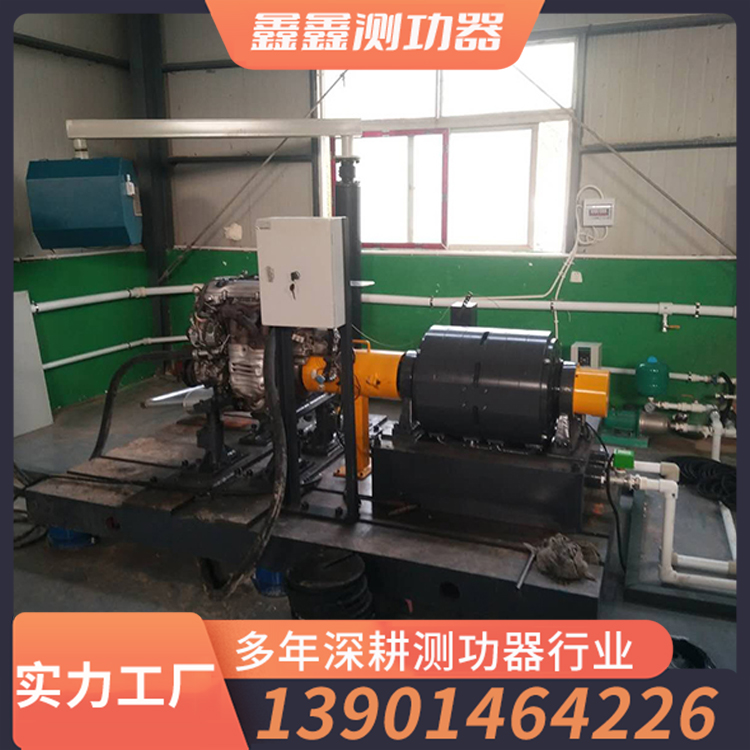
Power Dynamometer Introduction:
The dynamometer is primarily used for load testing of power mechanical equipment and transmission mechanisms. Traditional dynamometers provide load for power mechanical testing through methods like electromagnetic or water vortex braking. In contrast, electric dynamometers use motors operating in the generator mode as the load. Additionally, the load size is adjusted by regulating the motor's torque with a vector-controlled variable-frequency inverter. Due to the motor's long-term operation in the generator mode, an energy feedback device is typically included in the variable-frequency drive system to return the energy generated during testing to the power grid. To ensure the quality of the returned grid power (low harmonic content, high power factor), the energy feedback device is a PWM rectifier, also known as an Active Front End (AFE).
Compared to traditional methods, the dynamometer is highly energy-efficient, structurally simple, easy to control, and quick to respond. Thanks to its ability to start from 0 RPM and reach full load, it is suitable for testing loading purposes on motors, gearboxes, and more.


















