





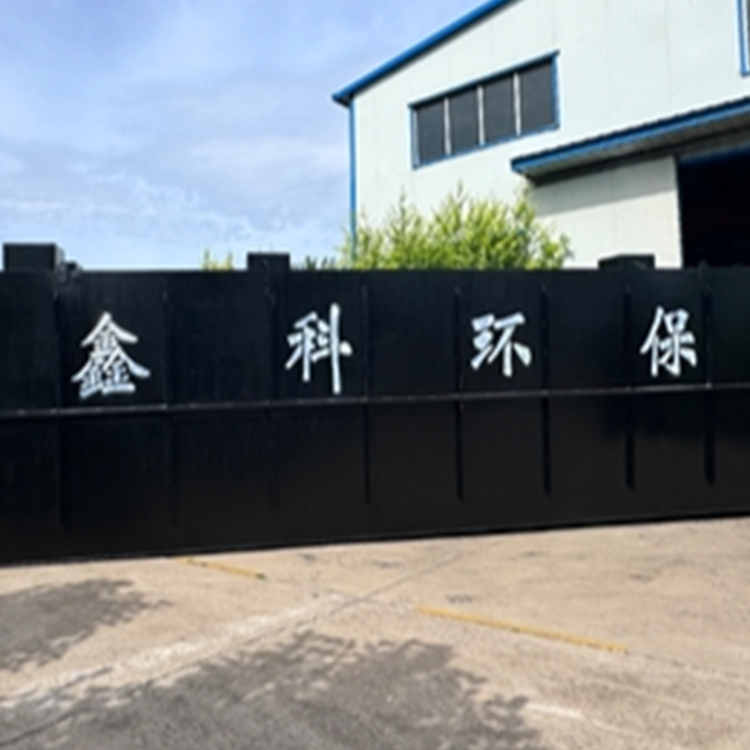


Wastewater treatment equipment utilizes advanced domestic and international technology for manufacturing, primarily using glass fiber reinforced plastic, Q235 steel plate lined with rubber for corrosion resistance, and stainless steel. This equipment is mainly used for treating and recycling organic wastewater from small and medium-scale sources such as hospitals, residential areas, office buildings, schools, highway service areas, tourist attractions, as well as similar facilities for breeding, slaughtering, and food processing. Our wastewater treatment equipment employs advanced biological treatment technology, which combines the removal of BOD5, COD, and NH3-N, and boasts stable and reliable technical performance, excellent treatment results, cost-effectiveness, minimal land use, and convenient maintenance.
Our company can tailor-made equipment based on the customer's on-site conditions and the emission standards required by the local environmental protection department.
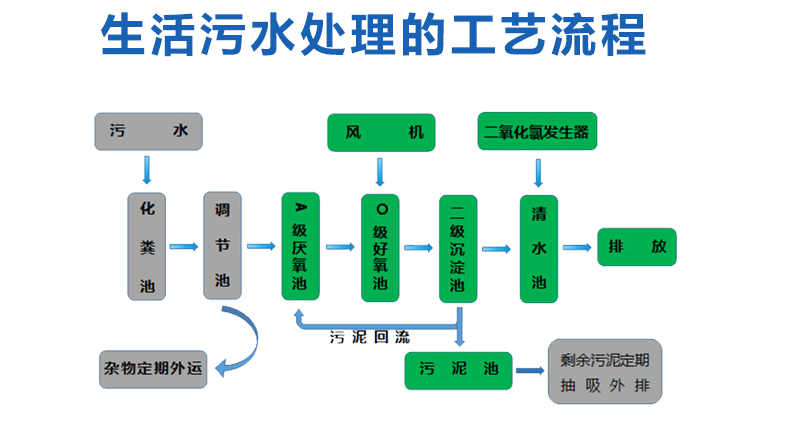
I. Equipment Structure:
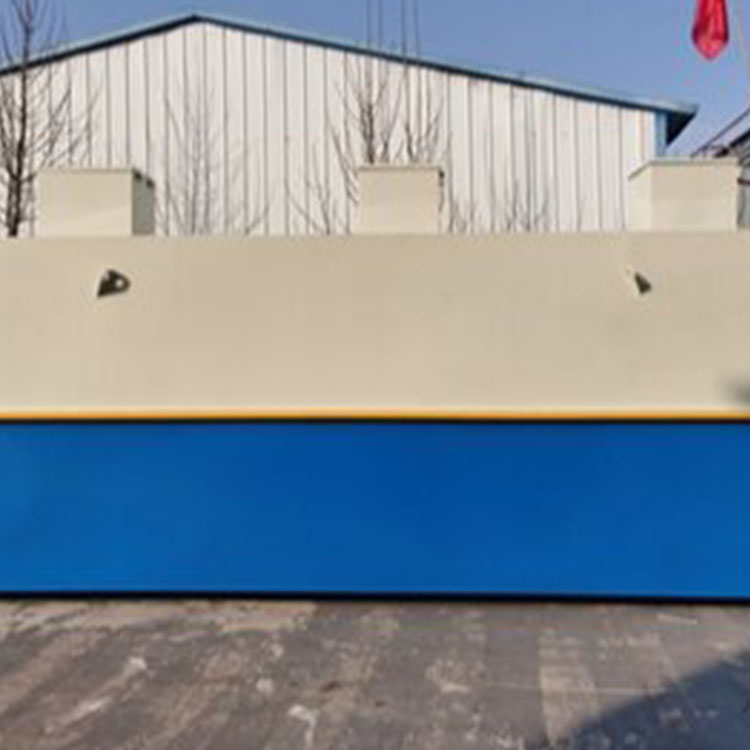
WSZ-AO Sewage Treatment Equipment is a compact, space-saving unit that integrates biological degradation, sedimentation, oxidation, and disinfection processes for treating domestic and similar wastewater. It operates economically, has strong shock load concentration resistance, and offers high treatment efficiency. The equipment primarily employs the mature A/O biochemical treatment process and consists of anoxic pond, contact oxidation pond, secondary sedimentation tank, clear water tank, sludge tank, and a fan room.
II. Equipment Features:
1. The WSZ series of domestic wastewater treatment equipment is buried below the ground surface. The ground above the equipment can be used for landscaping or other purposes without the need for construction or heating/insulation. Treatment units with a capacity below 30t/h are typically made of A3 steel plate and are coated for corrosion resistance; for units above 50t/h, reinforced concrete is generally used, also coated for corrosion resistance.
2. The three-stage biological contact oxidation process employs plug flow biological contact oxidation, which offers superior treatment efficiency compared to complete mix or two-stage series complete mix biological contact oxidation ponds. It also requires less volume than an activated sludge pond, has strong adaptability to water quality, excellent shock load resistance, and stable effluent water quality without sludge bulking. The pond utilizes new elastic three-dimensional packing material, which has a larger specific surface area, facilitating easy microbial attachment and detachment. Under the same organic load, it achieves a high removal rate of organic matter and enhances the solubility of oxygen in water.
3. The reaction pond employs the biological contact oxidation method, with a low volume load of its fillers. Microorganisms are in their own oxidation phase, resulting in minimal sludge production. Sludge is only required to be discharged once every three months (90 days) or more, either by pumping with a manure truck or dewatering into sludge bricks for external transport.
4. The equipment utilizes a blower with not only conventional noise reduction measures (such as vibration isolators, mufflers, etc.) but also a noise-reduction device at the entrance of the blower room, ensuring the noise level during operation is less than 50 dB(A), in compliance with quiet community requirements and having minimal impact on the surrounding environment.
5. The odor control method for this underground residential wastewater treatment equipment includes conventional high-air exhaust, along with soil deodorization measures.
6. The entire equipment processing system is equipped with an automatic electrical control system and a device fault alarm system, ensuring safe and reliable operation. Generally, no dedicated personnel management is required, only timely maintenance and care for the equipment.