


















I. Applicable Scope
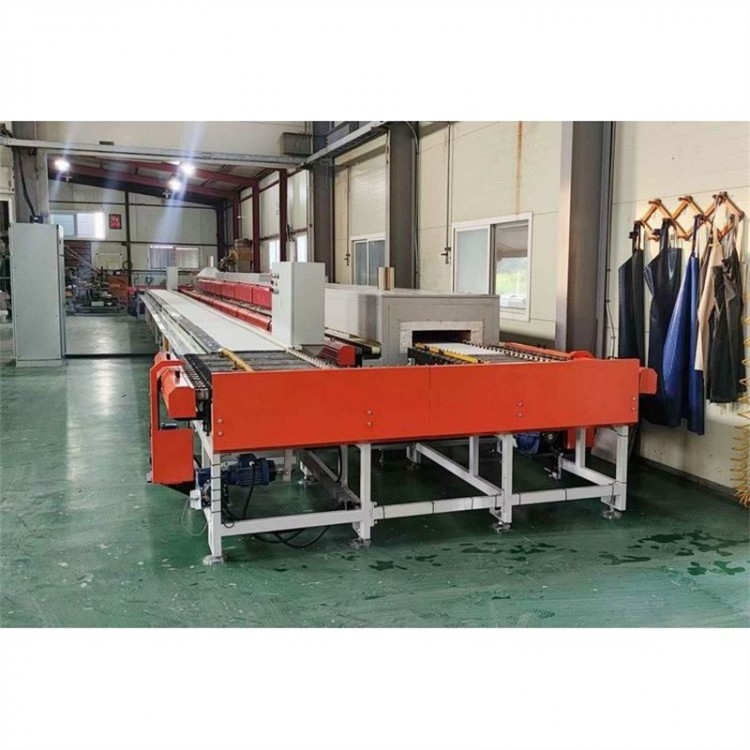
A continuous high-temperature roller hearth furnace is a highly efficient kiln type with high output and low energy consumption, originally used in the construction ceramic, sanitary ceramic, and tableware industries. Due to its many advantages and advancements in roller rod materials, such as the emergence of recrystallized silicon carbide roller rods, it has begun to be used in industries like lithium battery materials, rare earth, magnetic materials, electronic powders, and electrical porcelain components over the past two years. The introduction of the recrystallized silicon carbide roller rods enables the furnace temperature to reach up to 1200°C. In terms of high output and investment requirements, roller hearth kilns are the preferred choice. Roller hearth kilns are suitable for mass production of products such as advanced ceramic materials, electronic components, powder metallurgy, ultra-pure alumina powders, catalysts, magnetic materials, rare earth oxides, alumina, zirconia, catalysts, lithium cobaltate, lithium manganate, lithium-ion ternary materials, cobalt oxide, pearlescent powders, ultra-pure powders, magnetic materials, oil catalysts, glass crystallization, lithium battery materials, sodium battery materials, chemical powder, ceramic substrates, magnetic material raw materials, rare earths, electronic powders, electrical porcelain components, and more, for large-scale drying and firing operations below 1200°C.
II. Technical Specifications
1. Furnace length can be customized according to the customer's production capacity.
2. Heating options: Resistance wire or Silicon carbide rod
3. Temperature range: 200-1300°C, with a wide adjustable range.
Section 3: Furnace Features
1. Air environment, or nitrogen environment
2. The furnace chamber is made of new materials, ensuring no pollution.
3. Utilizing new refractory materials, which saves 30% more energy than traditional ones.
4. Filling Method: Materials are loaded into pots, then the pots are placed on roller bars for conveyance. The pots are arranged in double rows and layers inside the kiln.
5. Kiln Atmosphere: Air. During the firing process, the material will produce a small amount of waste gases such as steam.
6. Atmosphere Control: Install exhaust pipes in the preheating and firing sections to facilitate the rapid expulsion of various exhaust gases within the kiln.
IV. Main Technical Parameters and Requirements
4.1 Rated Temperature: 200-1300°C. Standard Temperature: 1200°C (adjustable).
4.2 Rated Power: Varies according to furnace chamber size and temperature.
4.3 Insulation Power: Insulation power is related to feeding speed and exhaust volume at the furnace top.
4.4 Power Supply: 3φ-380V
4.5 Number of heating zones: varies with the furnace chamber length
4.6 Temperature Control Points: Twice the number in the heating zone
4.7 Heating Method: Top and bottom heating, separate temperature control for the upper and lower constant-temperature zones
4.8 Heating Element: High-temperature Resistance Wire or Silicon Carbide Rod
4.9 Temperature Control Accuracy: ≤±1°C
4.10 Sectional Temperature Difference (Constant Temperature Section): ≤ ±5°C
4.11 Bowl Size (L×W×H): 300×300×90mm (to be provided by the buyer, customizable dimensions available)
4.12. Kiln Shell External Dimensions (approx. L×W×H): Varies by Furnace Chamber Size
4.13 Transmission Speed: 800-4500mm/h: Standard Speed: 2000mm/h (adjustable)
4.14 Speed Control Method: Variable Frequency Speed Control
4.15 Reference Furnace Dimensions (L×W×H) - Customizable to Requirement
Section 5: Roller Kiln Control System
Temperature control utilizes PID automatic control. Features include automatic heating adjustment, PID self-tuning, and zero-crossing triggering. The actuator is a bi-directional thyristor, which boasts advantages such as no mechanical contacts, no noise, long lifespan, and no interference with the power grid. Operation
Concentrated, intuitive observation.
The control panel features an intuitive visual structure, with each temperature control zone equipped with a corresponding alarm device, including over-temperature alarms for each zone. Additionally, each zone is fitted with an independent air switch for easy operation and maintenance.
Thermocouple temperature sensors use an insertion type thermocouple and are equipped with a thermocouple insertion hole. When not in use, they should be tightly sealed with refractory fiber to prevent heat from escaping the furnace chamber. The control system ensures normal operation under rated conditions and can be checked regularly.
24/7 continuous shipping. Production can be customized according to customer requirements.
Six. Roller kiln body structure
6.1. The side wall of the furnace lining is constructed with wet-set mullite lightweight bricks, and the insulation layer is made of lightweight fiber materials.
6.2. The preheating de-gassing area is equipped with adjustable exhaust outlets.
6.3. The furnace body is equipped with easily removable mounting plates (with handles) and a protective cover on top, featuring an aesthetically pleasing appearance.
6.4. To reduce the export temperature of the product (approx. 90°C), a cooling water jacket is installed in the cooling zone. It is equipped with an alarm device for water over-temperature, over-pressure, under-pressure, or water shutdown.
Section 7: Mechanical Motion Components
7.1: Transmission Equipment: The transmission uses bevel gear drive (origin: Guangdong), with the driving unit located on the right side of the furnace (viewing from the furnace head towards the back), equipped with 1 variable-frequency motor (origin: Jiangsu), with adjustable speed. Adjustment
Speed: 120mm~700mm per minute
7.2: Transmission Structure: The transmission mechanism is the power source for the kiln to receive products, and its smooth and reliable operation directly affects product quality. The transmission is driven by a variable-frequency motor and gear drive. It is assembled according to the principles of mechanical design.
7.3: Transmission Tube: The transmission tube is made of silicon carbide tube/stainless steel tube/alpha-alumina ceramic tube, etc. (Selection or customization is available based on different temperature requirements and furnace size.)


















