


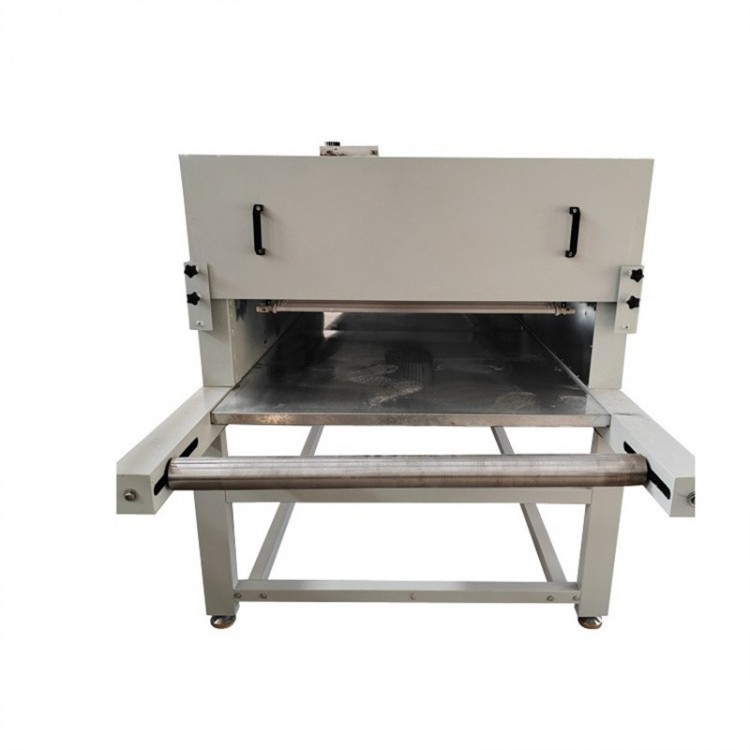















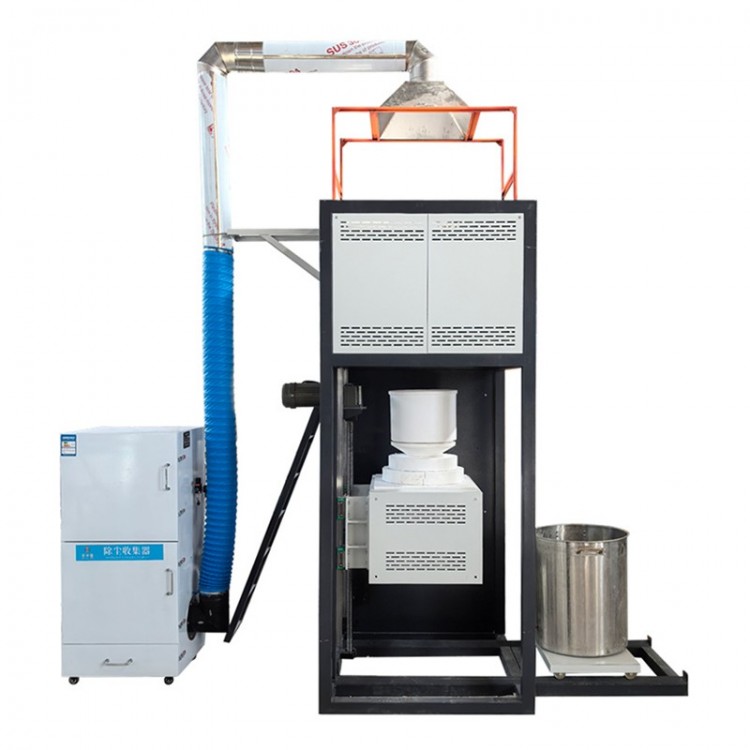

The complete mesh belt furnace equipment consists of three main parts: the furnace body, the mesh belt transmission system, and the temperature control system. The furnace body is composed of the feeding section, pre-burning section, sintering section, slow cooling section, water cooling section, and discharge section. The mesh belt transmission system includes high-temperature resistant mesh belts and transmission devices. The mesh belt speed is controlled by a variable-frequency drive, equipped with a digital mesh belt speed measuring device; the speed can be directly read. The temperature control system is made up of thermocouples, a digital display intelligent PID controller, and silicon-controlled rectifiers, forming a closed-loop control system that enables automatic temperature control.
Heating elements utilize FEC ceramic heating plates or ceramic heating rods. The temperature control system is equipped with a multi-step intelligent program temperature controller imported from Japan. Data communication interfaces can be configured as required, featuring variable frequency stepless speed control, heat-resistant steel mesh belt conveying, and a large package angle tensioning wheel design concept, ensuring smooth product transportation.
A mesh belt furnace, as an efficient continuous heat treatment equipment, boasts the following core product features and is suitable for various industrial application scenarios:
Continuous automated production
High Efficiency Operation: Utilizing conveyor belts to transport workpieces, achieving continuous feeding and discharging, significantly enhancing production efficiency, especially suitable for mass production line operations.
Automation Control: Integrated PLC or intelligent temperature control system, automatically adjusts temperature, speed, and atmosphere, minimizing manual intervention.
2. Precise Temperature Control and Uniform Heating
Multi-sectional temperature control: The furnace is divided into several independent temperature zones, with each zone's temperature independently adjustable to ensure even heating of the workpiece (e.g., three-zone heating: preheat, high temperature, slow cooling).
Process stability: PID algorithm or fuzzy control technology ensures minimal temperature fluctuations (±1~5℃), meeting the requirements for precise heat treatment.
3. Modular structural design
Clear functional sections: includes heating, insulation, and cooling zones (such as water-cooled, air-cooled, or oil quenching tanks), suitable for the entire production chain.
High-temperature resistant transmission system: The conveyor belt is made of heat-resistant alloys (such as 310S stainless steel) or ceramic materials, capable of withstanding temperatures above 1000℃ for long periods, operating smoothly.
4. Wide applicability and flexibility
Multi-material processing: Suitable for metals (steel, copper, titanium alloys), powder metallurgy parts, electronic components, etc., covering processes such as quenching, tempering, sintering, and brazing.
Compatible with various workpieces: Designed specifically for small to medium-sized parts (such as fasteners, bearings, chains), featuring customizable belt width and speed adjustment.
5. Controlled Atmosphere and Vacuum Options
Oxidation Protection: Nitrogen, hydrogen, or a mixed gas can be introduced to form a protective atmosphere, reducing oxidation and decarburization of the workpiece, and enhancing surface smoothness.
Vacuum Expansion: Some models support vacuum conditions, catering to high-purity heat treatment requirements (such as aerospace components).
6. Energy-saving and environmentally friendly design
High thermal efficiency: Utilizes ceramic fiber insulation and waste heat recovery system, reducing energy consumption by 20% to 30%.
Low Emission: Combustion exhaust is treated to meet emission standards, in compliance with environmental protection regulations.
7. User-friendly operation and low maintenance
User-friendly Human-Machine Interaction: Real-time monitoring of operating parameters via a touch screen interface, and a simplified fault self-diagnosis feature for ease of operation.
Low maintenance cost: Modular components are easy to replace, and regular lubrication and belt tension adjustment ensure long-term operation.
8. Multi-level security protection mechanisms
Safety Protection: Equipped with over-temperature alarms, emergency stop functions, gas leak detection, and explosion-proof devices, ensuring safe operation.
High-sealing: The furnace's airtight design minimizes heat loss while maintaining a stable atmosphere environment.
Application Field Examples
Automotive Manufacturing: Gear and bolt hardening and tempering.
Electronic Industry: Sintered Magnetic Materials.
Tool Processing: Blade, Tool Hardening Treatment.
The mesh belt furnace, with its high efficiency, precision, and adaptability, has become the core equipment in modern heat treatment processes, helping enterprises enhance product quality and production efficiency.


















