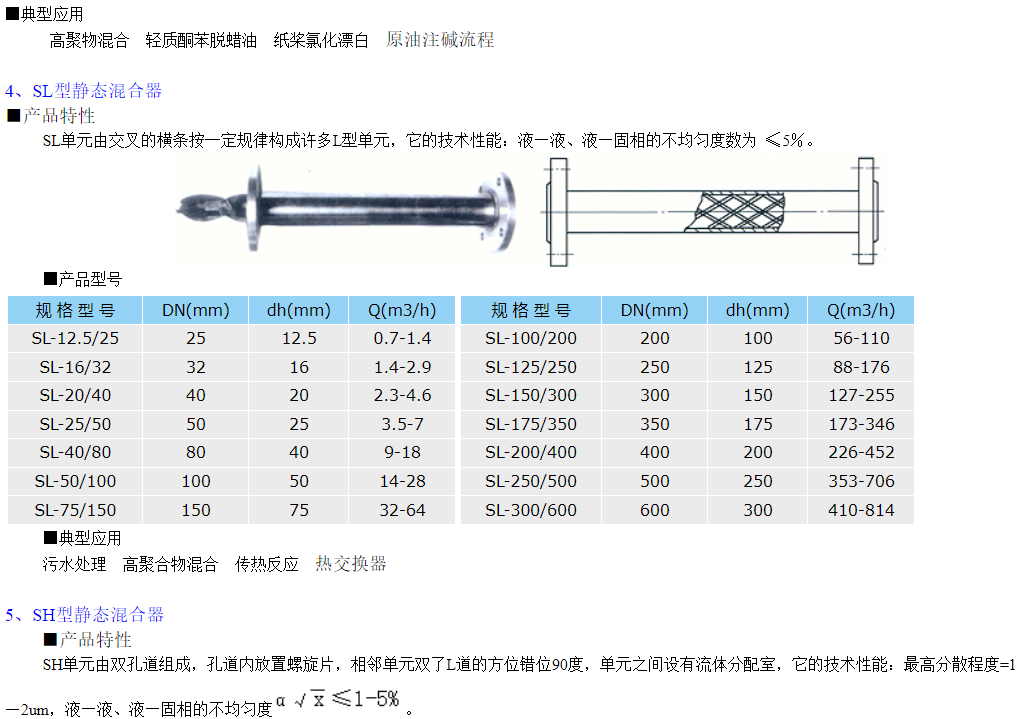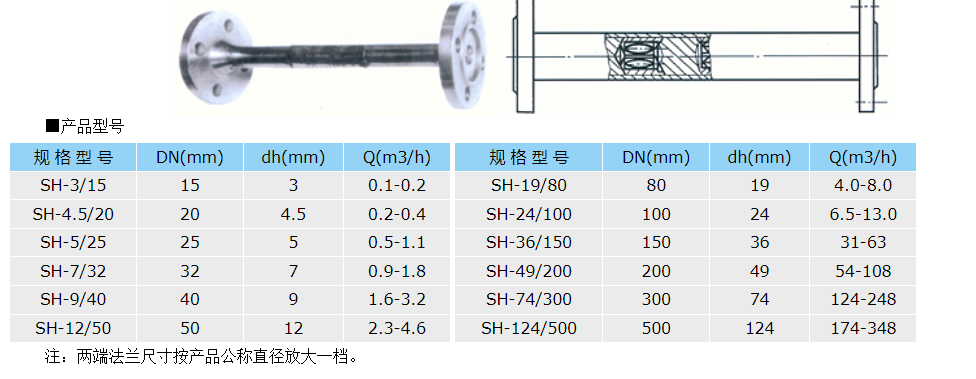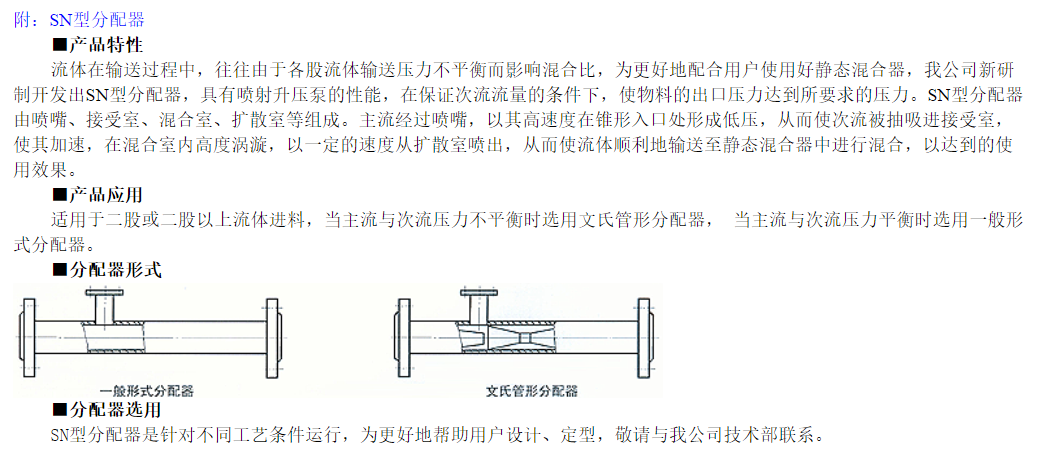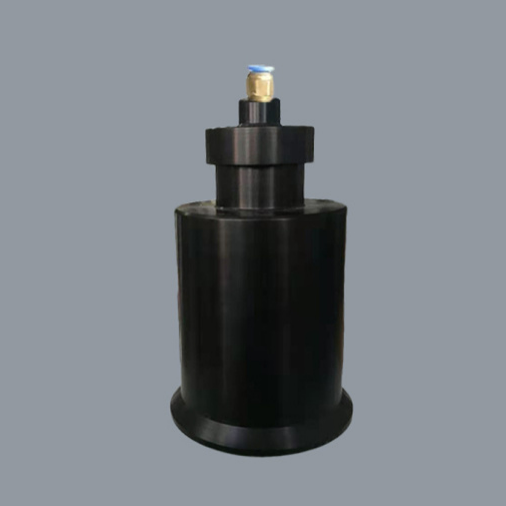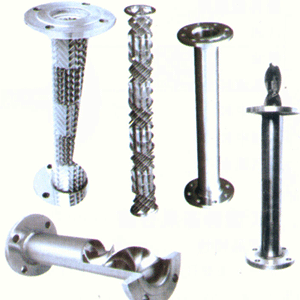










A static mixer is an efficient blending device without moving parts. In addition to being widely used in the oil refining and chemical industries, it is also extensively employed in pharmaceuticals, food, mining and metallurgy, plastic extrusion, and environmental protection sectors. Compared to traditional mixing equipment such as agitators, colloid mills, homogenizers, and Venturi tubes, it offers advantages like simple process, compact structure, low energy consumption, low investment, high operational flexibility, no maintenance required, and excellent blending performance. It can replace traditional equipment in processes involving liquid-liquid, liquid-gas, liquid-solid, gas-gas mixing, emulsification, neutralization, absorption, extraction, reaction, and enhanced heat transfer.
 Pressure Drop Calculation for Static Mixers
Static mixers are used in pipelines, and the pressure drop they generate is not significant. When the system pressure using static mixers is high, the pressure drop caused by the static mixers can be ignored. If the system pressure using static mixers is low, you need to check the pressure drop of the static mixer. The calculation method for pressure drop varies depending on the type of the mixer. For calculations, please contact our technical department.
SV Type Static Mixer
Product Features
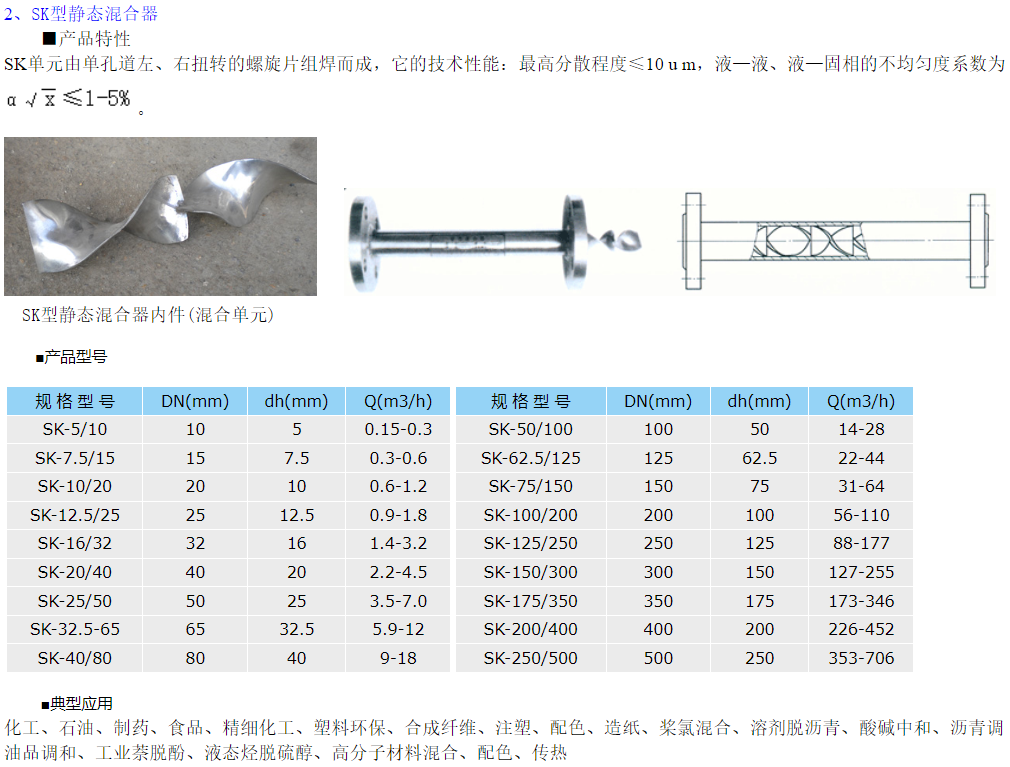
The SV unit is a cylinder assembled from corrugated plates of certain specifications, with its technical performance featuring the highest dispersion extent of 1-2um, and the unevenness coefficient for liquid-liquid and gas-gas phases.

SV Type Static Mixer Internal Parts (Mixing Unit)
Product Model