












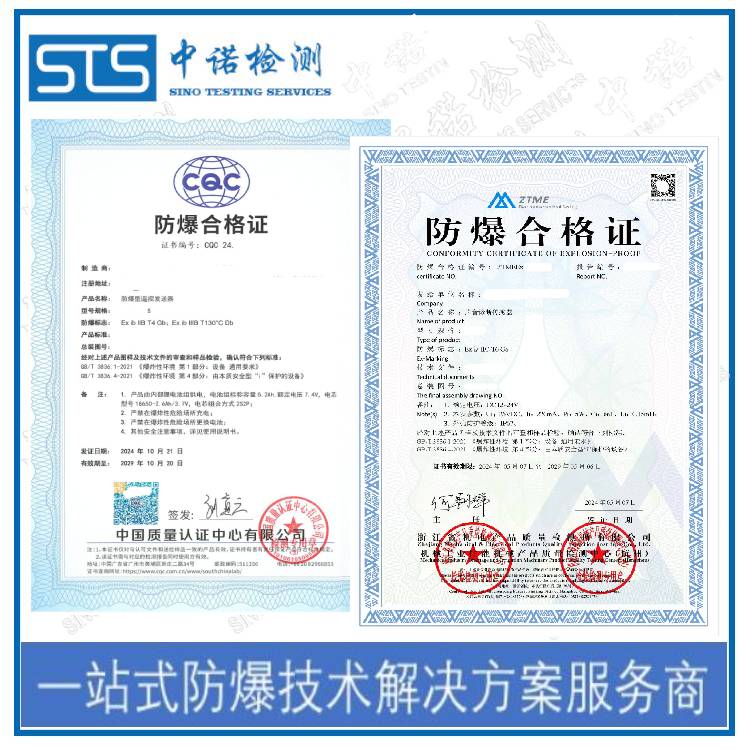
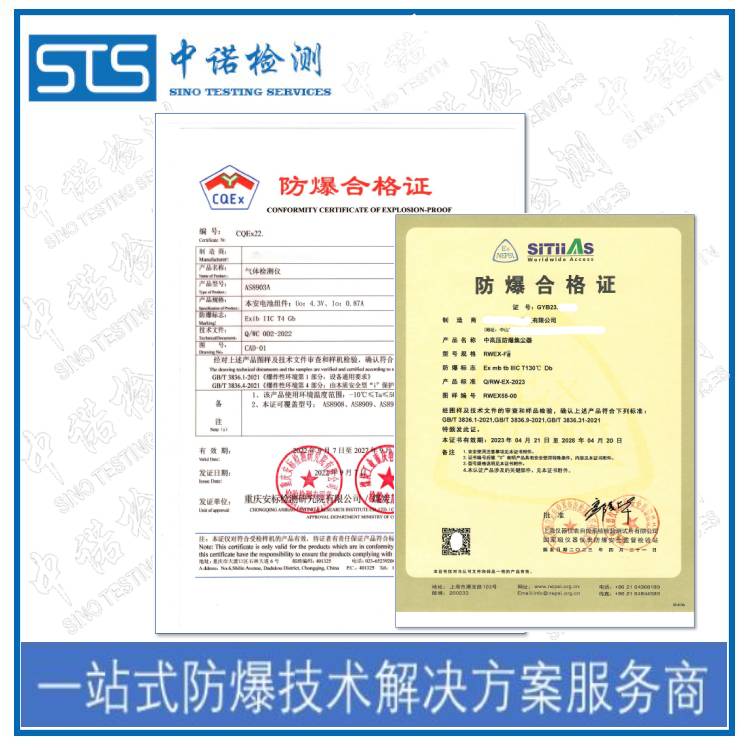
The significance of the alphabetical ratings for explosion-proof levels is crucial for understanding and selecting the appropriate explosion-proof equipment. Below is a detailed explanation by Shenzhen Zhongnuo Testing Technology Co., Ltd. on the meanings of the alphabetical ratings for explosion-proof levels:
I. Basic Composition of Explosion-Proof Markings
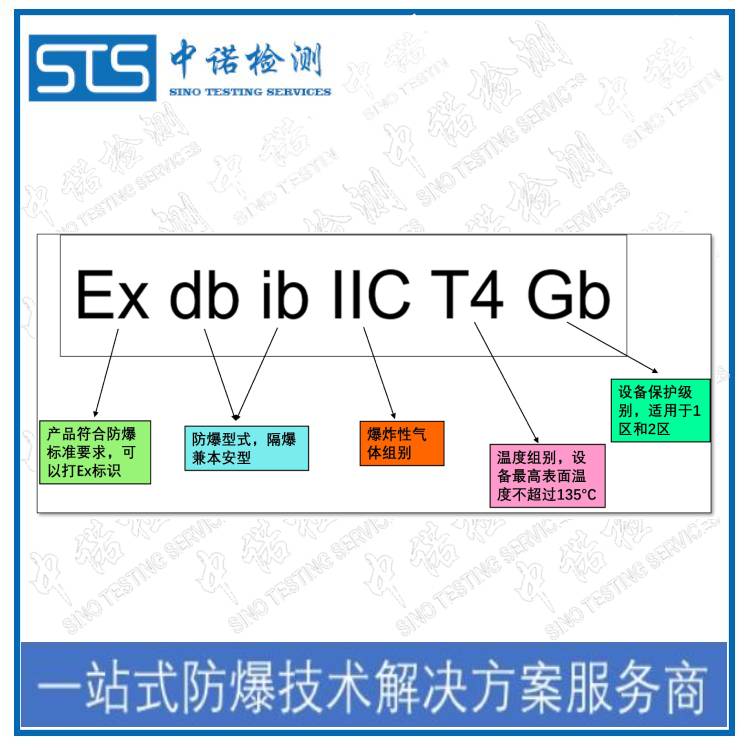
The explosion-proof marking is typically composed of several letters and numbers, mainly including the following parts:
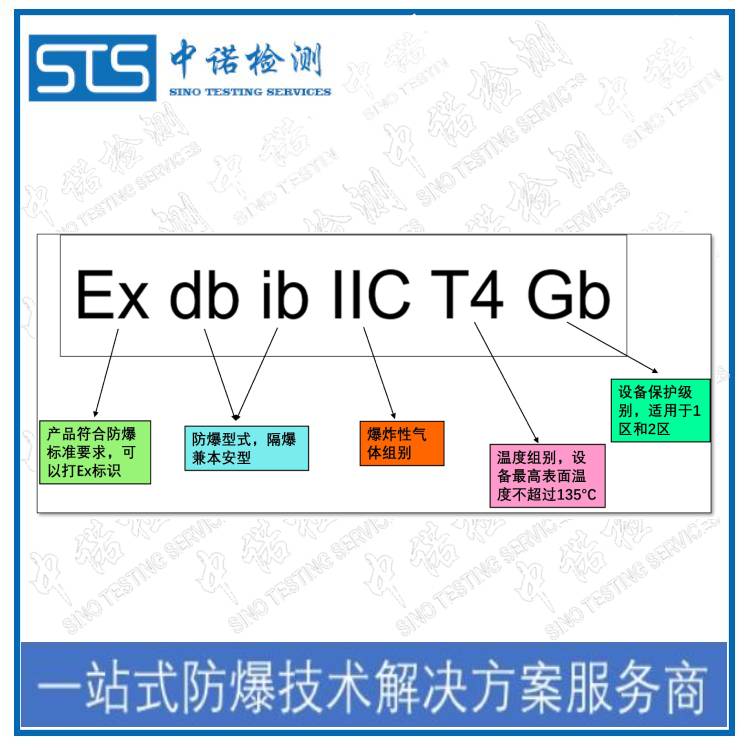
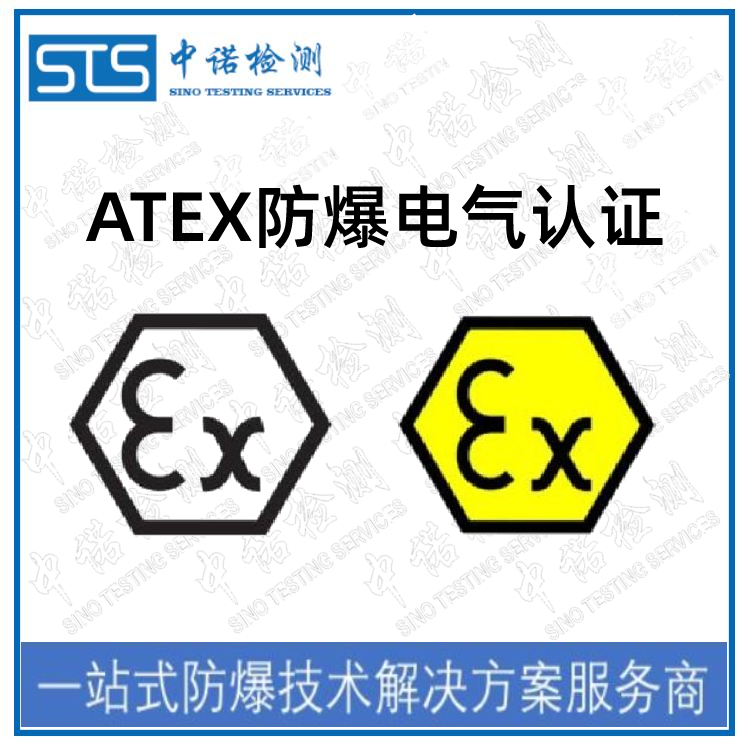
Explosion-Proof Marking"Ex" marking indicates that the equipment has passed explosion-proof certification and meets explosion-proof standards.
Explosion-proof protection type:Typically, it is a letter used to indicate the type of explosion-proof protection adopted by the equipment.
Gas Category:Please specify the gas groups applicable to the equipment, such as I, IIA, IIB, IIC, etc., which represent different explosive gas environments.
Temperature Category:T followed by a number indicates the maximum surface temperature of the equipment during operation, commonly ranging from T1 to T6.
Equipment Protection Level:The Equipment Protection Level (EPL), commonly used to further categorize the safety performance of equipment in explosive environments.
II. Specific Meanings of Explosion Proof Grade Letters
Explosion-proof protection type:
"ia," "ib," and similar designations indicate the explosion-proof protection type of the equipment. Devices with the "ia" classification cannot ignite explosive gas mixtures under normal operation and in two fault conditions, whereas "ib" classified equipment cannot ignite explosive gas mixtures under normal operation and in one fault condition.
Gas Group Alphabet
I: Used in coal mine gas environment.
IIA: Suitable for lower hazard gases such as CH4.
IIB: Suitable for C2H8 and other medium-hazard gases.
IIC: Suitable for high-hazard gases such as H2 and C2H4.
Hazard levels increase sequentially, with IIA < IIB < IIC.
Temperature Group Letters and Numbers:
T1: The maximum surface temperature of the equipment does not exceed 450°C.
T2: Maximum surface temperature of the equipment does not exceed 300°C.
T3: Maximum surface temperature of the equipment does not exceed 200°C.
T4: Maximum surface temperature of the equipment does not exceed 135°C.
T5: The highest surface temperature of the equipment does not exceed 100°C.
T6: The maximum surface temperature of the equipment does not exceed 85°C.
Equipment Protection Level Letter:
Explosive gas environment equipment with a "highly" protective level; not a source of ignition during normal operation, anticipated failure, or rare failure.
Gb: Equipment for explosive gas atmospheres, with a "high" protection level, not a source of ignition under normal operation or expected failure conditions.
Gc: Equipment for explosive gas atmospheres with "normal" protection level; not a source of ignition during normal operation.
Protection levels increase sequentially.Gc is less than Gb, which is less than Ga. Ga can be used in Zones 0, 1, and 2; Gb can be used in Zones 1 and 2; Gc can be used in Zone 2.
Section 3: Example
For example, with the explosion-proof marking "Ex ia IIC T6 Ga":
“Ex”: Indicates that the equipment is explosion-proof.
“ia”: Indicates the explosion-proof grade of the equipment is the highest level within the intrinsic safety category.
“IIC”: Indicating that the equipment is suitable for IIC-level explosive gas environments.
“T6”The maximum surface temperature of the equipment does not exceed 85°C.
“Ga”: Indicates a high level of equipment protection, suitable for Zones 0, 1, and 2.
In summary, understanding the meanings of the explosion-proof rating letters is crucial for correctly selecting and using explosion-proof equipment.Shenzhen ZhongNuo Inspection & Technology Co., Ltd.As a professional explosion-proof product design and testing service provider, we offer comprehensive explosion-proof product testing and certification services to ensure your equipment meets relevant standards and requirements. Should you have any questions or needs, please feel free to contact us at any time.