

Product Details



价 格Negotiable
最小起订1 Piece库存1004 Piece
 Business Card
Negotiable

Negotiable

Negotiable

Negotiable
 Hotel Wastewater Treatment Equipm
Negotiable
Electroplating Chrome Plating Was
Negotiable
Hotel Wastewater Treatment Equipm
Negotiable
Electroplating Chrome Plating Was
Negotiable
 Distillery Wastewater Treatment E
Negotiable
Distillery Wastewater Treatment E
Negotiable
 Wastewater Treatment Equipment Ma
Negotiable
Wastewater Treatment Equipment Ma
Negotiable
 River Sediment Removal and Treatm
Negotiable
Washing Sand Stone Sewage Treatme
Negotiable
River Sediment Removal and Treatm
Negotiable
Washing Sand Stone Sewage Treatme
Negotiable
 Integrated Wastewater Treatment E
Negotiable
Integrated Wastewater Treatment E
Negotiable
 Tourist Attraction Wastewater Tre
Negotiable
Tourist Attraction Wastewater Tre
Negotiable
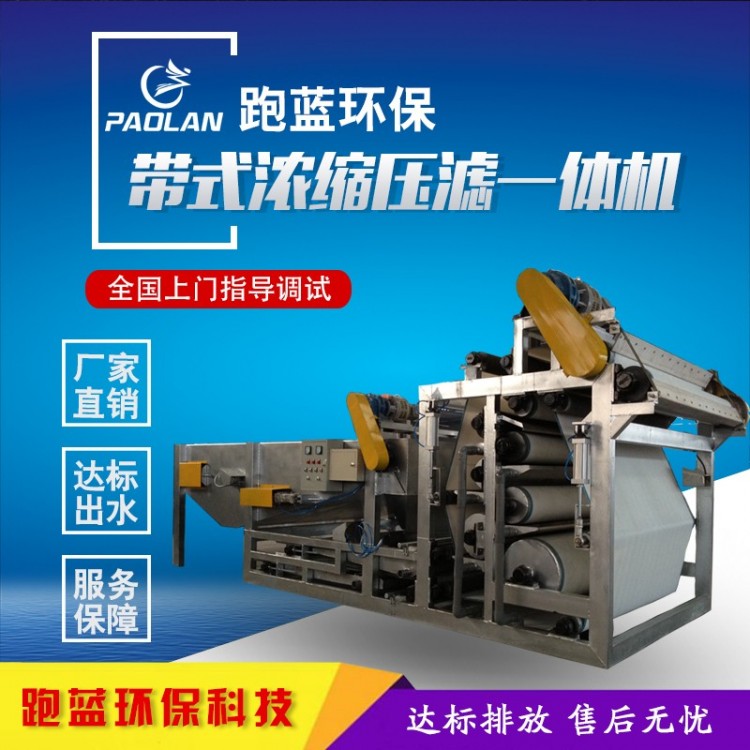 Belt-type Concentrated Press Filt
Negotiable
Belt-type Concentrated Press Filt
Negotiable
 Craned mud scraper
Negotiable
Craned mud scraper
Negotiable

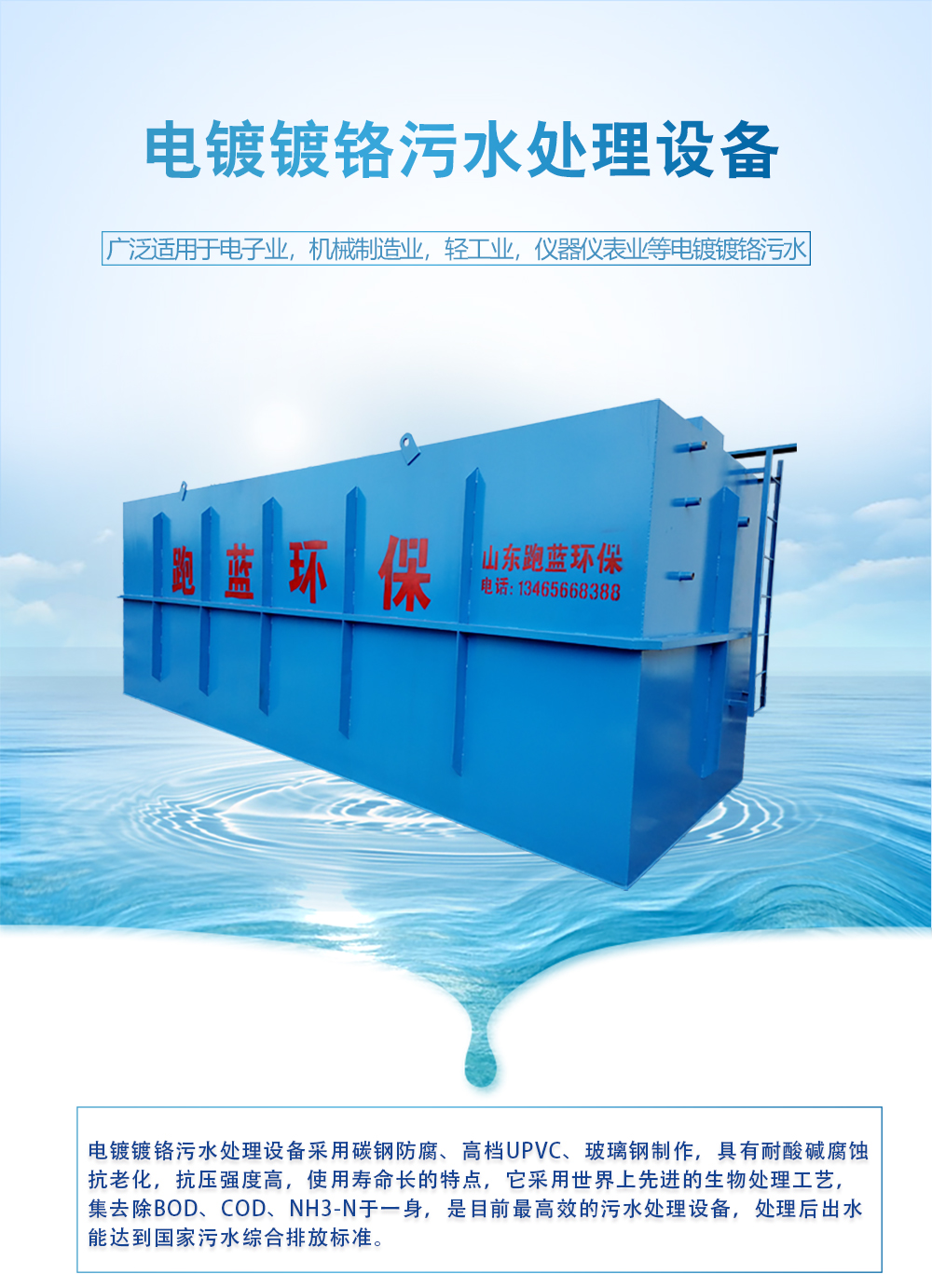
Electroplating Zinc Waste Water Treatment Equipment Introduction
The wastewater produced during electroplating production is highly complex, containing not only cyanide (CN-) and acids/bases but also heavy metals, which are a category of wastewater with potential hazards in the electroplating industry. These substances pose threats to both the environment and human health. The main sources of electroplating wastewater include:
1. Plating Cleaning Water (a primary source of wastewater). This wastewater contains not only heavy metal ions but also a small amount of organic matter, with low concentration but in large volume.
2. Plating solution filtration rinse water and waste plating solution discharge. This portion of wastewater is not substantial in volume, but it contains high levels and poses significant pollution.
3. Wastewaters emitted due to "leakage, overflow, dripping, and spilling" in process operations, equipment, and process flows.
4. Wastewater generated from washing equipment and flooring.
The primary source of zinc in electroplating and metal processing wastewater is the drag-off solution from electroplating or acid pickling. Pollutants are transferred to the rinse water during the metal washing process. The acid pickling process involves immersing the metal (zinc or copper) in strong acid to remove surface oxides, followed by immersion in a brightener containing strong chromic acid for polishing. This wastewater contains a large amount of hydrochloric acid and heavy metal ions such as zinc and copper, as well as organic brighteners, with high toxicity. Some contain highly toxic substances that are carcinogenic, teratogenic, and mutagenic, posing a significant threat to humans. Therefore, it is crucial to carefully recycle and treat electroplating wastewater to eliminate or reduce its environmental pollution.
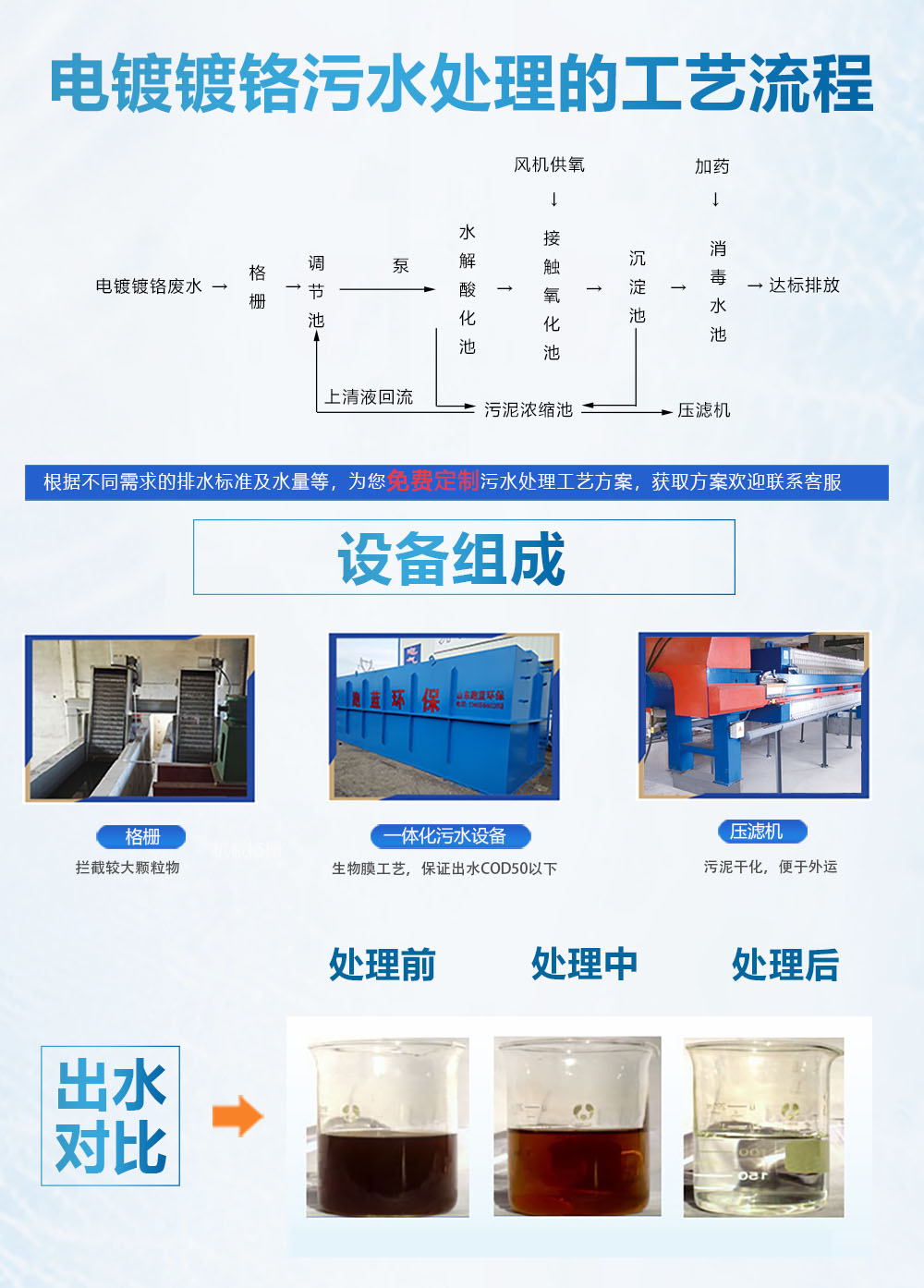
The electroplating wastewater treatment equipment consists of an adjusting tank, dosing box, reduction tank, neutralization reaction tank, pH adjusting tank, flocculation tank, inclined tube sedimentation tank, box filter press, clear water tank, air flotation reaction, and activated carbon filter, among others.
Electroplating zinc waste water treatment equipment treatment method
Electroplating production process and water quality for various plating types
The production process typically includes: parts after etching treatment → electroplating tank → recovery tank → freshwater tank → freshwater rinse.
The wastewater from this section primarily originates from the clean water rinsing process, containing corresponding metal ions or cyanides. The cyanide electroplating copper rinsing water contains cyanide and copper ions; chrome plating rinsing water contains hexavalent chromium; nickel plating rinsing water contains nickel ions, etc. The rinsing water is分流 treated based on different plating types, such as cyanide-containing wastewater分流 after secondary cyanide breakdown and pH adjustment, followed by solid-liquid separation, can meet the discharge standards; chromium-containing wastewater分流 after reduction reaction, then neutralization and solid-liquid separation, can also meet the discharge standards.
The treatment of electroplating wastewater has gained widespread attention both domestically and internationally. Various treatment technologies have been developed, which include converting toxic substances into non-toxic ones, transforming harmful into harmless, recovering precious metals, and recycling water to eliminate and reduce the discharge of pollutants. With the rapid development of the electroplating industry and the increasing environmental protection requirements, the treatment of electroplating wastewater is now entering the stages of clean production processes, total quantity control, and integration with circular economy. The mainstream direction of development is resource recovery and closed-loop recycling.


Phone Consultation