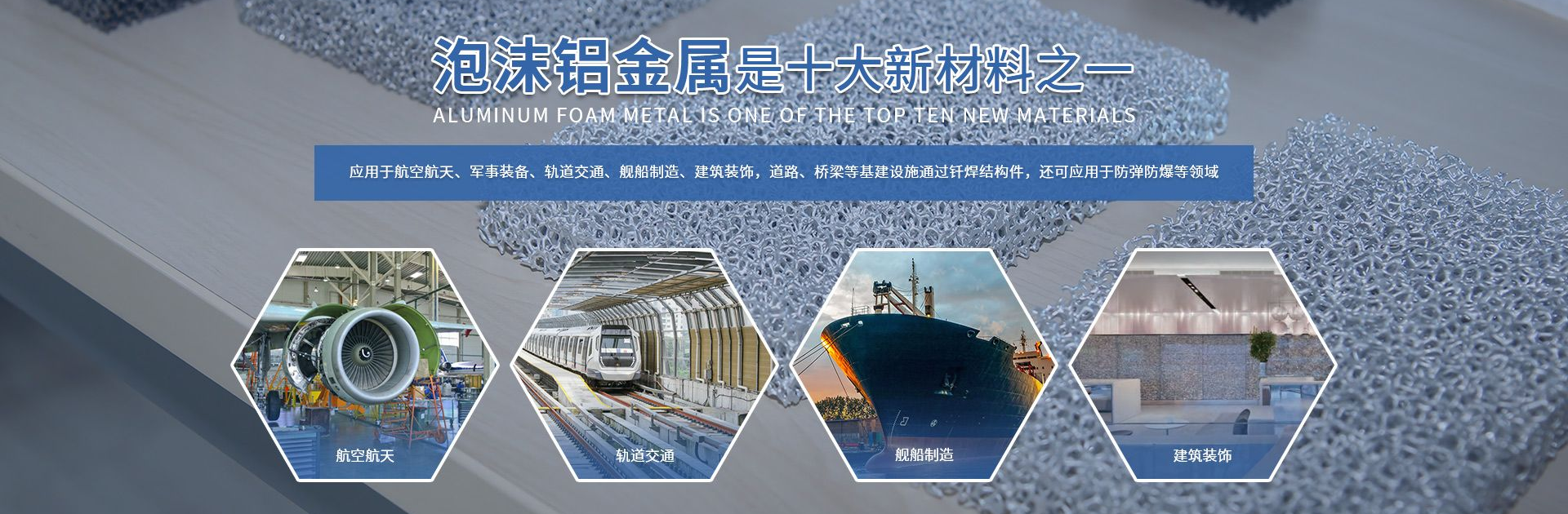
Foam aluminum and its composite products, foam aluminum d...

In the field of materials science, porousFoam AluminumIts unique structure and superior comprehensive performance have garnered attention. It is formed through a foaming process on the basis of pure aluminum or aluminum alloy, with an internal structure filled with a large number of isolated and non-communicating holes. This special structure endowsClosed-cell foam aluminumNumerous features, such as low density, high specific stiffness, excellent vibration and noise reduction, and strong electromagnetic shielding capabilities, demonstrate broad application prospects in industries like construction, transportation, and aerospace. Moreover, its thermal bending properties play a crucial role in practical applications.
Microscopically, closed-cell aluminum foam is composed of a metallic aluminum skeletal structure combined with pores. The metallic skeletal structure forms a continuous phase, providing a base for strength and toughness; the pores are uniformly distributed in a discrete manner, significantly influencing the material's overall performance. During the thermal bending process, the synergistic action of the metallic skeletal structure and the pores determines the material's behavior. As the temperature rises, the thermal motion of the aluminum atoms in the skeletal structure intensifies, and the binding force between atoms weakens to some extent, which alters the material's mechanical response.
Research indicates that the thermal bending properties of closed-cell foam aluminum are closely related to temperature. Within a lower temperature range, as the temperature rises, the material's plasticity improves, making it easier to deform during bending, which is reflected by a decrease in yield strength and an increase in elongation. This is because higher temperatures promote more active dislocation movement, which is beneficial for the material's plastic deformation. For instance, when the temperature is raised from room temperature to around 100°C, closed-cell foam aluminum can produce larger bending strains under bending loads with less applied force, and it is less prone to brittle fractures during the bending process.
However, as the temperature continues to rise and reaches a certain level, the trend of the thermal bending performance of closed-cell aluminum foam takes a turn. Excessive temperature can cause the metal frame to soften too much, resulting in a significant decrease in material strength. At this point, although the material's deformation ability is further enhanced during the bending process, over-deformation or even collapse may occur. Taking a closed-cell aluminum foam with a porosity of 85% as an example, when the temperature approaches 300℃, its pore walls are prone to collapse under bending loads, thereby disrupting the overall structural integrity of the material and deteriorating its bending performance.
Additionally, the thermal bending properties of closed-cell aluminum foam are influenced by factors such as porosity and pore size. Generally speaking, the higher the porosity, the smaller the proportion of the metallic framework within the material, resulting in lower load-bearing capacity during thermal bending and a greater tendency to deform under heat. However, a higher porosity also allows the material to have better thermal buffering capabilities to some extent, as it can coordinate the deformation of the pores at lower temperatures, thereby improving the uniformity of bending. As for pore size, a smaller distribution of pore sizes is more beneficial for maintaining structural stability during thermal bending, as smaller pores enhance the continuity of the metallic framework and increase resistance to thermal deformation.
In practical applications, the heat bending performance of closed-cell foam aluminum is notably advantageous. In the construction field, when used to manufacture lightweight partition boards, its excellent heat bending properties at appropriate temperatures facilitate the shaping into various forms, catering to diverse architectural design requirements. Additionally, it can also address functions such as sound insulation and heat insulation. In the aerospace industry, when used as a structural material, the heat bending performance of closed-cell foam aluminum ensures that components maintain a certain degree of shape stability during temperature changes, guaranteeing the normal operation of equipment.
The thermal bending performance of closed-cell foam aluminum is a complex characteristic influenced by multiple factors. By delving into the intrinsic relationship between its microstructure and thermal bending behavior, as well as the mechanism of factors like temperature, porosity, and pore size, a solid theoretical foundation can be provided for further optimizing material properties and expanding application areas, driving the greater value of closed-cell foam aluminum in more critical fields.


www.114global.com © Zhongshang 114 Hebei Network Technology Co., Ltd.Address: Room 6009, Oriental New World Center, No.118 East Zhongshan Road, Qiaoxi District, Shijiazhuang City, Hebei ProvincePlatform Service Hotline: 4006299930