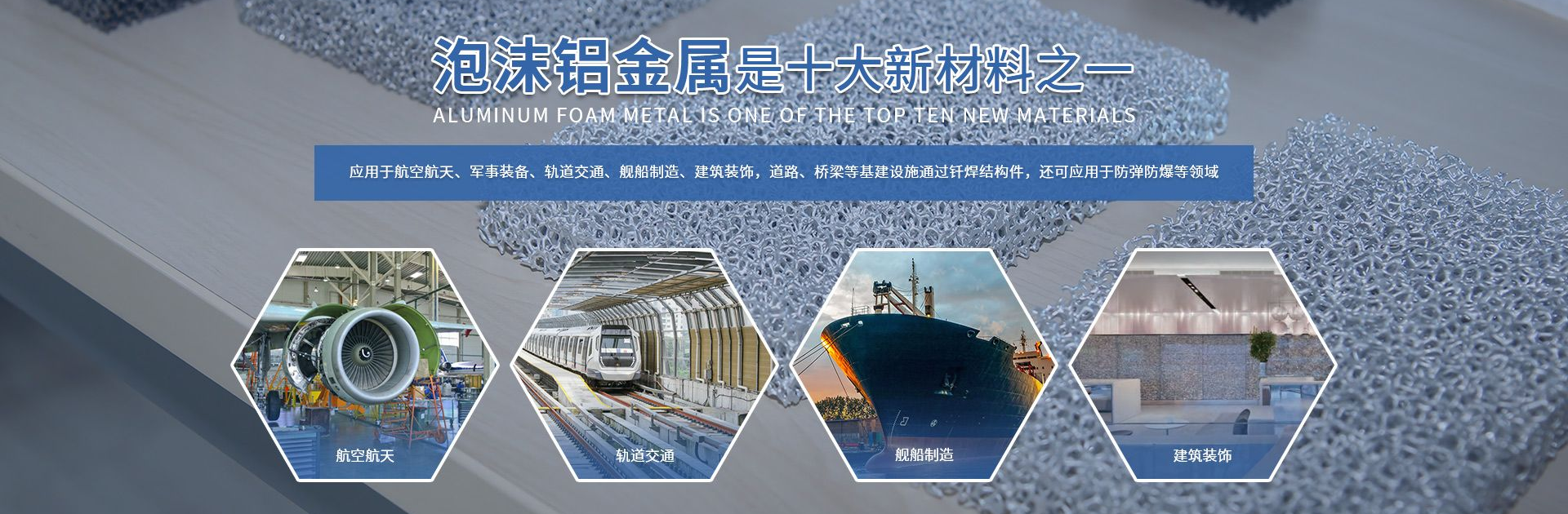
Foam aluminum and its composite products, foam aluminum d...

Foam AluminumBoard is a new material with multifunctional characteristics such as lightweight, high specific strength, energy absorption, noise insulation, and heat insulation, widely used in aerospace, automotive manufacturing, and architectural decoration fields. Its performance mainly depends on two key parameters: porosity and pore size. This article will discuss the impact of porosity and pore size onFoam Aluminum SheetFrom the perspective of performance impact, this article discusses how to select appropriate parameters based on application requirements.
The Effect of Porosity on the Performance of Aluminum Foam Plates
Pore ratio refers to the percentage of the total volume occupied by the pore volume in aluminum foam plates. It is a core parameter that determines the performance of aluminum foam plates, significantly affecting their mechanical, thermal, and acoustic properties.
Mechanical properties
Strength and Stiffness: As the porosity increases, the density of aluminum foam plates decreases, and so does their strength and stiffness. This is because higher porosity indicates a reduction in the content of solid aluminum within the material, leading to decreased load-bearing capacity. Therefore, for applications requiring higher strength, lower porosity aluminum foam plates should be chosen.
Energy Absorption Performance: When subjected to impact, the porous structure of foam aluminum sheets can absorb energy through plastic deformation. The higher the porosity, the better the energy absorption performance is typically, as more pores provide greater deformation space. Therefore, in applications requiring energy-absorbing cushioning (such as automotive crash structures), foam aluminum sheets with higher porosity can be selected.
2. High thermal performance
Thermal Insulation Performance: The higher the porosity, the greater the air content within the aluminum foam plate, as air is a poor conductor of heat. Therefore, aluminum foam plates with high porosity offer superior thermal insulation properties. In applications requiring insulation, such as buildings or industrial equipment, high-porosity aluminum foam plates are a suitable choice.
Thermal Conductivity: Higher porosity results in lower thermal conductivity. This is because high porosity reduces the continuous thermal conduction paths of solid aluminum, hindering the transfer of heat.
Acoustic Performance
Sound Insulation: The higher the porosity, the better the sound insulation performance of aluminum foam panels. This is because the air layers in high-porosity materials can absorb and scatter sound waves, reducing sound transmission. In applications requiring sound insulation (such as building walls or equipment enclosures), high-porosity aluminum foam panels can be selected.
Acoustic Performance: The sound-absorbing properties of aluminum foam are closely related to its porosity. High-porosity materials can absorb sound wave energy more effectively, reducing noise.
II. The Influence of Aperture Size on the Performance of Aluminum Foil Sheets
The aperture size refers to the average diameter of the pores in aluminum foam sheets, typically measured in micrometers or millimeters. The aperture size significantly impacts the performance of aluminum foam sheets, particularly in the following aspects:
Mechanical performance
Strength and Tensile: The smaller the pore size of aluminum foam plates, the higher their strength and tensile properties typically are. This is due to the smaller pore structure, which can distribute stress more evenly and reduce stress concentration. Therefore, for applications requiring high strength, the use of aluminum foam plates with smaller pore sizes is recommended.
Energy Absorption Performance: The effect of aperture size on energy absorption performance is relatively complex. Generally, foam aluminum sheets with medium-sized apertures exhibit better energy absorption performance, as excessively small apertures may limit plastic deformation, while excessively large apertures could lead to structural instability.
2. Heat performance
Insulation Performance: The smaller the pore size, the better the thermal insulation performance of aluminum foam plates typically is. This is because smaller pore structures can better restrict air convection, reducing heat transfer. For applications requiring high-efficiency insulation, you can opt for aluminum foam plates with smaller pore sizes.
Thermal Conductivity: The smaller the pore size, the lower the thermal conductivity typically is. This is because the smaller pore structure increases the path length for heat transfer, impeding thermal conduction.
3. Acoustic Performance
- Sound Insulation: The smaller the pore size, the better the sound insulation performance of aluminum foam sheets is typically. This is because the smaller pore structure can scatter and absorb sound waves more effectively. For applications requiring high sound insulation, the use of aluminum foam sheets with smaller pore sizes is recommended.
-Acoustic Absorption Performance: The influence of aperture size on acoustic absorption is similar to porosity. Generally, foam aluminum plates with medium aperture sizes perform better in terms of acoustic absorption, as excessively small apertures may limit the entry of sound waves, while excessively large apertures may lead to reflections.
How to Choose the Appropriate Pore Size and Pore Density
In practical applications, selecting the appropriate porosity and pore size requires a comprehensive consideration of the specific material's intended use and performance requirements. The following are some recommended selection scenarios for common applications:
High-strength structural materials
Select Recommendations: Low porosity (typically below 70%) and small pore size (usually less than 1mm).
Application Scenarios: Aerospace structural components, automotive body parts, etc.
2. Energy-absorbing cushioning material
Choose Recommendations: High porosity (typically above 80%) and medium pore size (usually between 1-3 mm).
Application Scenarios: Automotive collision structures, packaging materials, etc.
Insulation Materials
Select Recommendations: High porosity (typically above 85%) and small pore size (typically less than 1 millimeter).
Application Scenarios: Building wall insulation, industrial equipment thermal insulation, etc.
4. Soundproofing Materials
Select Recommendations: High porosity (typically above 80%) and small pore size (usually less than 1mm).
Application Scenarios: Soundproofing walls for buildings, equipment enclosures, etc.
5. Absorptive Materials
Choose recommendations: Medium porosity (usually between 70-85%) and medium pore size (usually between 1-3 millimeters).
Application Scenarios: Recording studios, conference rooms, etc.
The porosity and pore size of aluminum foam are key parameters determining its performance. Porosity primarily affects the material's density, strength, energy absorption, thermal insulation, and acoustic properties, while pore size further fine-tunes these performance aspects. In practical applications, the appropriate porosity and pore size should be chosen based on specific requirements to optimize material performance. For instance, high-strength structural materials require low porosity and small pore sizes, whereas energy-absorbing cushioning materials need high porosity and moderate pore sizes. By selecting parameters wisely, aluminum foam can leverage its unique advantages across various fields and meet diverse application needs.


www.114global.com © Zhongshang 114 Hebei Network Technology Co., Ltd.Address: Room 6009, Oriental New World Center, No.118 East Zhongshan Road, Qiaoxi District, Shijiazhuang City, Hebei ProvincePlatform Service Hotline: 4006299930