Specializing in filter presses, chemical pumps, fire pump...



Product Recommendation
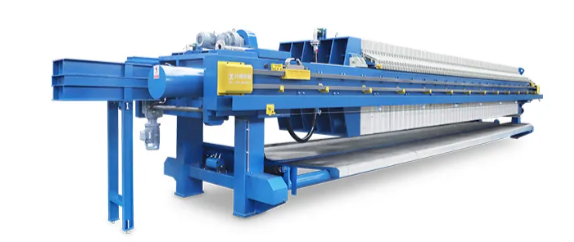
A pressure filter is an industrial equipment that achieves solid-liquid separation through pressure, widely used in industries such as chemicals, mining, environmental protection, and food. Its core working logic utilizes the screening effect of filter media, allowing the liquid to pass through the filter cloth and flow out under the force of external pressure, while solid particles are retained to form filter cake, thereby completing the solid-liquid separation process.
The working principle of the filter press
The operation of a pressure filter mainly consists of four core stages: compressing the filter plates, feeding and filtering, optional cake washing, and cake unloading and cleaning. Different types of pressure filters share the same fundamental principle, differing only in the specifics of their operations.
Pressurized Filter Plate
Driven by a hydraulic system or mechanical device, the clamping plate pushes the neatly arranged filter plates towards the thrust plate until they are tightly sealed. A sealed filter chamber is formed between adjacent filter plates, which is the core space for containing material and completing the filtration process. The sealing effect directly determines whether leakage of material will occur during the filtration process.
Raw Material Filtration
Under the high pressure of the feed pump, materials are transported to various sealed filter chambers. Liquid components are driven by the pressure difference to permeate through the filter cloth on the surface of the filter plate, flowing out of the equipment along the drainage channels on the filter plate; solid particles, due to their larger particle size than the pores of the filter cloth, are retained within the filter chamber. As the feeding process continues, solid particles in the filter chamber accumulate and gradually form a filter cake.
Slurry Washing (Optional)
For filter cakes requiring purity, a washing solution is introduced after filtration. This washing solution, under pressure, passes through the filter cake layer, displacing any remaining filtrate or impurities, thereby enhancing the quality of the filter cake. This step is commonly used in industries such as chemicals and food processing that demand high purity in finished products.
Unpack and clean up
Upon reaching the preset thickness or filtering time, the hydraulic system drives the pressing plate back, and the filter plates are sequentially opened. Once the filter cake loses its support, it either falls off due to its own weight or is assisted in falling off by vibration or scraping devices. Subsequently, staff clean the solid particles remaining on the filter cloth surface, inspect for any damage, and prepare for the next round of filtering.
Section 2: The Main Structure of the Press Filter
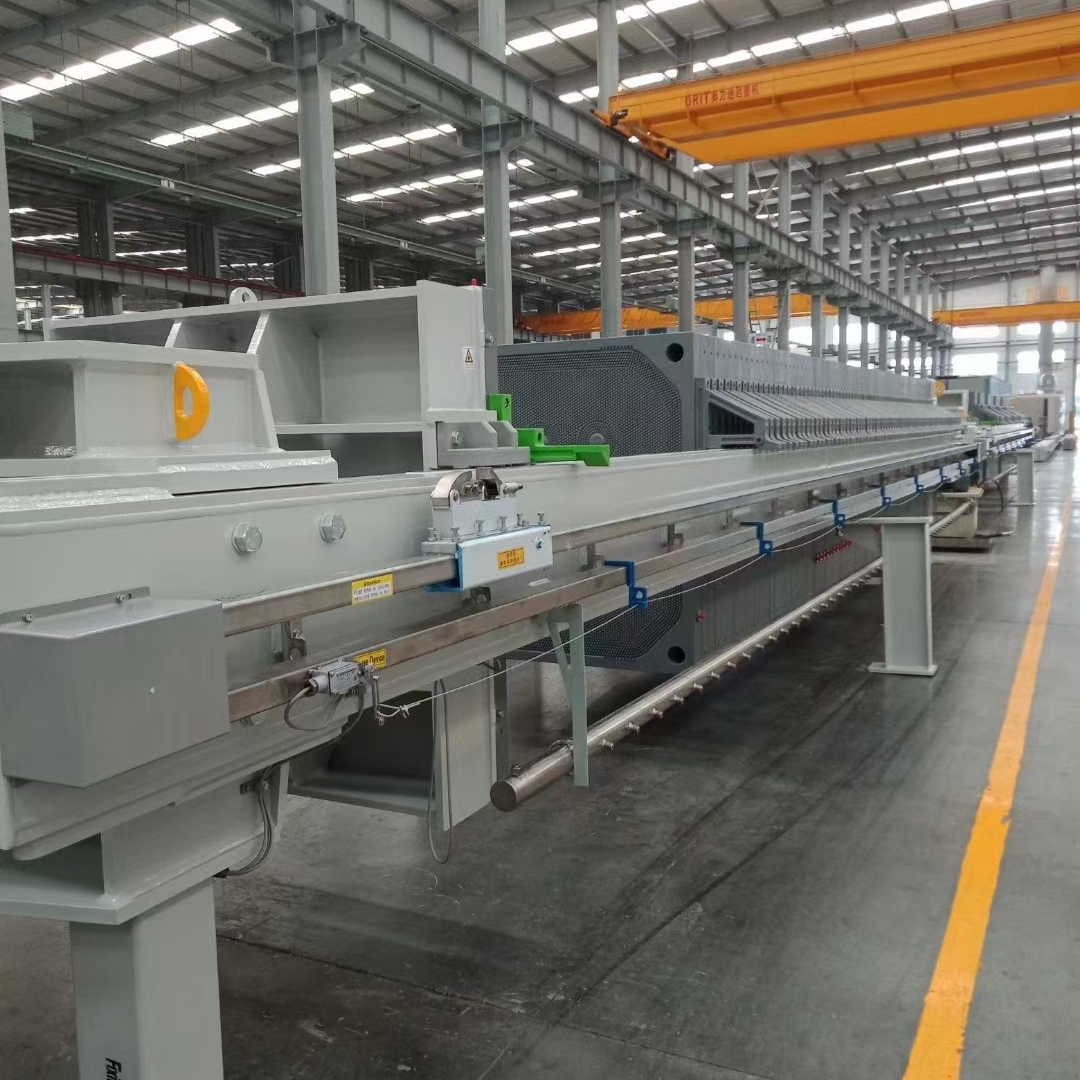
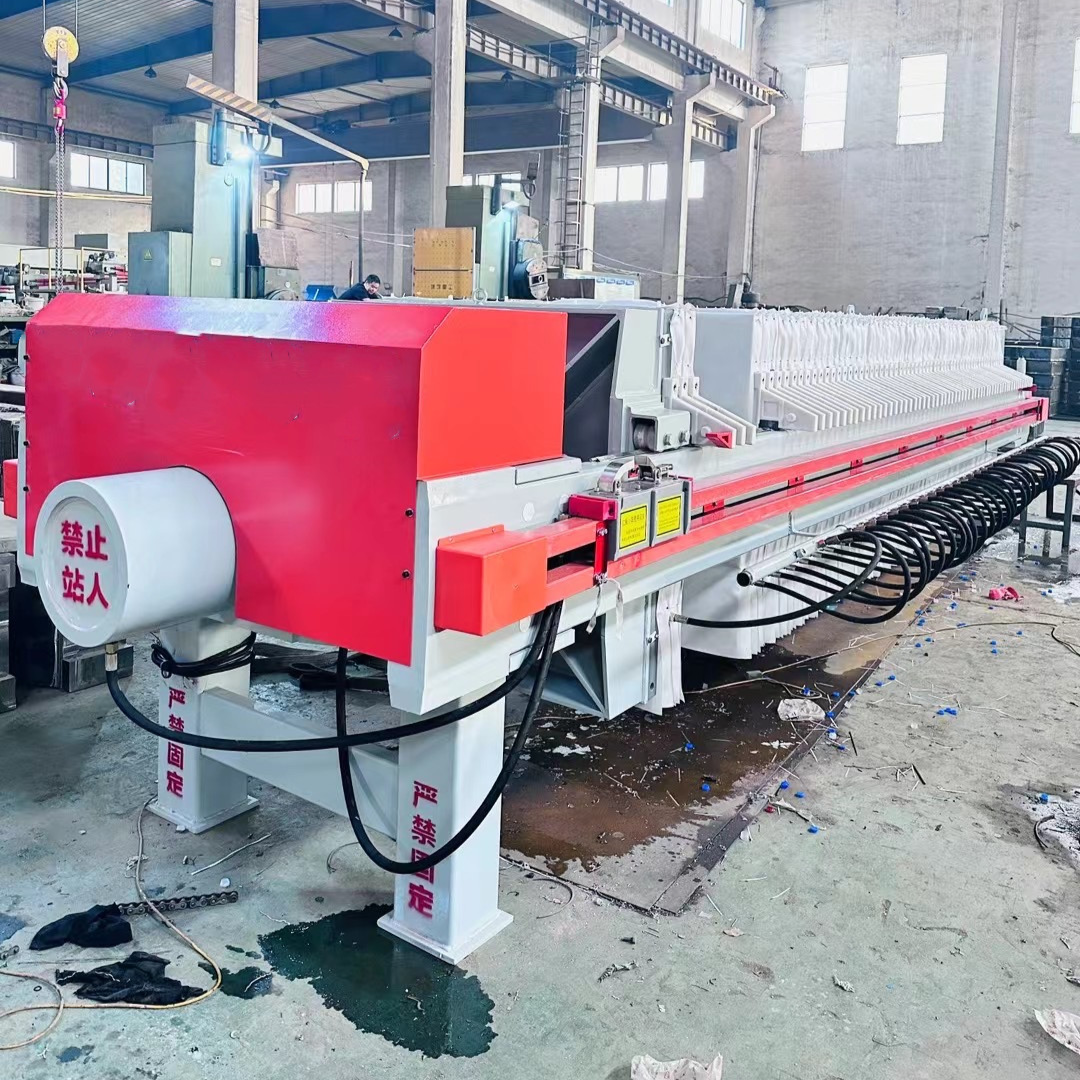
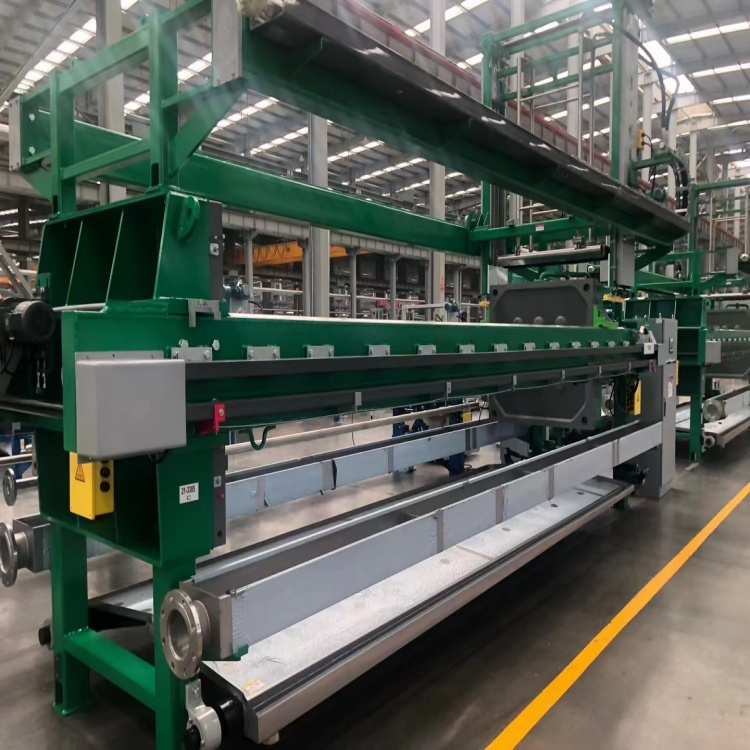
The structure of the pressure filter is designed around three core functions: "formation of sealed filter chamber," "material conveying and filtration," and "filter cake discharge." It is mainly composed of four major modules: the frame section, the filtration section, the hydraulic section, and the electrical control section.
Rack Section
The frame is the fundamental supporting structure of the pressure filter, determining the overall stability of the equipment. It mainly includes thrust plates, clamping plates, main beams, and bases. The thrust plate is fixed at one end of the main beam, used to support filter plates and to open feed and discharge ports; the clamping plate can move along the main beam, used to clamp or release filter plates; the main beam is the load-bearing component connecting the thrust plate and the clamping plate, with both filter plates and clamping plates mounted on it; the base is used to secure the entire frame, distributing pressure during equipment operation.
Filtering Section
The filtration section is the core of solid-liquid separation, primarily composed of filter plates, filter frames (only available in plate-and-frame presses), and filter cloth. The filter plate is a critical component, featuring grooves and drainage holes with convex and concave surfaces, typically made of polypropylene, cast iron, or stainless steel, serving both as a seal and support for the filter cloth. The filter frame is used in conjunction with the filter plate to form a filter chamber, accommodating the material to be filtered. The filter cloth is the core filtration medium, available in materials such as polyester and polypropylene, with different pore sizes for various particle sizes, directly affecting the filtration efficiency and moisture content of the filter cake.
Hydraulic Components
The hydraulic section serves as the power source for driving the clamping and release of the filter plate, mainly including hydraulic pumps, hydraulic cylinders, hydraulic valves, and reservoirs. The hydraulic pump converts mechanical energy into hydraulic energy, providing power to the hydraulic cylinder; the hydraulic cylinder moves the clamping plate along the main beam to achieve clamping and release of the filter plate; the hydraulic valves control the flow direction and pressure of the hydraulic oil, ensuring the smoothness of the clamping process; the reservoir is used for storing and cooling the hydraulic oil.
Electrical Control Section
The electrical control section is the "brain" of the press filter, mainly consisting of the control cabinet, motor, sensors, and operation panel. The PLC or relay control system inside the control cabinet enables the equipment to be operated automatically or manually, controlling the start and stop of feed pumps and hydraulic pumps, as well as the processes of plate clamping, feeding, and unloading; sensors are used to monitor parameters such as plate clamping pressure and filtration time, ensuring the equipment operates within a safe range; the operation panel facilitates staff in setting parameters and monitoring the equipment's operational status.


www.114global.com © Zhongshang 114 Hebei Network Technology Co., Ltd.Address: Room 6009, Oriental New World Center, No.118 East Zhongshan Road, Qiaoxi District, Shijiazhuang City, Hebei ProvincePlatform Service Hotline: 4006299930