

Product Details





价 格Negotiable
最小起订0 piece库存0 piece
 Business Card
Negotiable

Negotiable

Negotiable

Negotiable
 Coarse-textured geomembrane
Negotiable
Plastic drainage channels
Negotiable
Coarse-textured geomembrane
Negotiable
Plastic drainage channels
Negotiable
 3D Composite Drainage Mesh
Negotiable
3D Composite Drainage Mesh
Negotiable
 Rigid Perforated Pipe
Negotiable
Rigid Perforated Pipe
Negotiable
 Eco-bags
Negotiable
Eco-bags
Negotiable
 Bentonite Waterproof Mat
Negotiable
Bentonite Waterproof Mat
Negotiable
 Polypropylene mesh fiber
Negotiable
Polypropylene mesh fiber
Negotiable
 Geotextile膜
Negotiable
Geotextile膜
Negotiable
 3D Vegetation Net
Negotiable
3D Vegetation Net
Negotiable
 Flexible Perforated Drain Pipe
Negotiable
Flexible Perforated Drain Pipe
Negotiable
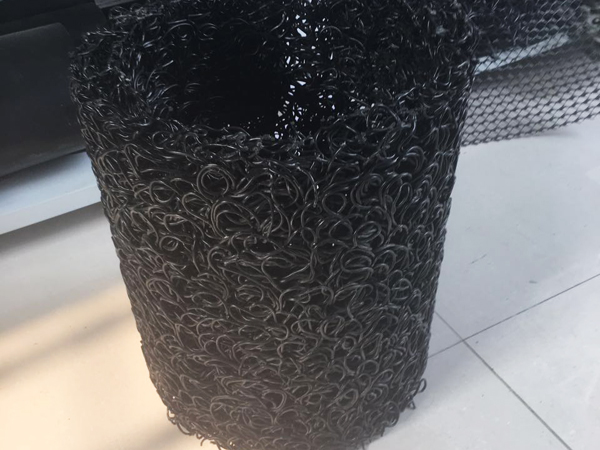
Plastic drainage channels, also known as blind channels or subterranean conduits, primarily serve to collect and drain渗水 from soil. They are used to reduce groundwater pressure, eliminate excess moisture, and protect soil and structures from damage due to infiltration-induced deformation. They are widely used in underground drainage projects for civil engineering, transportation, water conservancy, civil and industrial construction, mining, and environmental protection projects. With the development of high polymer materials, plastic drainage channels were developed abroad in the 1970s. This product overcomes the shortcomings of traditional blind channels, featuring high porosity, strong compressive resistance, large drainage capacity, and good durability. Consequently, they have been universally welcomed in the engineering community and are widely applied.
Product Features:
1) The plastic drainage channel itself is fused from numerous modified plastic fibers of the same toughness, eliminating the possibility of being snapped or damaged. Under 250kPa pressure, the void ratio at the cross-section still maintains above 60%, even under greater pressure, there is always a water-permeable gap, with 10~15% voids remaining, and it has good recovery properties.
2) The surface average aperture rate of our plastic blind trench is 90~95%, significantly higher than other similar products. It can effectively collect seepage water from the soil and promptly gather and drain it away.
3) Plastic blind channels are composed of a filter membrane made from corrosion-resistant fibers and a three-dimensional mesh of modified polyethylene, both of which offer the advantage of non-degradation in soil and water. Enhanced with an anti-aging formula, they maintain the material's unchanged characteristics.
4) The filter membranes for plastic blind channels can be selected according to different soil conditions, fully meeting the engineering requirements and avoiding the single drawback of the filter membranes in older products.
5) Plastic blind channels are lightweight, making on-site construction and installation very convenient, significantly speeding up the construction efficiency.
6) Over twenty years of extensive engineering practices both domestically and internationally have fully demonstrated the reliability of this product. It has been tested by the Ministry of Transport, the Ministry of Water Resources, and the Nanjing Institute of Hydrology under the Ministry of Electric Power Industry, and its quality and performance indicators meet or exceed national standards. Some indicators surpass those of Japanese products, yet the price is significantly lower.

Phone Consultation