

Product Details





价 格Negotiable
最小起订0 piece库存0 piece
 Business Card
Negotiable

Negotiable

Negotiable

Negotiable
 Unidirectional Plastic Geogrid
Negotiable
Unidirectional Plastic Geogrid
Negotiable
 Geotextile膜
Negotiable
Long-fiber Geotextile
Negotiable
Needle-punched nonwoven geotextil
Negotiable
Geotextile膜
Negotiable
Long-fiber Geotextile
Negotiable
Needle-punched nonwoven geotextil
Negotiable
 Polypropylene mesh fiber
Negotiable
Polypropylene mesh fiber
Negotiable
 Geotextile Mat
Negotiable
Geotextile Mat
Negotiable
 Coarse-textured geomembrane
Negotiable
Coarse-textured geomembrane
Negotiable
 EVA Waterproof Sheet
Negotiable
EVA Waterproof Sheet
Negotiable
 Flexible Perforated Drain Pipe
Negotiable
Flexible Perforated Drain Pipe
Negotiable
 3D Composite Drainage Mesh
Negotiable
3D Composite Drainage Mesh
Negotiable
Product Introduction:
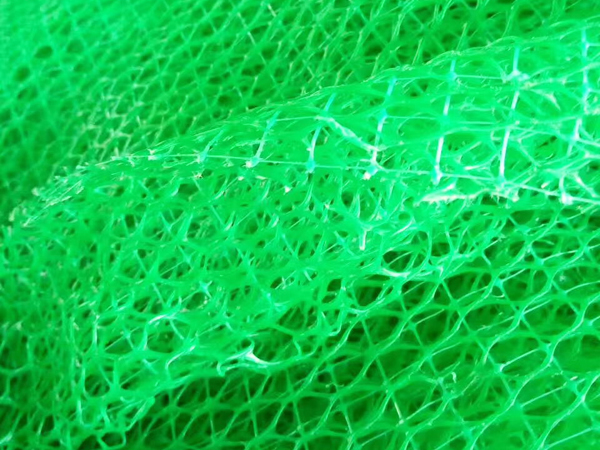
Three-dimensional Vegetation Net Slope Protection refers to a new technology that constructs a self-growing protective system on the slope surface by utilizing active plants combined with engineering materials such as geosynthetic materials. It reinforces the slope through the growth of plants. According to the characteristics of the slope terrain, soil quality, and regional climate, a layer of geosynthetic material is covered on the slope surface, and various plants are planted at certain combinations and intervals. Through the growth activities of the plants, the purpose of reinforcing the root system and preventing erosion of the stems and leaves is achieved. After being treated with ecological slope protection technology, a dense vegetation cover can be formed on the slope surface, with a tangled root system in the topsoil layer. This effectively resists the erosion of the slope by heavy rain runoff, increases the shear strength of the soil mass, reduces the pore water pressure and the self-weight of the soil mass, thereby significantly improving the stability and erosion resistance of the slope.
Product Features:
The embankment can be protected from wind and rain erosion before the grass is fully grown.
Can maintain even distribution of seeds on the slope, preventing them from being blown away or washed away by rain.
The netting can absorb a large amount of heat energy, enhance ground temperature, promote seedling germination, and extend the growth period of plants.
The composite protective layer formed by the growth of plants can withstand the scouring of high water levels and strong currents.
A substitute for concrete, asphalt, and cobblestone, primarily used for slope protection on highways, railways, waterways, and embankments.

Phone Consultation