New material technology R&D; technical service, technolog...



Product Recommendation
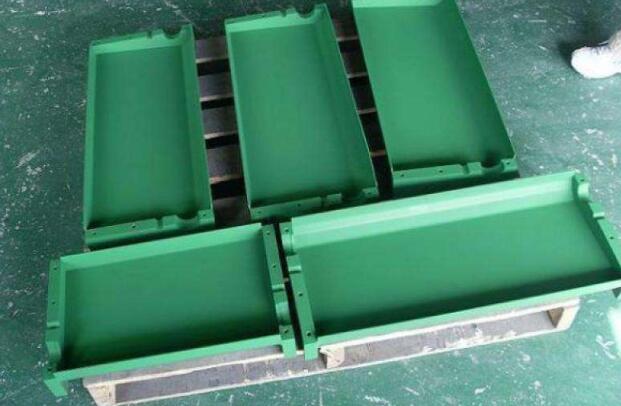
Teflon coatings, known for their non-stick, easy-to-clean, corrosion-resistant, and high-temperature-resistant properties, are widely used. Teflon coatings, from paints to spraying, have undergone numerous project inspections to ensure that the products reach consumers safely and meet quality standards. Next...Guizhou Teflon CoatingLet's unveil the secrets behind the Teflon coating inspection.
Test One: Hardness Test
Using a standard pencil and a coating, push the pencil with a 750g pencil hardness gauge at a speed of 0.5-1mm/s away from the operator for at least 10mm. Wipe with an eraser and observe the surface marks on the coating to determine if there is any damage. Repeat this process until a pencil with the desired hardness is found.
Test Two: Average Coating Thickness Measurement
Thickness of non-stick cookware coatings is measured using a coated layer thickness gauge. If the coating is too thin, its wear resistance, scratch resistance, and corrosion resistance will be poor, leading to peeling and detachment during use, as well as corrosion spots, significantly shortening the lifespan of the cookware.
Test 3: Coating Adhesion Test
A places a ruled grid board on the Teflon-coated surface, uses an artist's knife to score the lines, then applies 3M-898 tape in all directions and pulls it off 5 times; no detachment should exceed 5%.
Boil B in water for 15 minutes, then scratch the surface with an artist's knife and apply 3M-898 tape in all directions.
Apply five times, peeling should not exceed 5%.
Test 4: Heat Resistance and Rapid Temperature Change Stability Test
Place the sample in an incubator and heat it to 250±5°C, then keep it there for 5 minutes before immediately transferring it to a 23°C water bath for 1 minute of cooling. Remove and dry it. Examine the coating surface with a 4x magnifying glass; there should be no signs of carbonization, cracking, or bubbling.
Test 5: Alkaline Resistance Test
Alkali Resistance: Place the sample into a 2% Na2CO3 solution, submerge two-thirds of it, soak for 2 hours, then remove and rinse with clean water, dry with a cloth. Examine under a 4x magnifying glass; the surface should be free of bubbling, cracking, shrinkage holes, and rust spots.
Test Six: Acid Resistance Test
Place the sample into a 2% solution, submerging it to two-thirds of its height, and soak for 2 hours before removing. Rinse with clean water, dry, and inspect under a 4x magnifying glass. No bubbles, cracks, shrinkage holes, or rust spots should be present.


www.114global.com © Zhongshang 114 Hebei Network Technology Co., Ltd.Address: Room 6009, Oriental New World Center, No.118 East Zhongshan Road, Qiaoxi District, Shijiazhuang City, Hebei ProvincePlatform Service Hotline: 4006299930