















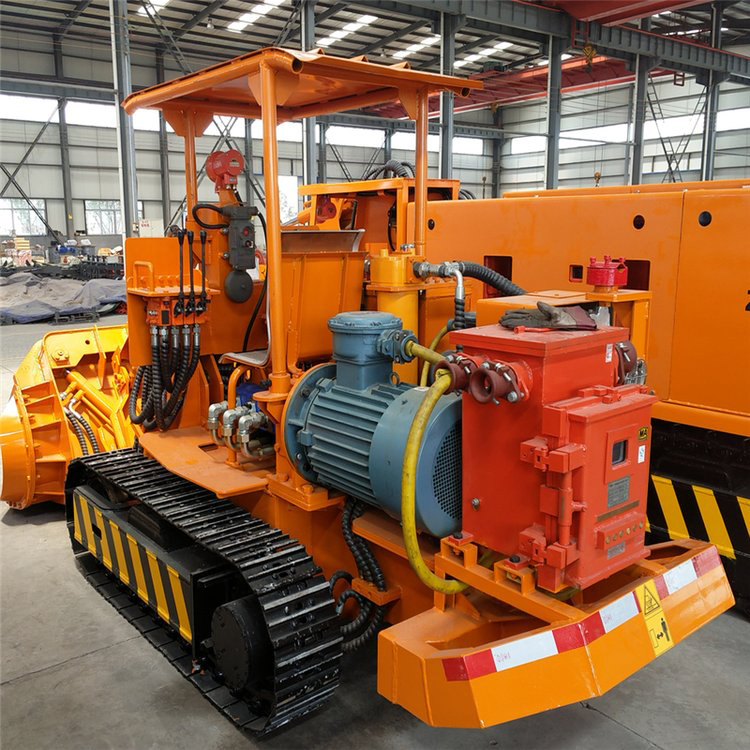


A mechanical loader for ore or rock in horizontal or gently sloping tunnels.
A Rock Loader [1] is a mechanical device used for loading ore or rock in horizontal or gently inclined tunnels. Its advantages include flexibility, reliability, and high production efficiency, making it suitable for geological prospecting tunnels. Depending on the form of its working mechanism, there are rakes, shovels, crab claws, vertical claws, and grabs, among others. It is mainly used in coal mines, metallurgical mines, and tunneling projects for loading operations with wagons or buckets. This section provides a detailed introduction to the structure, working principles, and applications of rakes, shovels, and crab claws. Additionally, it covers the maintenance and operation procedures for rock loaders.
The rock loading machine features high rock loading efficiency, simple structure, excellent reliability, easy operation, and wide application range. It is not only suitable for level tunnels but can also be used in inclined tunnels below 30°, making it a key equipment for increasing tunneling speed and achieving mechanization in tunneling.
Primarily used for mining, metallurgical mine, tunneling, and other engineering tunneling projects, accompanied by mining carts or buckets for loading operations.
⑴ Divided by the form of their working mechanism, there are rakes, shovels, crab claws, standing claws, and grab buckets, etc. [2].
⑵ Categorized by their mode of movement, there are also three types: rail-wheeled, tracked, and solid-tire.
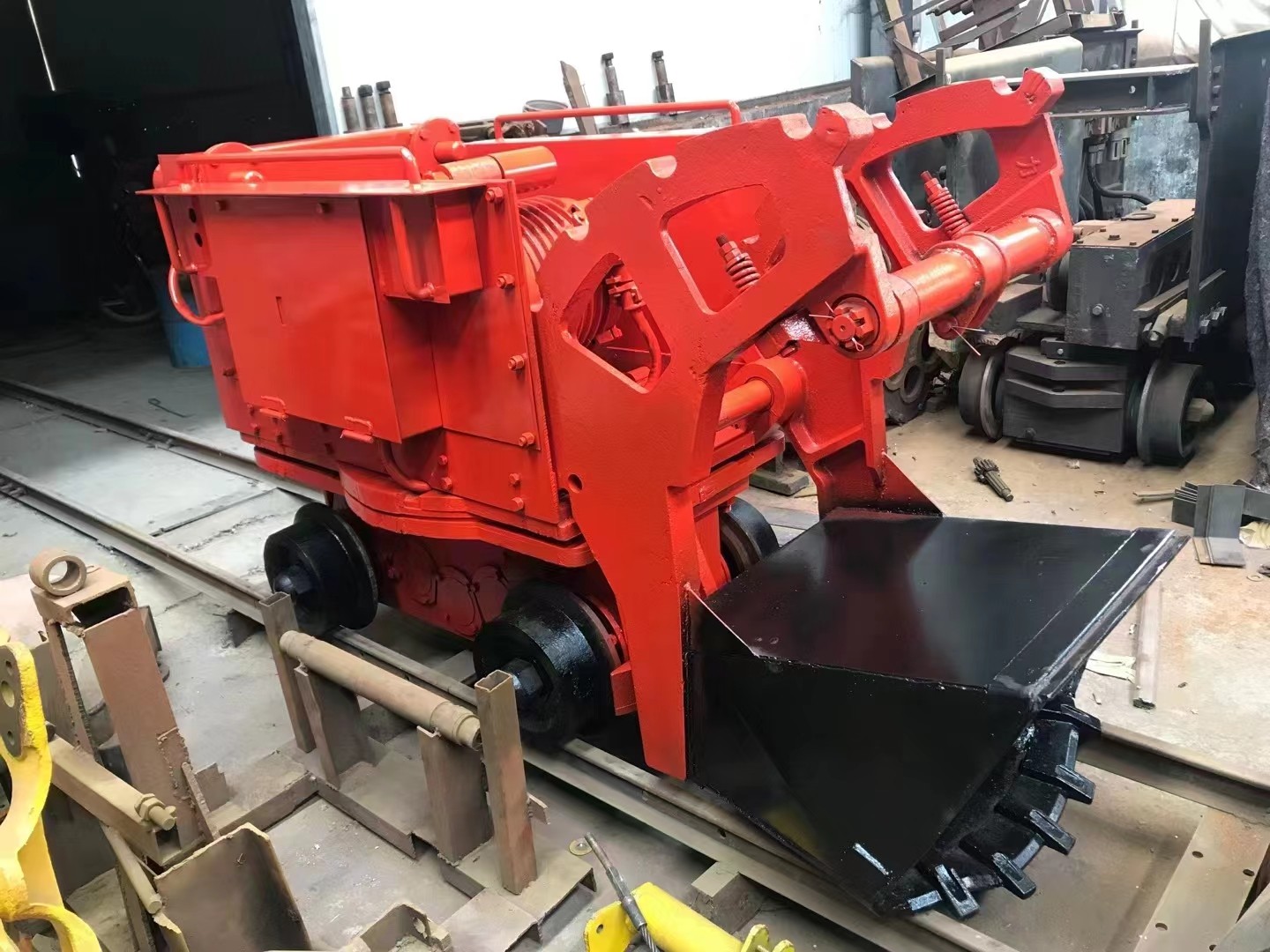 ③ Divided by the continuity of the working mechanism's movement, there are intermittent and continuous types. Some also integrate rock boring vehicles and loaders into a single unit, forming a rock boring machine that can both bore and load.


















