


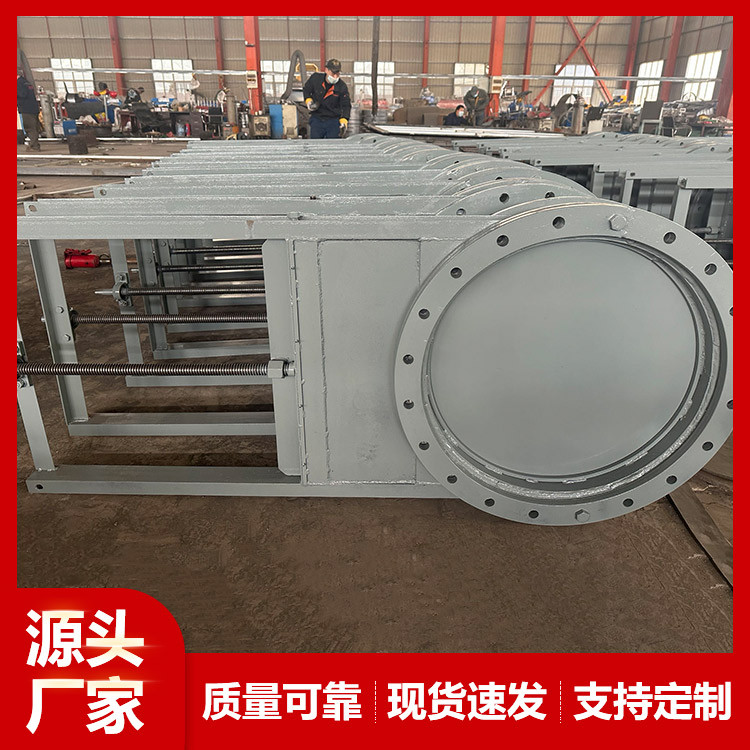













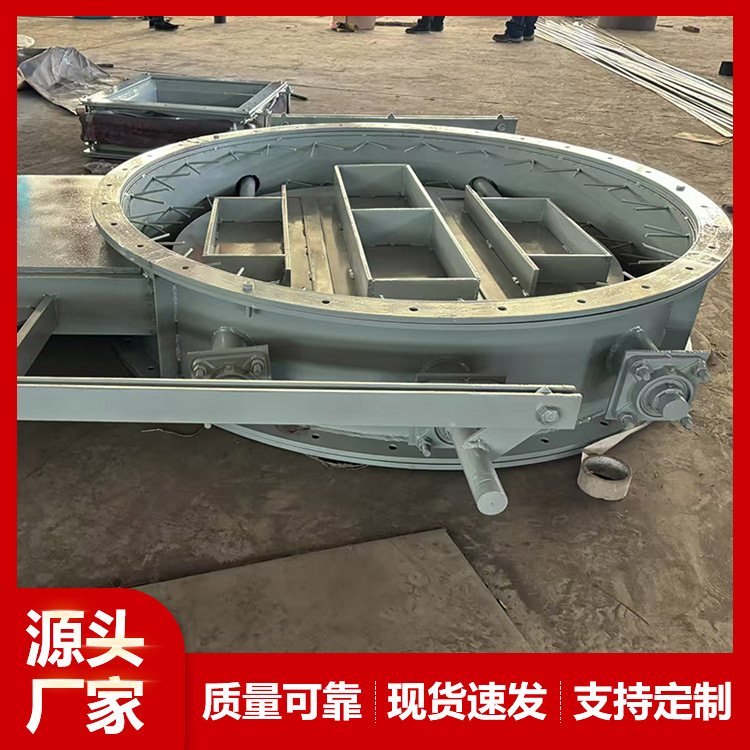
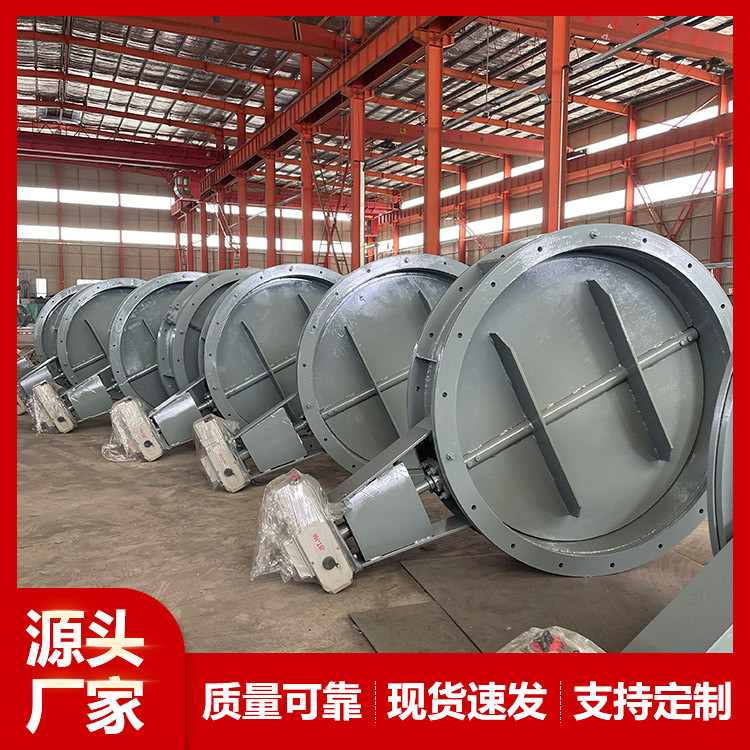
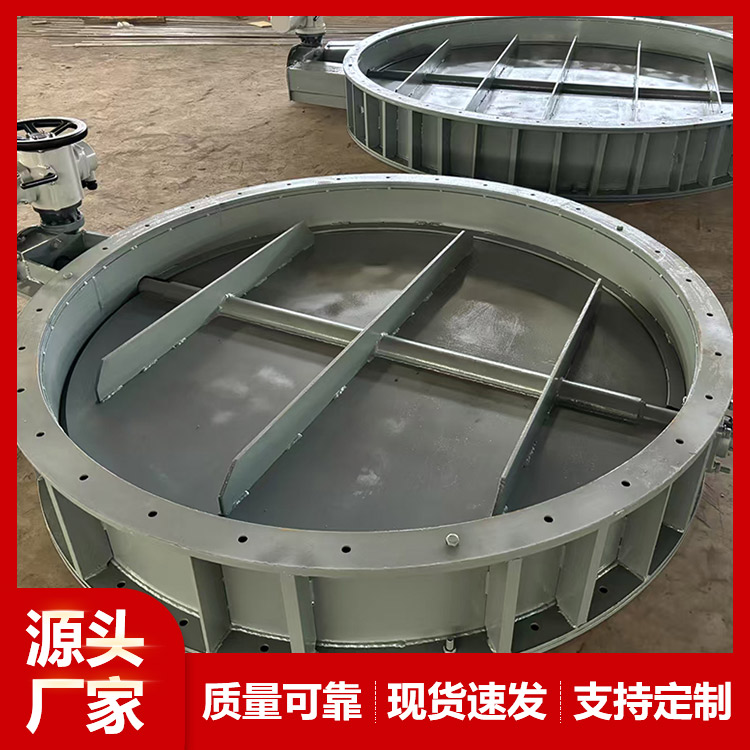
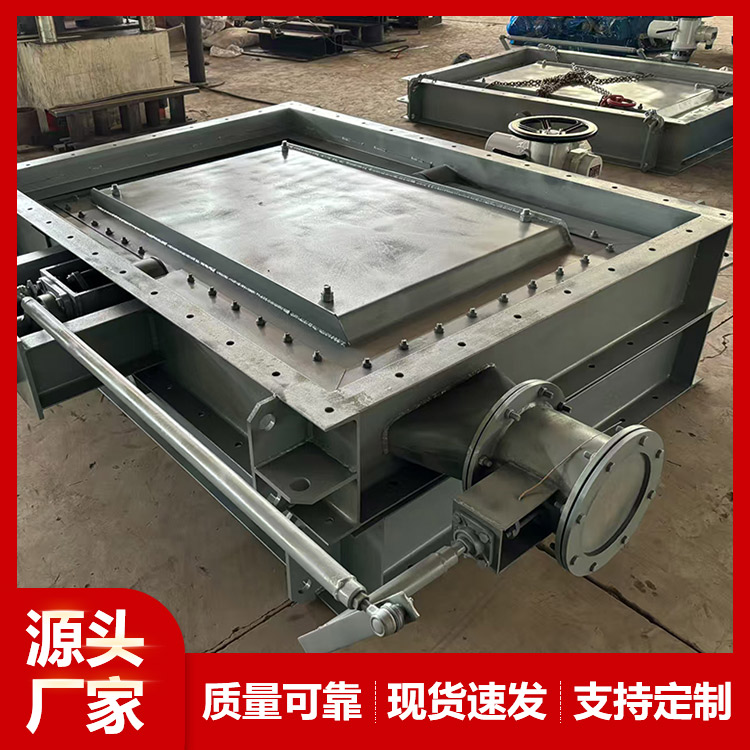
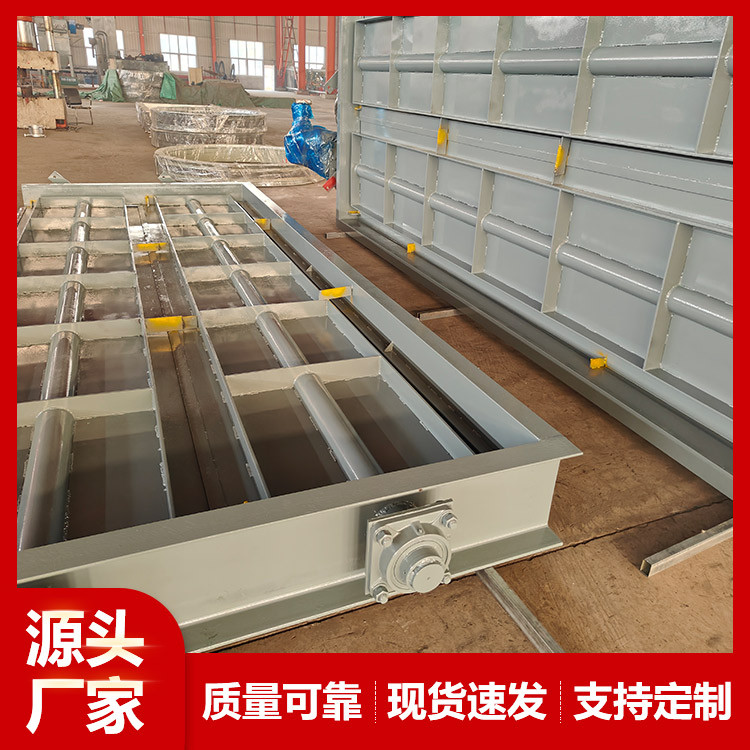

Plug valves are differentiated by diameter: large diameter ones are called plug gates, utilizing electric or hydraulic operation devices. Small diameter ones are referred to as plug valves, primarily using manual operation devices, and are used in coke oven flues to block the flow of flue gas medium. The plug is located outside the flue, avoiding corrosion from high-temperature flue gas and medium. It reduces the resistance of flue gas flow within the flue while also ensuring the longevity of the plug.
The plug valve is mainly composed of components such as the frame, valve plate, screw rod, nut, and actuator. It operates by the actuator rotating the screw rod, which in turn drives the valve plate to move up and down horizontally repeatedly, achieving the purpose of opening and closing the valve.
Features of Manual Plug Valves:
1. Manual plate valves are often used in conjunction with discharging equipment or material silos. These valves feature simple flange-mounted installation and come in both square and round inlet and outlet openings. They are available in dozens of sizes based on the diameter and are used in industries such as waste incineration, steel mills, power plants, chemical plants, and construction materials.
2. The manual plug valve features a simple and compact structure, reasonable design, reliable sealing, easy and flexible operation, small size, smooth flow path, low resistance, easy installation and disassembly, lightweight and material-saving, low flow resistance, and light weight.
3. Manually operated plug valves should be regularly inspected at all transmission parts during normal use, and lubrication should be applied for maintenance.
Electrical plug-in ball valve usage precautions and features:
The actuating part of the electric plug valve is the valve plate, which moves perpendicular to the fluid direction. The plug valve can only be fully open or fully closed; it cannot be used for adjustment or throttling.
The electric plug valve's valve plate features two sealing surfaces. The two sealing surfaces of the commonly used pattern plug valve form a wedge shape, with the wedge angle varying with the valve parameters, typically 50 degrees. The valve plate of a wedge plug valve can be made as a single, solid piece, known as a rigid valve plate; or it can be designed to have a slight degree of deformation, enhancing its processability and compensating for any deviations in the sealing surface angle that may occur during the manufacturing process. This type of valve plate is called an elastic valve plate.
When the plug valve is closed, the sealing surface can be sealed solely by the medium pressure, meaning the medium pressure pushes the sealing surface of the valve plate against the opposite valve seat to ensure the sealing. This is known as self-sealing. Most plug valves use forced sealing, which requires external force to forcibly press the gate plate against the valve seat when the valve is closed to ensure the sealing integrity of the sealing surface.


















