








I. Product Introduction:
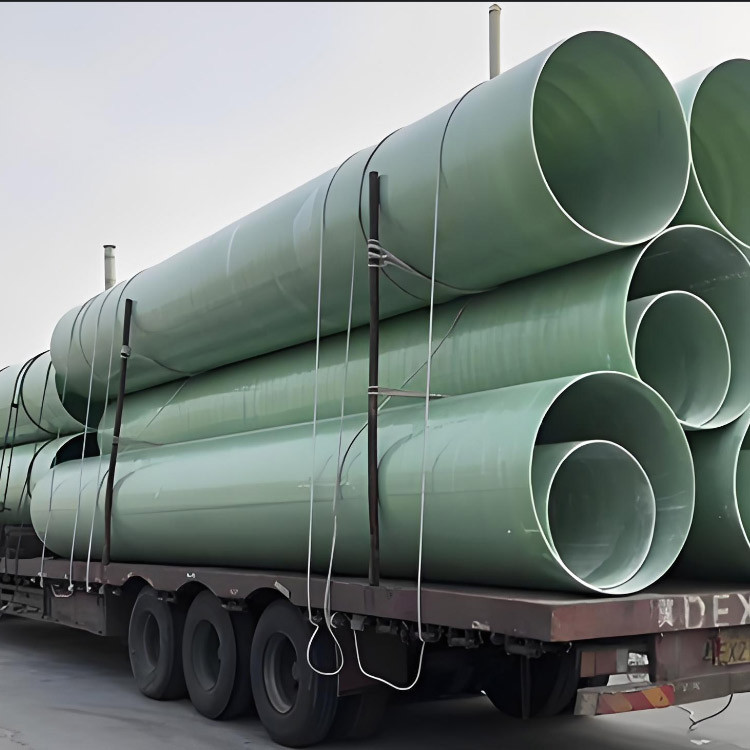
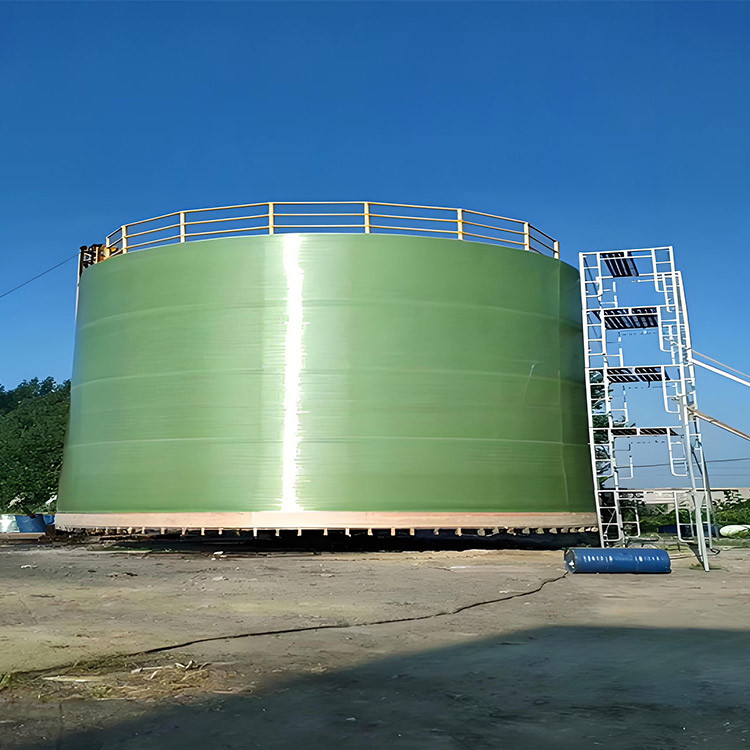
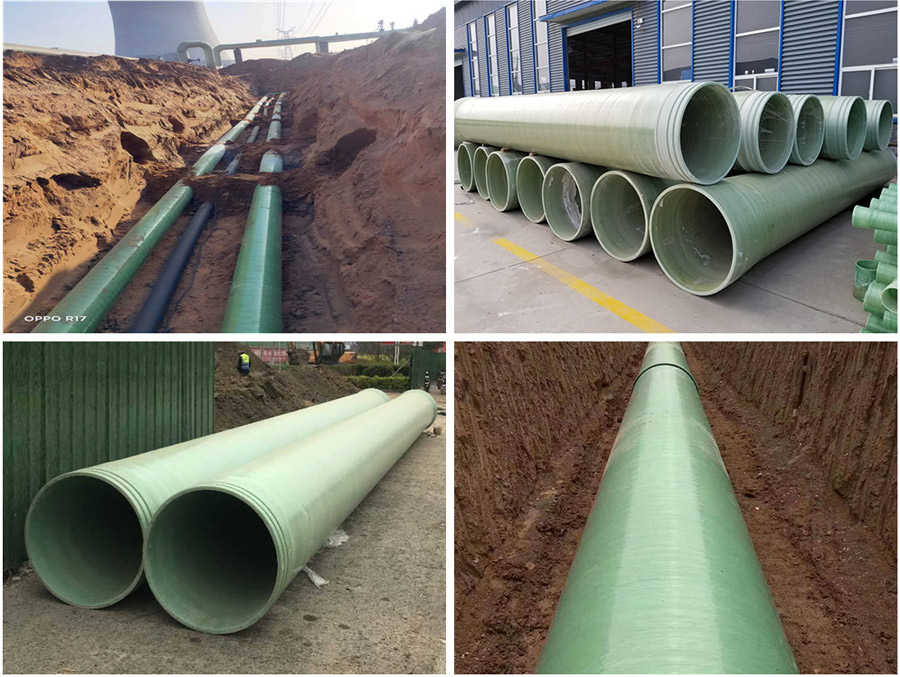
Glass fiber reinforced plastic (GFRP) effluent pipes are a new type of composite material made from unsaturated resin as the matrix material, glass fiber as the reinforcing material, and quartz sand as the filling material. They are favored in the chemical industry, drainage projects, and pipeline engineering due to their excellent corrosion resistance, hydraulic properties, lightweight high strength, large flow capacity, easy installation, short construction period, and low overall investment.
II. Product Advantages:
The products are made from corrosion-resistant resins, boasting superior mechanical properties and processing characteristics, making them suitable for most untreated wastewater containing acids, bases, salts, seawater, corrosive soil, groundwater, and numerous chemicals. At -30°C, they maintain excellent toughness and high strength, and can be used over a long period within the range of -50°C to 80°C. Resins with special formulas can even withstand temperatures up to 200°C. The glass steel pipes exhibit excellent wear resistance; tests have proven this by subjecting water mixed with large amounts of mud and sand to rotational wear impact tests in the pipes. After 300,000 rotations, the wear depth on the inner wall of the pipes was measured as follows: 0.53mm for tar and ceramic oil-coated steel pipes; 0.48mm for surface-hardened steel pipes; and only 0.21mm for glass steel pipes, demonstrating the remarkable wear resistance of glass steel pipes.
Section 3: Product Performance
Due to the low thermal conductivity of glass fiber reinforced plastic products, they exhibit exceptional insulation properties. During use, they do not scale, rust, or become infested with marine or wastewater microorganisms such as shellfish and fungi. The standard length of pipes is typically 3-6-9-12m per piece (special lengths can also be produced upon customer request). Longer single pipes have fewer joints, which speeds up installation, reduces failures, and improves the overall installation quality of the pipeline. Glass fiber reinforced plastic pipes produced by filament winding have a density of 1.65-2, which is only 1/4 that of steel. However, their hoop tensile strength is 180-300MPa, and their axial tensile strength is 60-150MPa, comparable to alloy steel. Therefore, their specific strength (strength/density) is 2-3 times that of alloy steel, allowing them to be designed to meet various internal and external pressure requirements based on user needs. For the same pipe diameter, FRPM pipes weigh only about 1/2.5 of carbon steel pipes (sheet steel coiled), 1/3.5 of cast iron pipes, and around 1/8 of prestressed concrete steel tube pipes, making transportation and installation very convenient. The tensile strength of the pipes is lower than that of steel but higher than that of ductile iron pipes and concrete pipes. Their specific strength is approximately 3 times that of steel pipes, 10 times that of ductile iron pipes, and 25 times that of concrete pipes. Additionally, their thermal conductivity is only 1% of that of steel pipes, offering excellent insulation properties, making them suitable for use in areas with dense transmission and telecommunications lines as well as regions prone to lightning.