







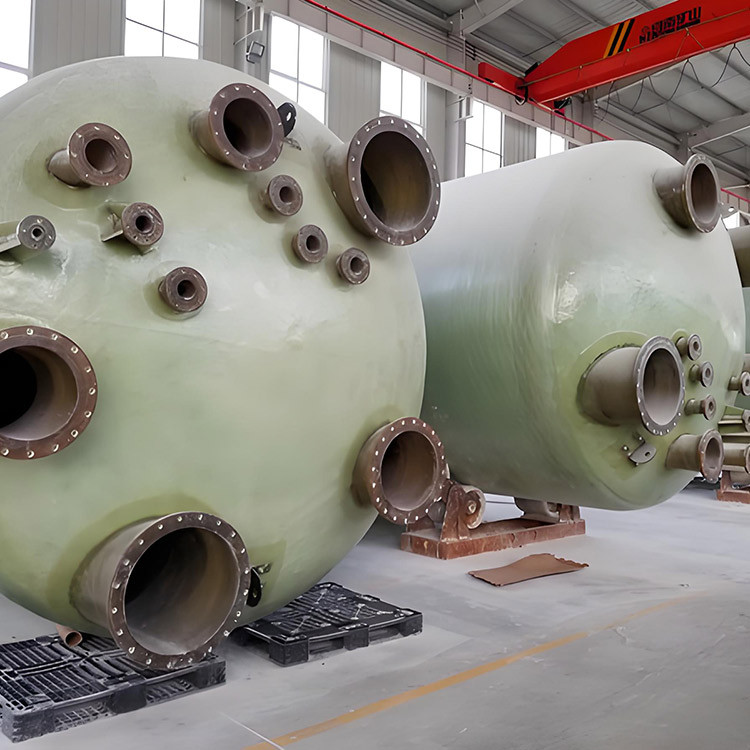
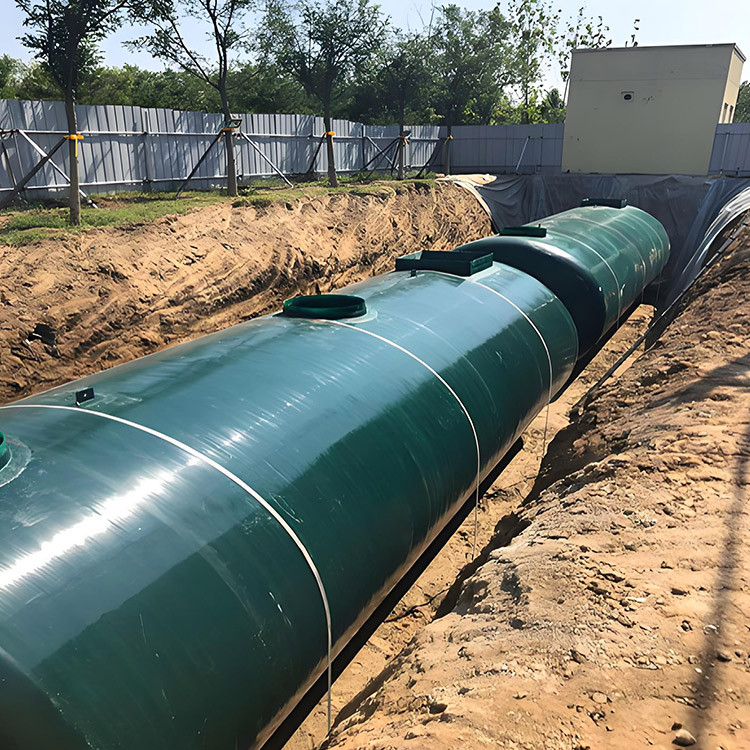
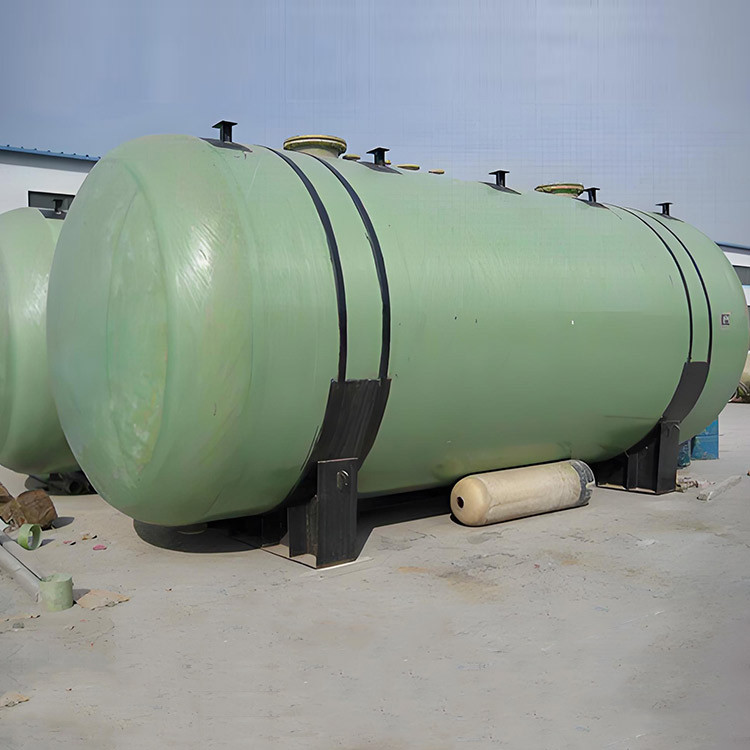
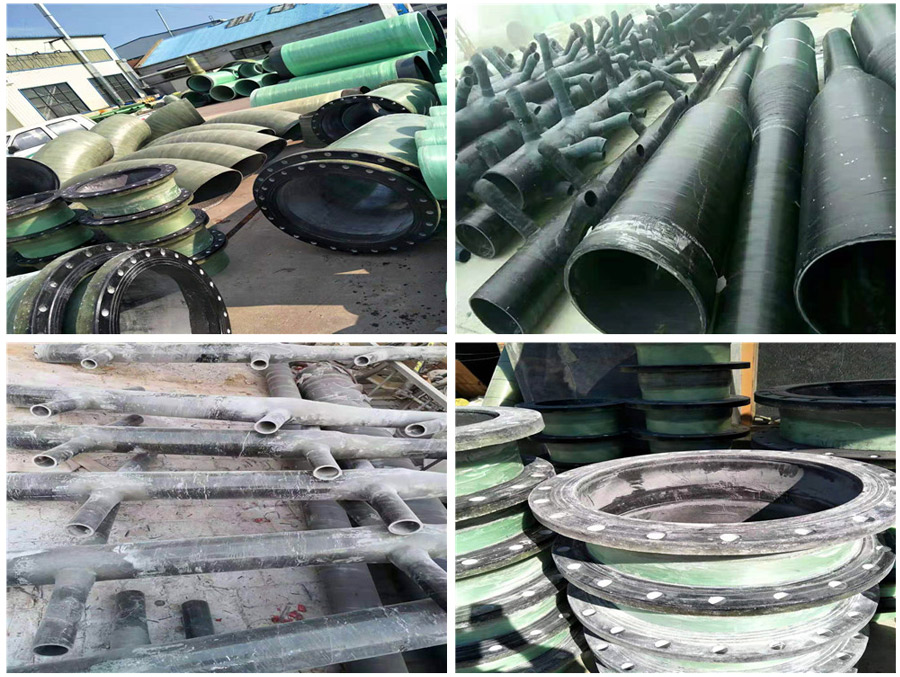
One, the glass fiber reinforced plastic (GFRP) nozzle pipe fittings used in flue gas desulfurization projects are typically manufactured in sections and components for ease of transportation. The sections are then connected using wrapping and bonding techniques on-site during installation. Currently, the connection between slurry nozzles and GFRP spray pipes has also transitioned from previous flange connections to wrapping and bonding techniques. The wrapping and bonding process offers advantages such as high connection strength, low leakage risk, simple process, ease of construction, and low cost.
Part two: The desulfurization spray pipe is divided into three sections from the outside to the inside:
1. FRP Spray Pipe Wear-Resistant Layer: This part constitutes the outer structure of the wrapping layer, composed of glass fiber surface felt, resin, and silicon carbide, primarily serving to resist corrosion and wear.
2. Glass Fiber Reinforced Plastic Sprinkler Pipe Corrosion-Resistant Layer: Composed of a secondary resin layer and an intermediate layer, this section is made up of glass fiber surface felt and resin, providing high corrosion resistance and placed beneath the wear-resistant layer. The rich resin layer contains over 90% resin with a thickness of approximately 0.5mm; the intermediate layer contains 70% to 80% resin with a thickness of about 2.0mm.
3. Glass Fiber Reinforced Spray Pipe Lining: This component is directly wrapped around the exterior of the pipe, primarily designed to withstand pressure and loads under various conditions. The thickness is calculated and determined based on the load conditions using Equation (1). The resin content in this layer is 30% to 40%, and it consists of glass fibers, chopped fiber mat, and resin.
Three, Inspection of the Wrapping Layer: After the wrapping bonding construction is completed, the wrapping layer should be inspected according to the requirements of HG/T20696-1999 "Design Specifications for Glass Fiber Reinforced Plastic Chemical Equipment." Defects such as delamination, peeling, cracks, crazing, fiber exposure, dry spots, inclusions, bubbles, small holes, and resin lumps are considered不合格.