







I. Product Introduction:
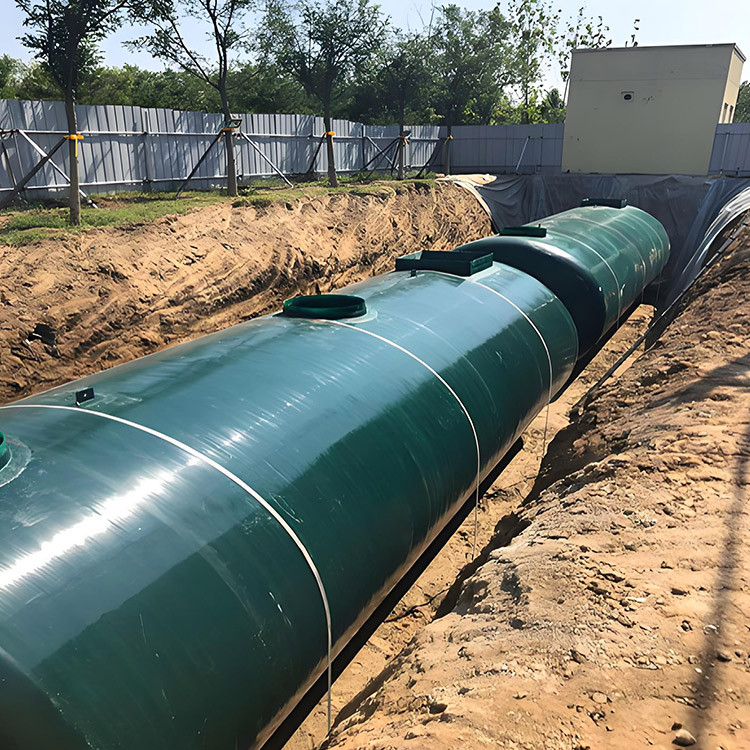
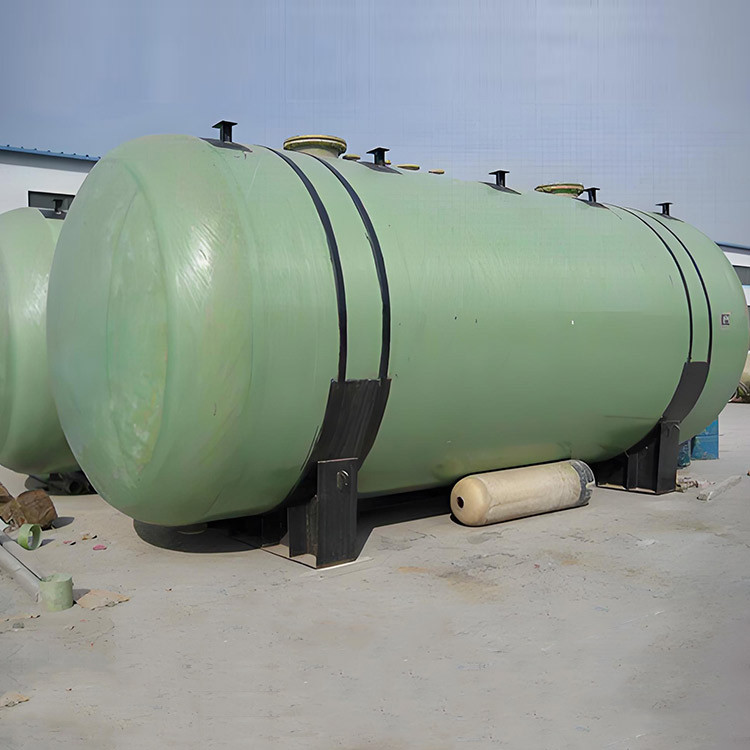
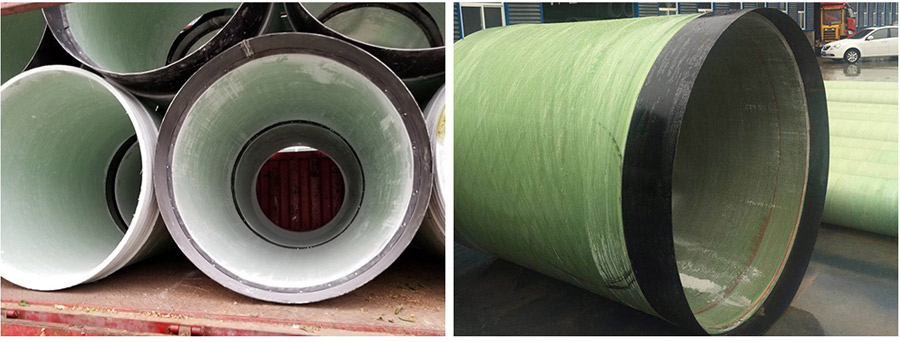
Glass fiber reinforced plastic (GRP) pipe is a newly developed pipeline product in the field of water supply and drainage. It can complete underground pipeline construction and installation without excavation. It can directly cross highways, railways, rivers, and ground buildings. Due to its excellent properties such as corrosion resistance, light weight, smooth inner wall, high flow rate, and good adaptability to geological conditions, it has become a pipeline material for pipeline projects in large and medium-sized cities.
Section II: Product Features:
1. Lightweight (1/10th the weight of concrete pipes), with low foundation requirements, minimal requirements for hoisting and pipe-laying equipment, and easy construction.
2. Due to small settlement and low thrust, pipeline alignment correction is easy.
3. Smooth inner wall, high flow rate; under a fixed flow rate, a smaller pipe diameter can be used, which can reduce the overall project cost.
4. Smooth surface, low thrust, soil cohesion has less effect on the glass fiber reinforced pipe, no pipe gripping or clogging occurs, longer single push length, lower requirements for pushing equipment.
Section 3: Process Route:
Utilizing a 12-meter long fixed-length winding glass fiber reinforced plastic (FRP) sand coated pipe production process, four sections of 3-meter-long FRP manholes are produced per mold, with intermittent sand filling in layers as designed. The 300-800mm pure FRP section at both ends of each manhole is reinforced locally with glass fiber fabric. Each section is processed and cut using special equipment, and after trimming to the specified shape and size, they can be removed from the mold in one go. The production efficiency fully meets the project progress requirements. The design and production process adopt an integrated solution for pure FRP and FRP sand coated composite reinforcement.
Section 4: Design Technology
Based on the specific application conditions of the glass-fiber reinforced plastic (GRP) sand-filled pipe used in pipe jacking projects, determine design parameters such as pipe diameter, material stiffness grade, soil parameters, design load (including internal pressure, vacuum, vertical static soil pressure at the pipe crown, live load from ground vehicles, and soil stacking load), etc. These parameters provide a theoretical basis for the structural calculations of the GRP sand-filled pipe.
V. Structural Calculation:
Based on the selected design conditions and parameters, the structural calculations for glass fiber reinforced plastic pipe sections are conducted in accordance with China's national standard "Glass Fiber Reinforced Plastic Pipe" (GB/T21492-2008), "Pipe Jacking Construction Technology," and computer nonlinear finite element numerical calculations. The structural calculations of the pipe material include calculations, analyses, and verifications for jacking force strength, stiffness, bending deformation, bending strength, stability analysis, seismic strength analysis, etc.
VI. Production Process:
1. Confirm and approve the design and production plan.
2. Lining manufacturing
3. Glass fiber hoop and cross-wound internal structure layers.
4. Special sandblasting with intermittent sandblasting paper (sandblasting paper is continuous at pure fiberglass but stops at sandblasting)
5. Promptly fabricate the pure fiberglass sections after each layer of sand-lamination.
6. Glass fiber hoop and cross-wound outer structural layer
7. Trim and cut to uniform shapes and specified dimensions.
8. After demolding, the products are inspected and then mounted with steel sleeve rings before being shipped out.
Section 7: Connection Method:
The pipe sections are connected and positioned using embedded steel sleeve rings. During jacking, glass fiber reinforced plastic resin is used for sealing. After the two pipes are joined, they function to seal water. Platforms are machined at both ends of the jacking pipes, ensuring the outer diameter of the steel sleeve ring matches that of the jacking pipe itself upon fitting the sleeve ring onto the pipe end. The steel sleeve ring serves as a positioning aid and enhances resistance to uneven settlement. The resin mouth provides sealing, and the pipes function to seal water after joining. Platforms are machined at both ends of the jacking pipes to ensure the outer diameter of the steel sleeve ring matches that of the jacking pipe itself upon fitting the sleeve ring onto the pipe end. The steel sleeve ring serves as a positioning aid and increases resistance to uneven settlement.
Section 8: Applicable Locations:
● Water supply and public utilities engineering. ● Petroleum and chemical engineering. ● Construction engineering. ● Sewage engineering. ● Power, metallurgy, and environmental protection engineering. In summary, FRP pipe can complete the construction and installation of underground pipelines without excavation of the ground. It can directly cross highways, railways, rivers, and ground buildings. This is due to the FRP pipe's inherent characteristics of excellent corrosion resistance, light weight, smooth inner walls, high flow rate, and good adaptability to geological conditions.