















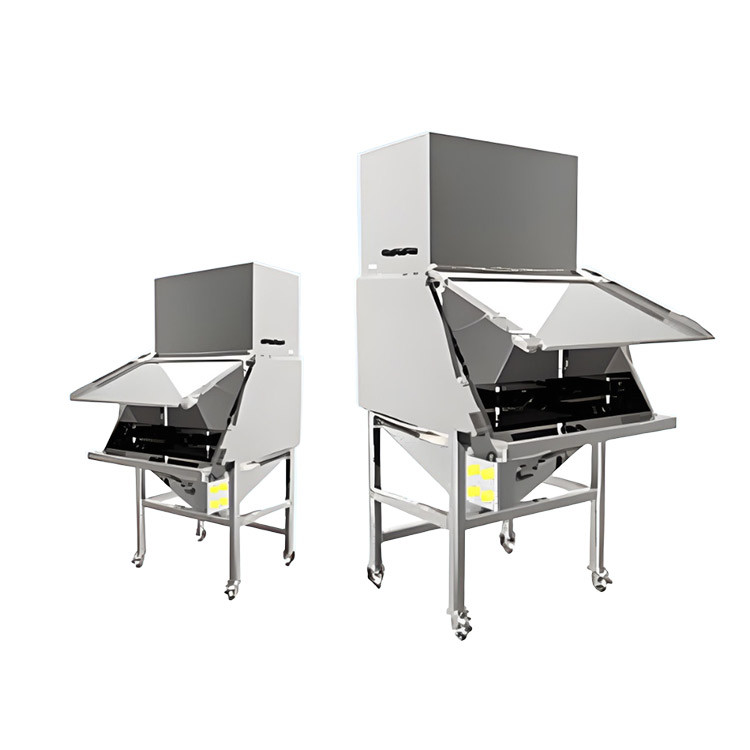
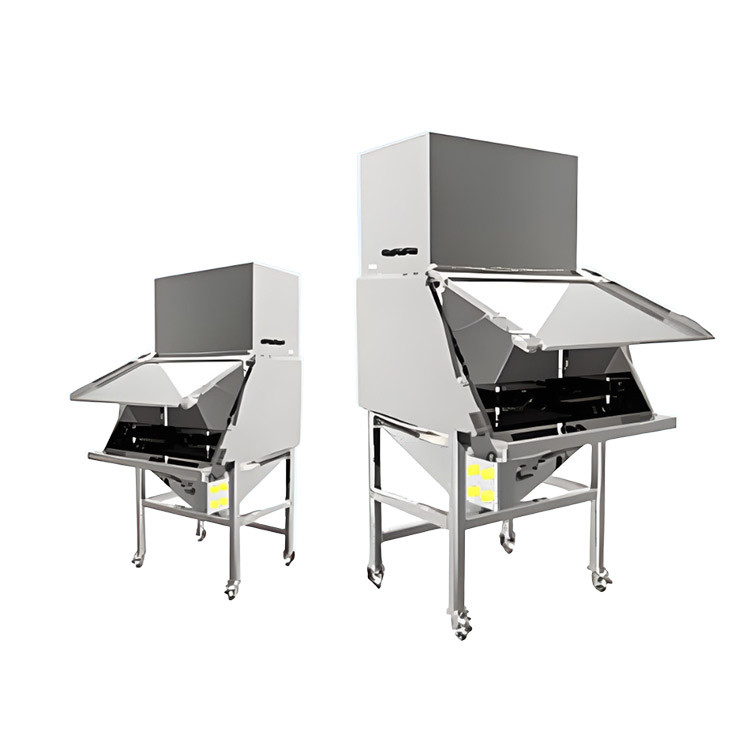
I. Overview of RLH Screw Conveyer Blender
The screw blade mixer consists of a U-shaped container, screw blade mixing blades, and transmission components; the screw-like blades are generally made in three or two layers. The outer screw strips gather materials from both sides to the center, while the inner screw strips transport materials from the center to the sides, creating a convectional mixing effect. The screw blade mixer is effective for mixing sticky or cohesive powdery particles, as well as mixing liquids and paste-like materials with powdery particles. The cylinder cover can be made into a full-open door for easy cleaning and product change of the equipment.
II. Application Scope
Horizontal screw blade mixers are used for food additives, powdered pesticides, veterinary drugs, powdered building materials, chemicals, biology, aquaculture, ceramics, refractory materials, plastics, and compound fertilizers. They are ideal for mixing solid-solid (i.e., powders with powders) and solid-liquid (i.e., powders with paste) mixtures, particularly suitable for thickening materials.
III. Working Principle
Horizontal screw blade mixers drive the material in the drum through the inner and outer diameter screws mounted on the stirrer shaft, causing the agitator to flip the material inside the drum. Structurally, the screws are designed as reverse helices, one inside and the other outside, and one on the left and the other on the right. When the mixer operates, the inner screw rotates the material near the axis, pushing it outward axially from inside to the sides, while the outer screw rotates the material near the drum wall, pushing it inward axially from the sides to the center, creating a convection circulation and shearing mixing within the drum, achieving a rapid and uniform mixing of the material in a short period of time.
IV. Structural Features
a. This machine features a horizontal cylinder with independent structures for its inner and outer spiral belts, offering smooth operation, reliable quality, low noise, long service life, easy installation and maintenance, and various agitator designs. The horizontal screw blade mixer ensures mixing efficiency that is unaffected by particle size and density.
b. Fast mixing speed, high uniformity, especially for sticky materials. The spiral conveyor can be equipped with scrapers, ensuring excellent mixing results for sticky substances as well.
c. Under various material blending requirements (especially, each batch of special material needs to be cleaned), different screw conveyor structures are used, featuring jacketed designs that are capable of heating and drying.
e. The helical blades rotate in both directions on the same horizontal axis, creating a low-power mixing environment. The smooth mixing process minimizes damage to fragile materials. A knife structure can be added for crushing, and a liquid spray system can also be installed. The liquid and powder are mixed thoroughly and evenly.
f. The horizontal unit can also be equipped with a removable cleaning door for user cleaning. The overall height of the equipment is low, making it easy to install.
V. RLH Ribbon Blender Technical Specifications:
Commercial Note: * The mixed volume in the table is measured based on a powder with a bulk density of 1, using the powder as the medium. Selection should be calculated according to the product's count, bulk density, fluidity, and other parameters.
Please provide detailed data if the working conditions involve high temperature, high pressure, flammability, explosiveness, corrosiveness, or粘性, so that we can select and customize a suitable option.
* Should there be any changes to the data or images in this table, no separate notice will be given. The correct parameters are to be determined by the physical items provided.
* This table does not include all products. For more information, please contact our sales engineer.
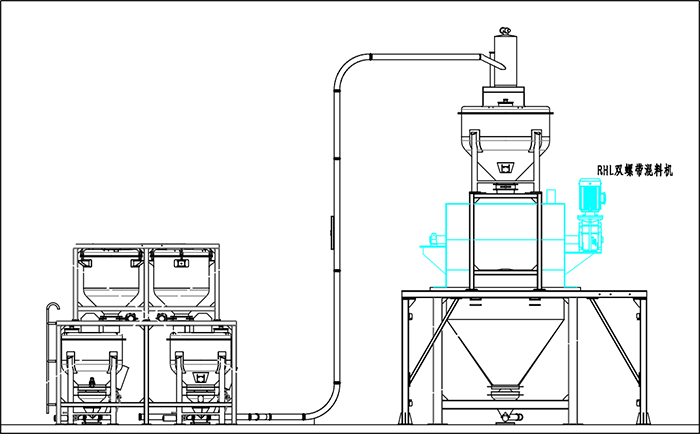
VI. Illustration of Small Production Line
VII. Product Advantages
a. Strong non-standardization
Customizable for various non-standard products, including explosion-proof, spray, heating, vacuum types, etc. Materials can be customized to carbon steel, SS316L stainless steel, SS304 stainless steel, and can also be lined with polyurethane or coated with high-wear-resistant materials; valves can be customized to butterfly valves, globe valves, ball valves, and bell valves, etc.
b. Wide application scope
Horizontal structure combined with an independent double-screw design, allowing for not only the mixing of powders with powders but also suitable for blending powders with liquids. It can also stir pasty, thick, or heavy materials such as genuine stone paint, putty, metal powders, and similar products.
c. High loading rate, strong sealing
For different material characteristics, the drum can be designed with a 180º-300º angle, with a maximum capacity of 70% material load. For fine powders, a composite sealing structure of airtight + filling material is used, which can significantly enhance the lifespan and effectiveness of the seal. For highly fluid slurries, mechanical seals can be configured to meet various mixing conditions.
d. High equipment stability and long lifespan
The reducer is selected with the K series spiral cone gear reducer, featuring high output torque, low noise, and long gear life with minimal oil leakage. The discharge valve utilizes an arched valve that fits closely with the drum body, ensuring thorough mixing without dead spots. The design of the new valve body structure guarantees the longevity and sealing effect of the valve.
Section 8: Selection Methods
a. Determine the volume of material mix for each batch and select the corresponding equipment size.
b. Select material for equipment manufacturing, which is categorized into: parts in contact with the material and parts not in contact with the material. Other equipment components maintain their original material. (Material selection is based on material properties, working conditions, sanitation level, and other factors. Common materials include carbon steel, 304/316L/321 stainless steel. Once the material is chosen, surface treatment requirements are determined accordingly.)
c. Determine the driving capacity based on the material's specific gravity, fluidity, and other properties, as well as the startup standards.
d. Increase auxiliary function components based on actual process conditions, such as heating, spraying, and cooling.
e. Specify the opening requirements for the design equipment, such as cleaning ports, feeding ports, exhaust openings, etc.
f. Select material discharge mode and drive type, including manual, pneumatic, and electric.


















