















Product Overview
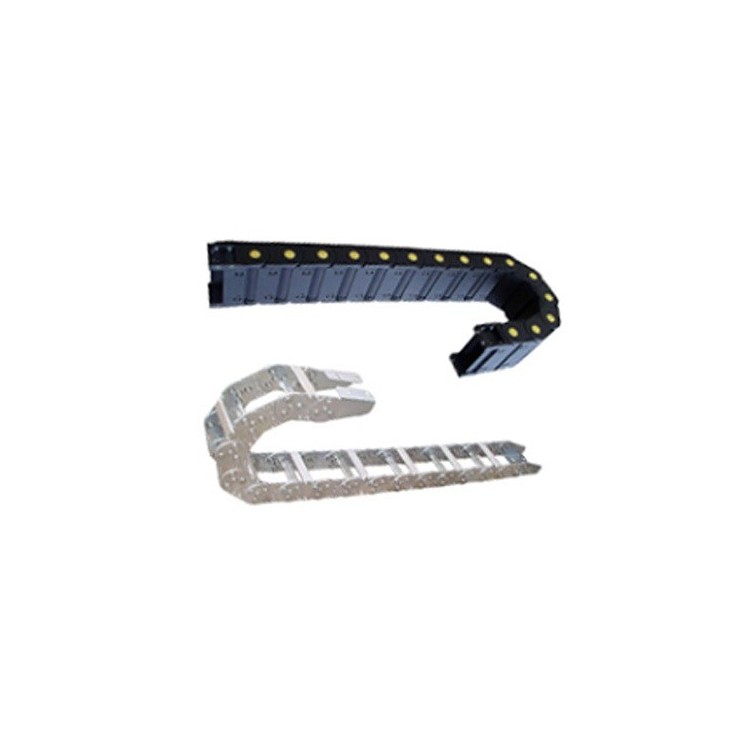
The JYL series cable track is assembled from components such as chain plates (plastic, carbon steel, or stainless steel), support plates (plastic, high-strength aluminum alloy), pin shafts, and following connectors. It ensures that there is no relative movement between the cable or rubber hose and the track, thereby eliminating direct mechanical wear. As a result, it will not produce bending or distortion deformation within the specified bending radius. All parts are treated for corrosion resistance, enabling operation in relatively harsh environments. Thanks to its reasonable structural design, strong load-bearing capacity, innovative design, compact structure, good rigidity, high strength, flexible transmission, safety, reliability, and ease of assembly and disassembly, it is widely used in the protective transmission processes of electricity, water, oil, and gas in machine tools, machinery, robots, and automated warehouses.
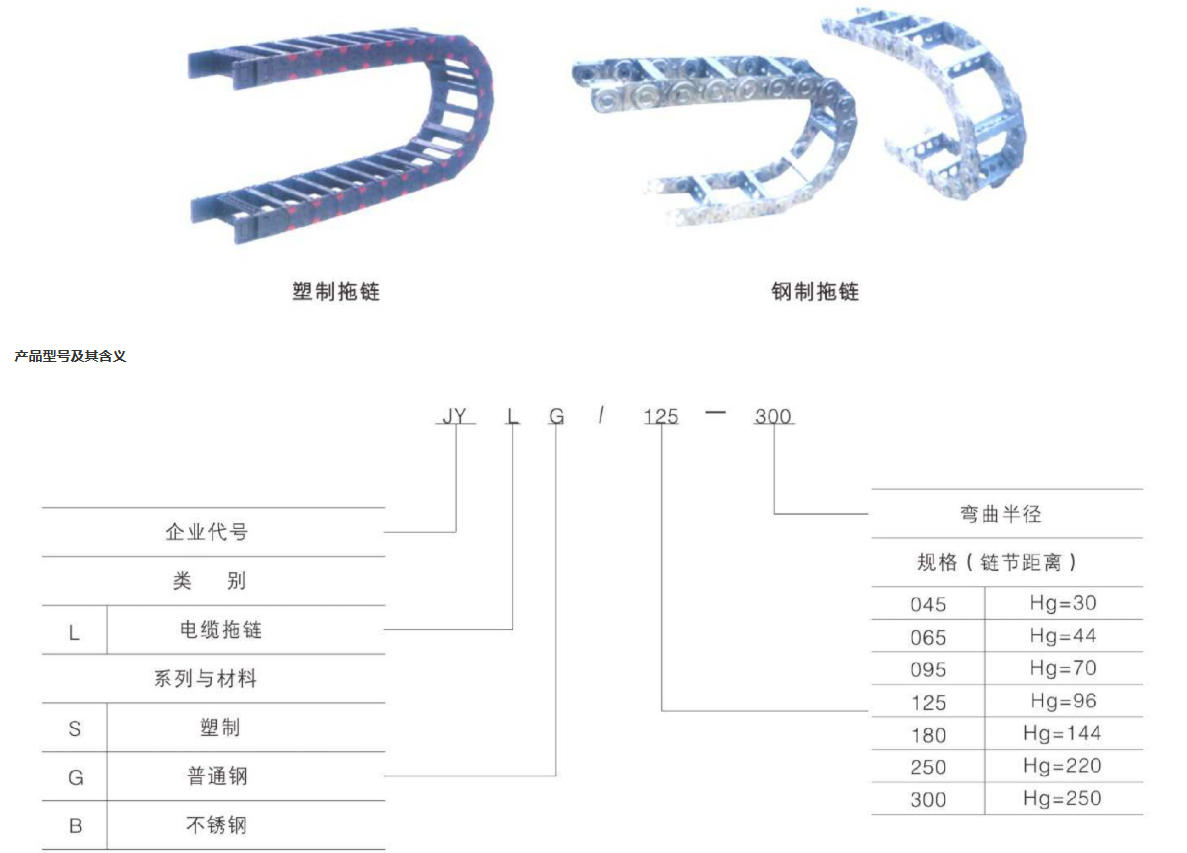
Structural form
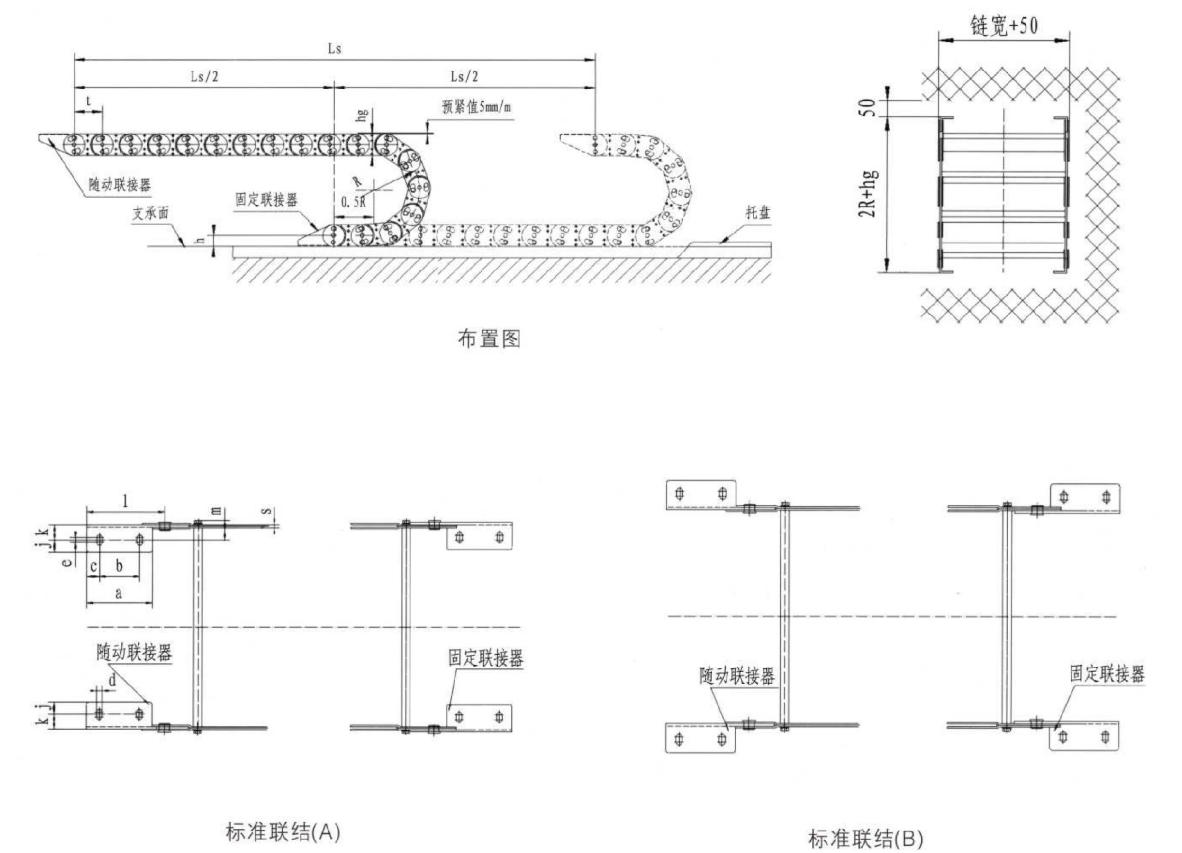
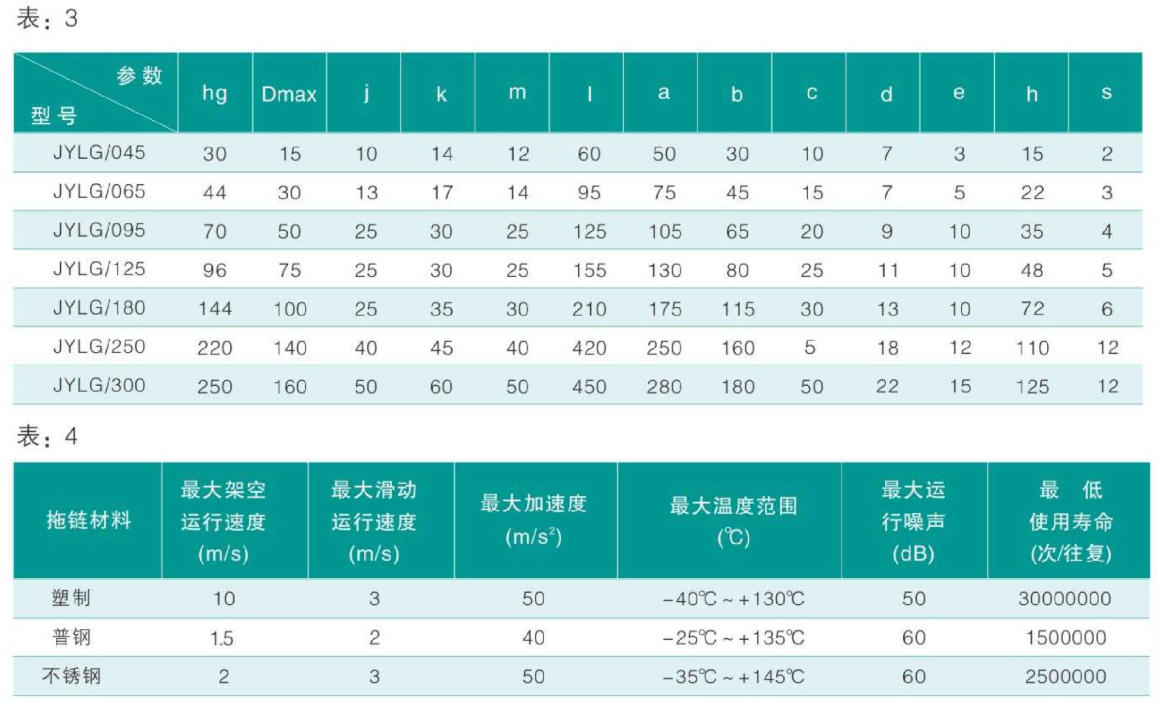
Specs and Parameters
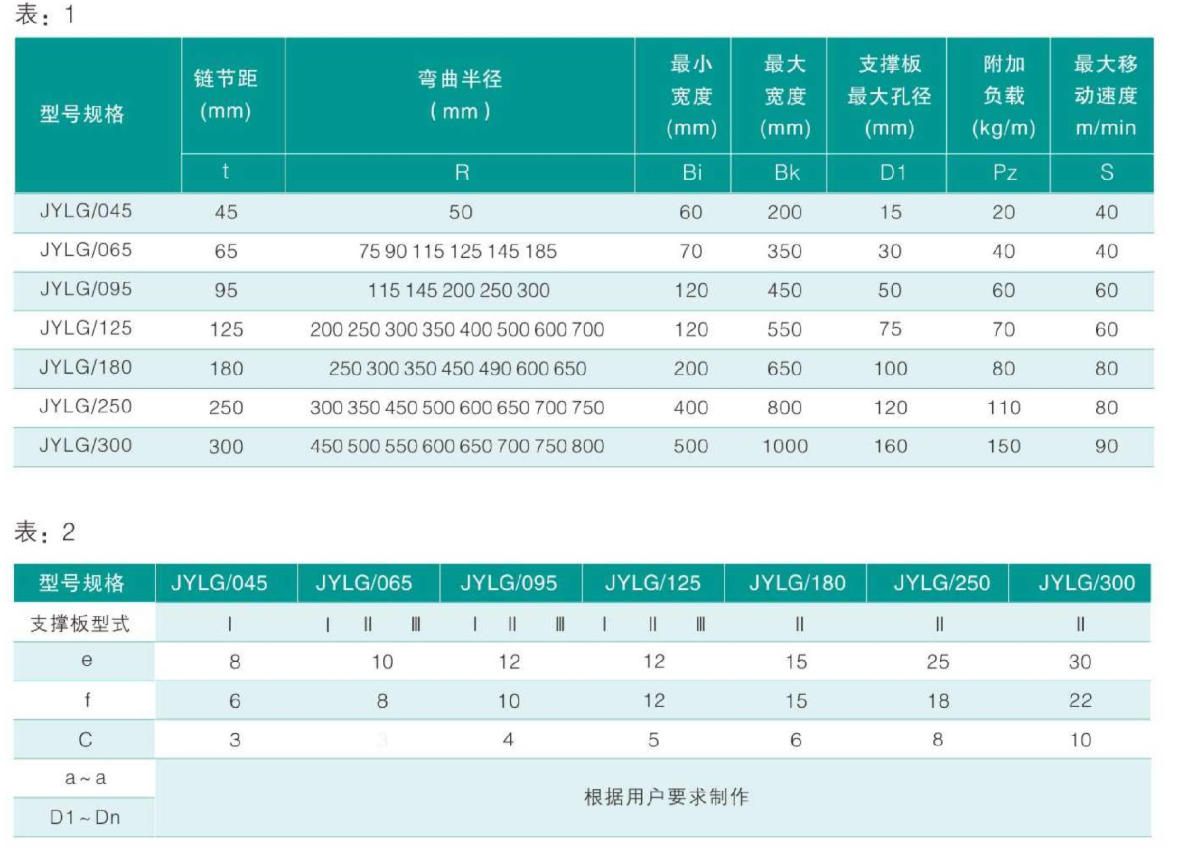
Installation Type
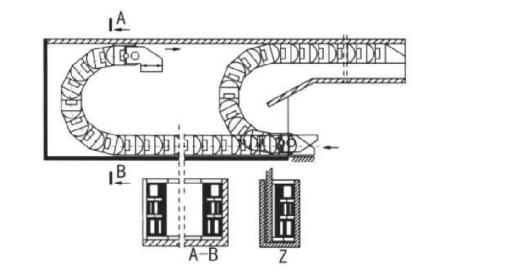
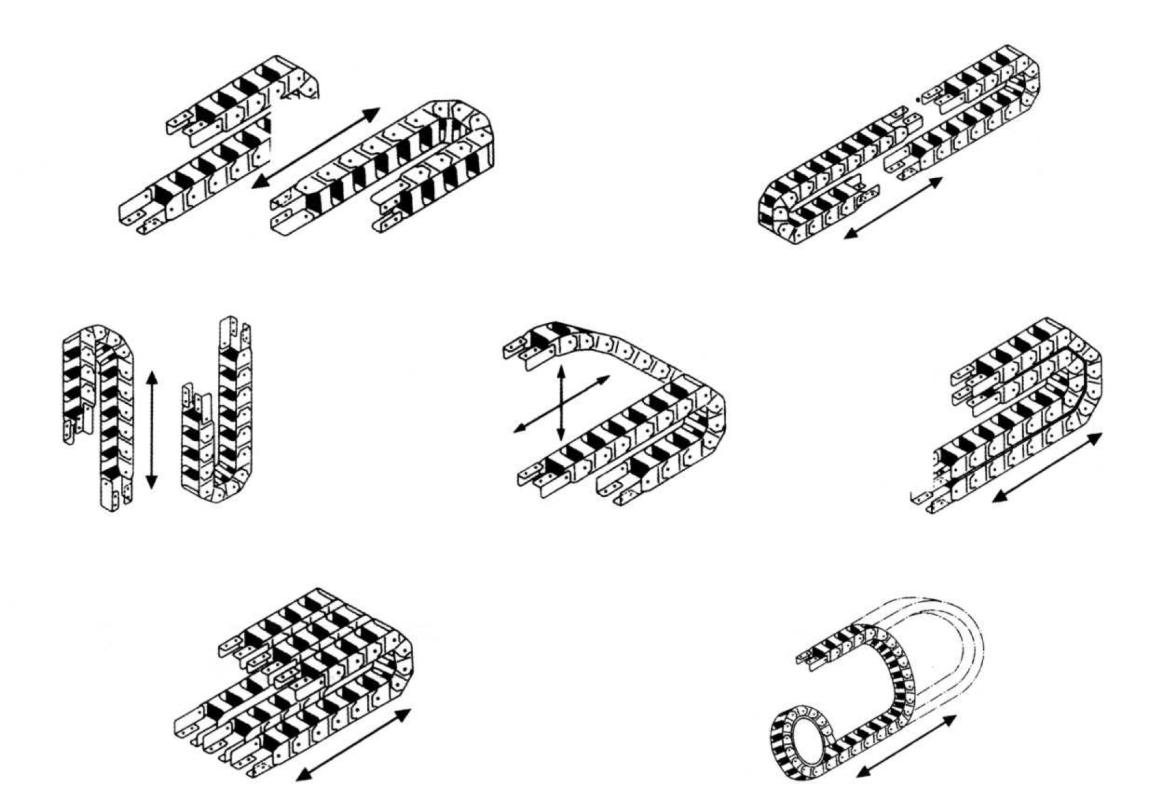
Cables can be categorized into various installation types based on different applications, such as: straight overhead; curved overhead; vertical standing; vertical hanging; lateral lying; and circular motion types. Below, we will briefly discuss their structural forms and characteristics.
The upper section of a straight overhead drag chain is suspended horizontally above the lower section or ground in the operating environment, which we refer to as a straight overhead type. This installation method is simple and straightforward, as it only needs to ensure that the lower section can roll on a base frame. Therefore, it is widely used in applications with short reciprocating linear motion.
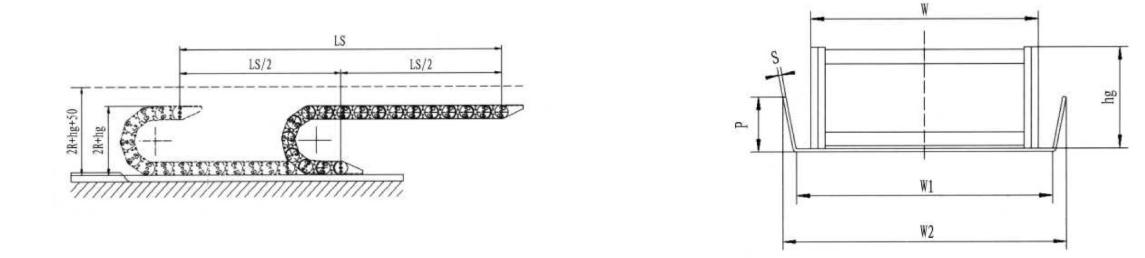
Chain Length Calculation
Chain Length = LS/2 + K
In the formula: LS = Chain Length
K = Additional Length for Chainflexibility Bending Radius
Note: This formula applies when the fixed end is set at the center of the stroke, and the chain can reciprocate left and right.
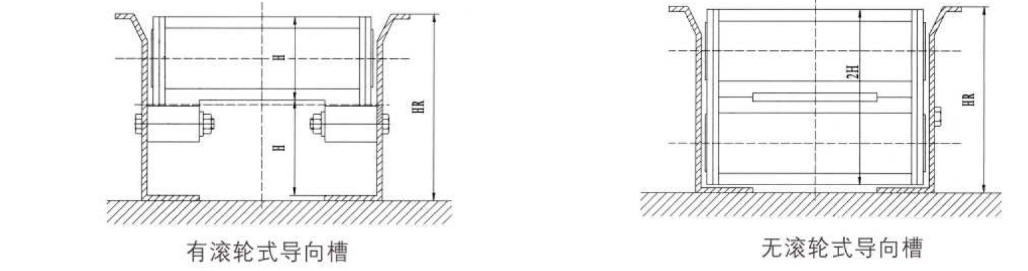
Slot width and height calculation
W2=W1+20
W1=W+10
P=hg/2
S=2~4
2. Arc架空 style. The upper section of the conduit is suspended in an arc above the lower section or the ground in the application environment, which we refer to as the arc架空 style. This installation is essentially the same as the straight架空 style. Due to its longer travel distance, guide grooves must be installed on the lower section to allow the conduit to roll freely within the grooves. Therefore, it is widely used in places with longer straight reciprocating movements.
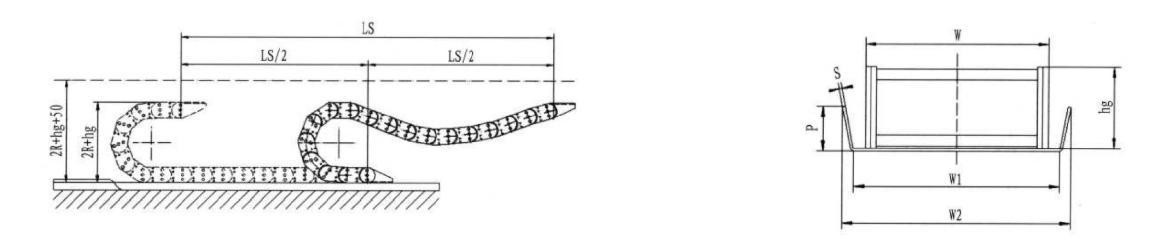
Chain Length Calculation
Chain Length = LS/2 + K
Equation: LS = Chain Length
K = Additional Length for the Chain Conveyer Bending Radius
Note: This formula applies when the fixed end is set at the center of the stroke, and the chain can reciprocate left and right.
Guide Slot Width and Height Calculation
W2=W1+20
W1=W+10
P=hg/2
S=2~4

Special note: Due to the long usage length of the chain guide, we have provided a support bracket and guide slot solution for you. However, in most cases, the架空 length is much greater than the reference value given in our formula. Users must carefully calculate and select the installation method when choosing the model.
3. Vertical standing
Two sections of the Mei Chain are in a vertical orientation. We refer to this as the vertical standing style. Due to its limited operating distance, it requires fixation and stabilization devices at both the trailing and fixed ends of the chain. This allows the chain to freely roll during vertical movement. Thus, it is widely used in short-distance straight back-and-forth motion applications.
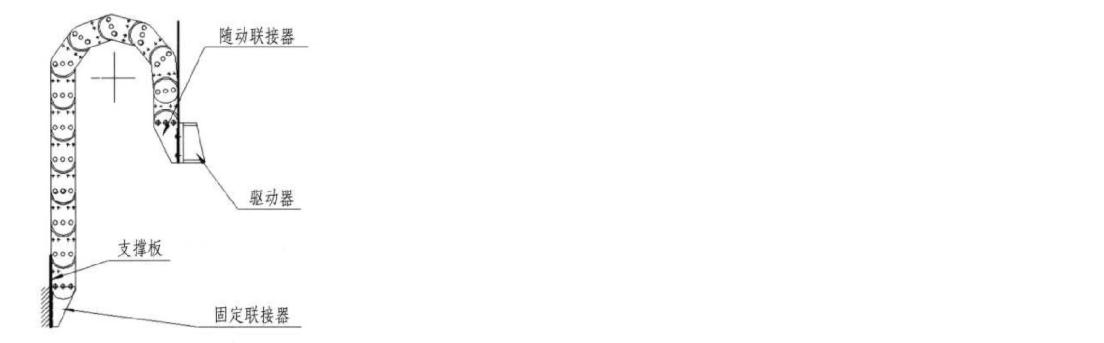
Installation Instructions
1. Motion connectors and fixed connectors must be securely and reliably fastened to prevent the conduit from swaying outward, ensuring its vertical alignment.
2. Cables or hoses must be neatly arranged for smooth and flexible longitudinal movement. Additionally, tension relief devices must be installed at the beginning and end of the cables or hoses. We particularly recommend using internal separators to stabilize the conduit.
3. Should there be lateral acceleration during operation, please secure the chain with an external fastener.
4. If the vertical height is high, it is recommended to add support plates at the corresponding sections to prevent lateral sway.
4. Vertical Suspended Type - Similar to the vertical standing type, this installation requires fixed and stabilizing devices at both the trailing and fixed ends of the cable chain due to its longer operating distance. This allows the cable chain to roll freely during vertical movement. Therefore, it is widely used in long-distance linear reciprocating motion applications.
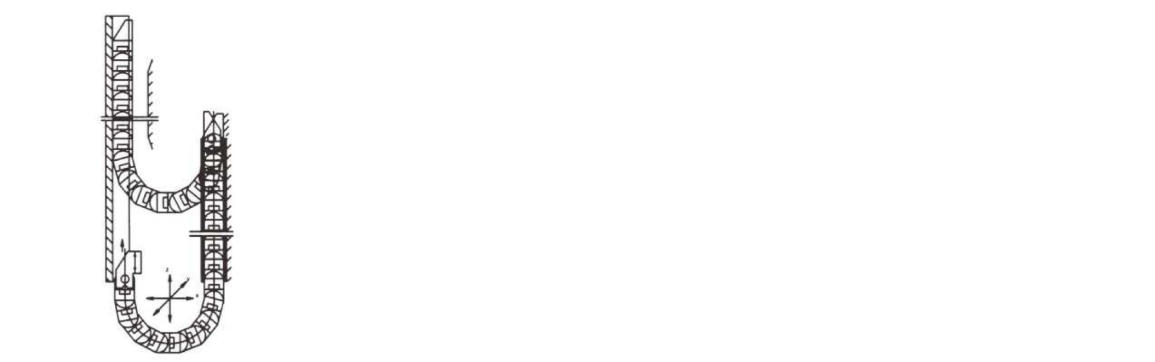
Installation Instructions
Due to the vertical height of up to 40 meters in this type of chain conveyor, it is limited to vertical movement and cannot perform horizontal acceleration. Side support is not required for operation in this configuration. If the installation space is limited, the "non-prestressed" type chain conveyor must be used.
2. Cables or hoses must be neatly arranged and tension devices must be installed at both ends. Additionally, the conduit must be smoothly suspended, ensuring even distribution of force and preventing any single conduit from bearing excessive stress and causing damage.
3. In case of special requirements, when vertical movement is accompanied by lateral acceleration, it is mandatory to install side support and guidance. However, the guidance device must cover the entire section of the cable sleeve that could be thrown out.
5. Lateral卧式 installation: The lateral卧式 installation is a relatively unique type, lying between circular motion and vertical suspension. It not only performs vertical reciprocating motion but also lateral circular motion. Thus, it is widely used in applications where the lateral reciprocating movement distance is relatively short.
Installation Instructions
1. This installation style is particularly suitable for locations where the installation space height is limited. The架空 length on one side depends on the additional load weight, conveyor belt width, bending radius, and parallelism during use.
2. The heavier the additional load of the chain, the shorter its installed length. When twisted 90 degrees, the width of the chain is almost equal to its height, and the higher the height, the more stable the entire housing becomes.
3. If the additional load is heavy and the overhead length is considerable, the chain must be fully or partially supported.
4. If the installation runs a long distance, please add guide grooves. The running distance can reach over 80 meters after installing guide grooves.
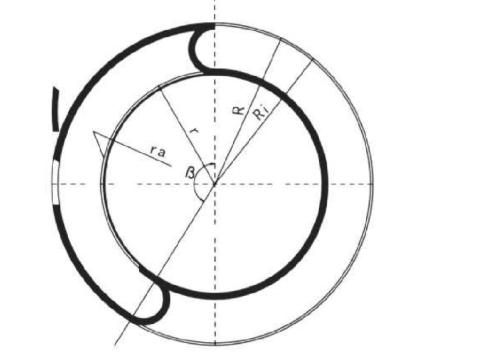
6. Circular Motion Style: As the name suggests, circular motion refers to the chain's ability to make corresponding forward and reverse rotations in both horizontal and vertical directions. This installation style relies on the rotating base and guide slots for the running path, making it widely applicable in long-distance circular reciprocating motion areas.
Installation Instructions
The utilization of circular motion installation forms is generally in special environments, hence it can opt for standard conduits to facilitate circular motion.
2. With this installation method, please select the appropriate tray or guide channel to complete the bending path.
3. The chain is designed for circular motion using reverse bend radii, meaning the chain can bend in both forward and reverse directions within allowable limits, with its bend radius differing from that of a straight drag chain.
4. The left image illustrates an example of circular motion using two opposite reverse-radius sleeve inserts. For special applications and requirements, please feel free to consult us.
5. This installation type is somewhat specialized, but our conveyor chains are standard for it. Therefore, when selecting and ordering chains for use in this environment, please pay attention to and provide detailed specifications to ensure your safety and reliability.
Cable Harness Selection
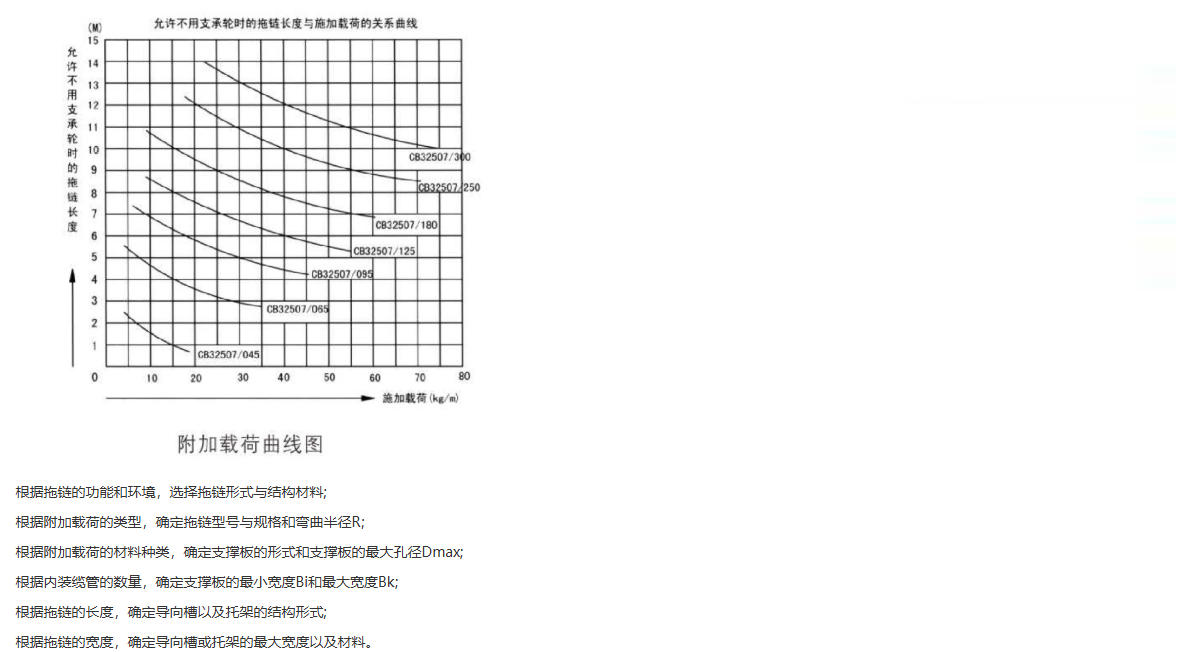
The selection of a chain guide should first be based on the user's application and operating environment, choosing different chain guides for various applications and environments. Generally, for lighter loads and situations where the chain guide is allowed to slide over long distances, plastic chain guides are more reasonable. For horizontal overhead applications with heavier moving loads, shorter distances, and higher speeds, steel chain guides are more suitable. In summary, there are many structural types of chain guides, and users can choose and configure them according to their needs. For first-time users, you can submit your application and operating environment to us, and we will provide you with a reasonable and cost-effective selection and configuration solution without hesitation.
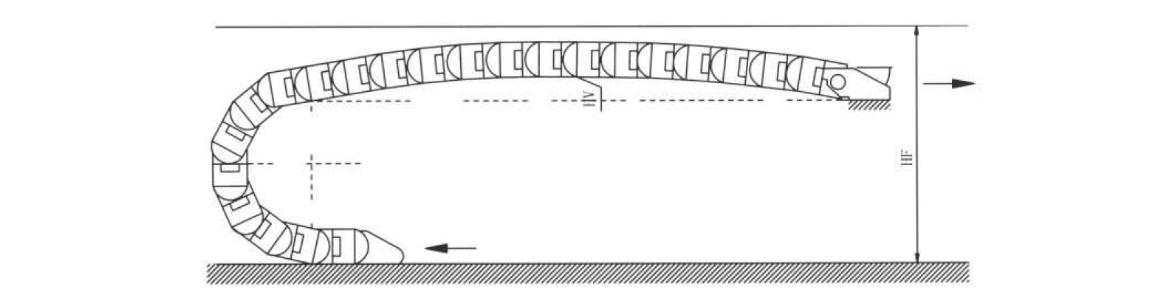
1. Chain Conveyor Prestress
1. The "pre-stress" of the chain guide refers to the increase or decrease of the top surface of the chain guide within the suspended length range.
2. All JYL series conduits are of the "pre-tensioned" type. The HF size shown in the left image is the installation height when pre-tensioned. If the installation space allows, please choose the "pre-tensioned" type of conduit, as the pre-tension can enhance and extend the effective operating length of the conduit. Additionally, pre-tension improves the durability and operational safety of the conduit. Therefore, it should be considered during selection.
Note: If the installation space for the chain is limited, "pre-stressed" chains cannot be installed. We will prepare "non-pre-stressed" chains for you.
2. Chain-link loading
Arrange cable conduits by categories, ensuring rows are neatly aligned without crossing or overlapping; pay particular attention to those in high-speed, high-frequency operation.
2. Cable conduit laying and fixation should be safe, reasonable, and robust. For sections where tension needs to be added to the start and end fixed ends of the cable conduit, tension devices must be installed.
3. Theoretically speaking, the faster the chain's operating speed and the higher its running frequency, the more critical it is to have a reasonable distribution of the cable conduit within the chain. Therefore, when users are designing and arranging the cable conduit, they should strive to optimize its distribution, ensuring the drag chain experiences as even and balanced a horizontal force as possible.
4. The loading space for the chain should generally not exceed 80% of the installable space.
5. If the aperture of the support plate D1 + D2 is greater than 1.2 times the chain height, separation between the two cable pipes is not necessary; otherwise, the cables are prone to entanglement.
6. Support plate
For a large aperture D1+D2 of 1.2x, the chain should be equipped with baffles or layered to reduce the internal height, thereby preventing D1 and D2 from "exchanging positions."
7. When there are several cables of equal thickness, the inner cavity height must not exceed 1.5 times the cable diameter. Due to the different materials of the protective sheath, the cables should be laid separately to prevent variations in wear resistance coefficients, which may lead to unnecessary additional wear.
8. When laying hydraulic and oil-gas hoses in a chain, be mindful that the hoses will elongate or expand in cross-section under pressure, so adequate space must be left for them to expand and contract.
3. Guide slots
Guideways are one of the essential key components that are indispensable when the chain is running over a longer distance. They bear the load support in the horizontal direction while also providing protection against lateral twisting. Therefore, careful attention should be given to the selection, design, and installation of this component.
2. The mating surface of the guide slots must be precise and smooth, with no distortion, misalignment, or obstruction.
3. The connecting screws for the guide slots must be semi-circular head or countersunk screws, and the nut end should be placed on the outer side of the slot, ensuring there are no protruding parts on the inner side of the slot.
4. The transition between the fixed cable joints and the slider track must be smooth and even.
5. Guide slots with longer operating distances must have good rigidity and must not exhibit phenomena such as downward deflection and lateral bending.