













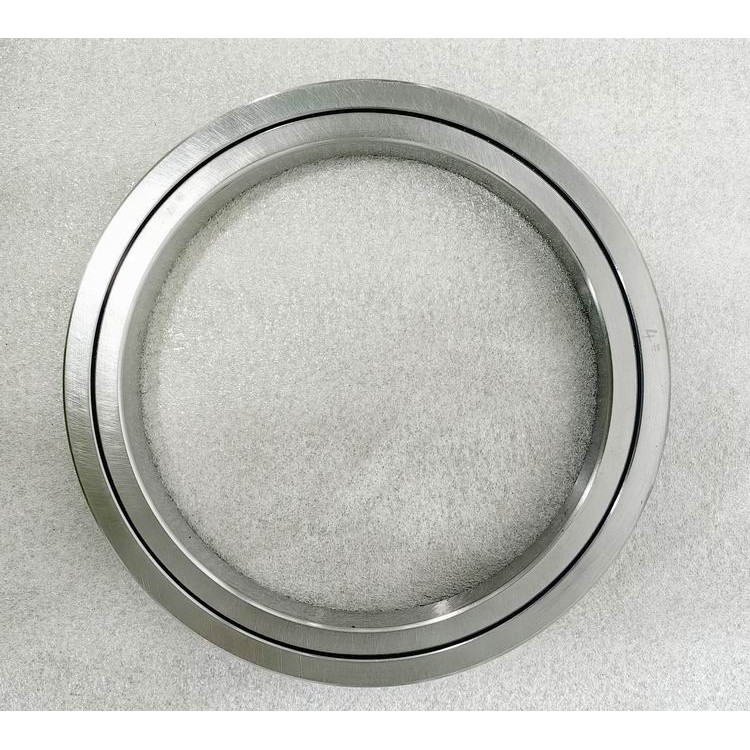
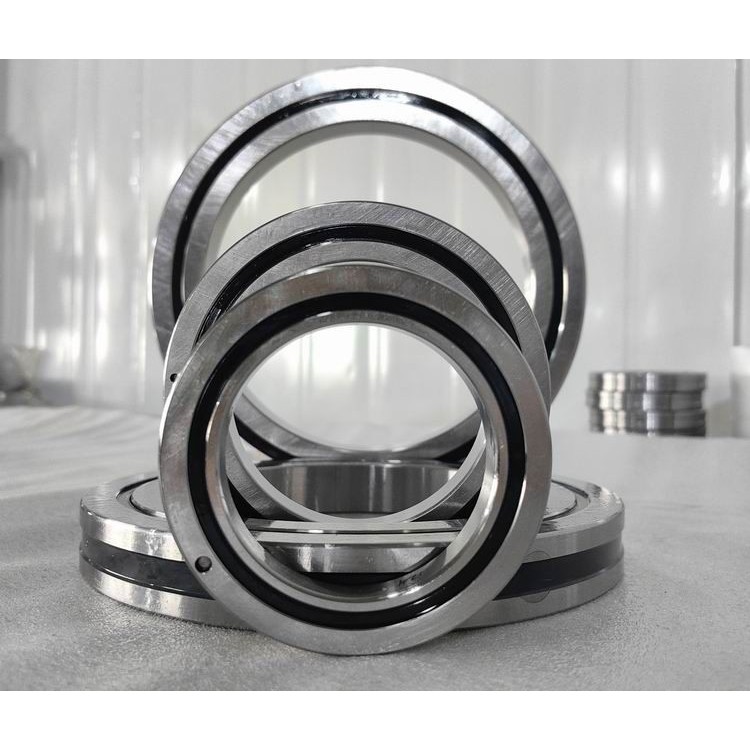
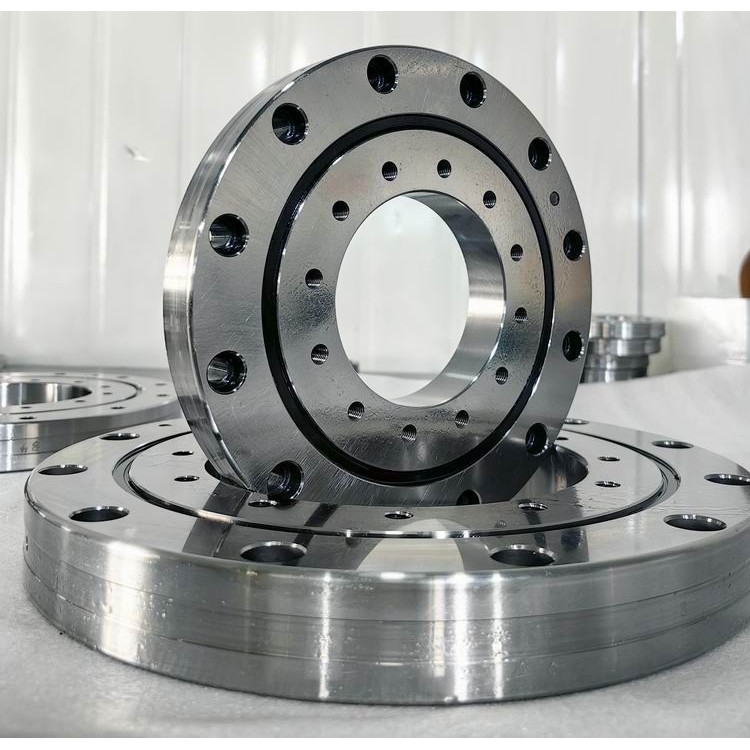
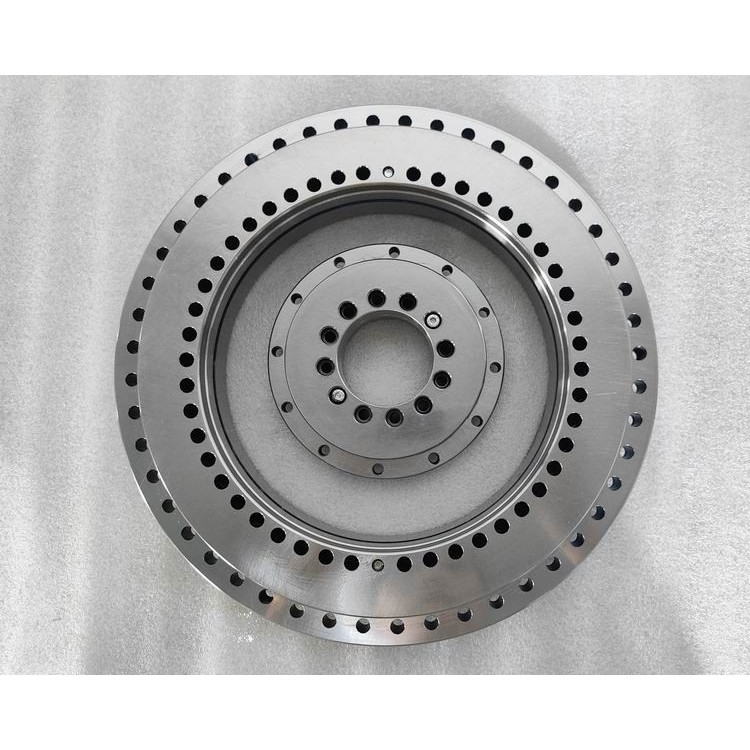
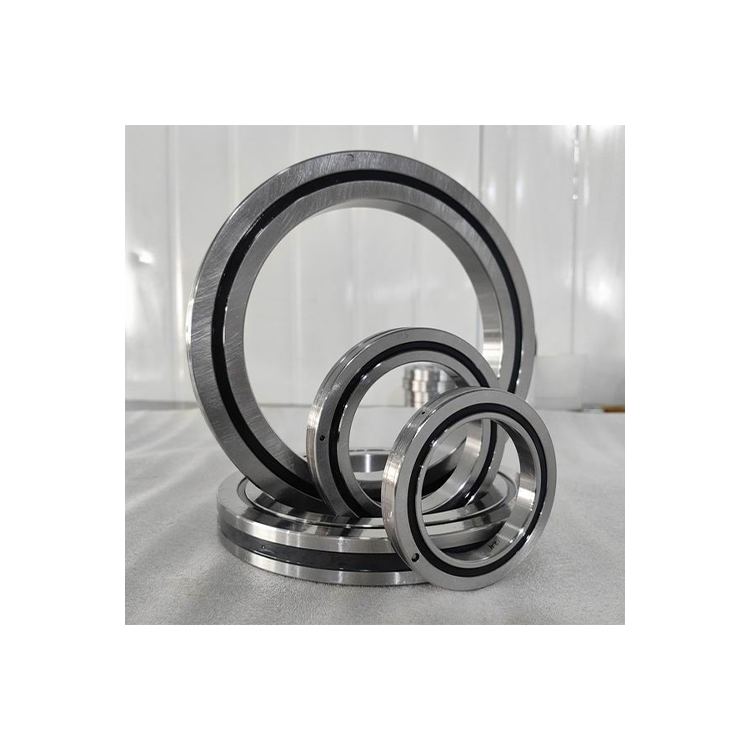
YRI Turntable Bearings
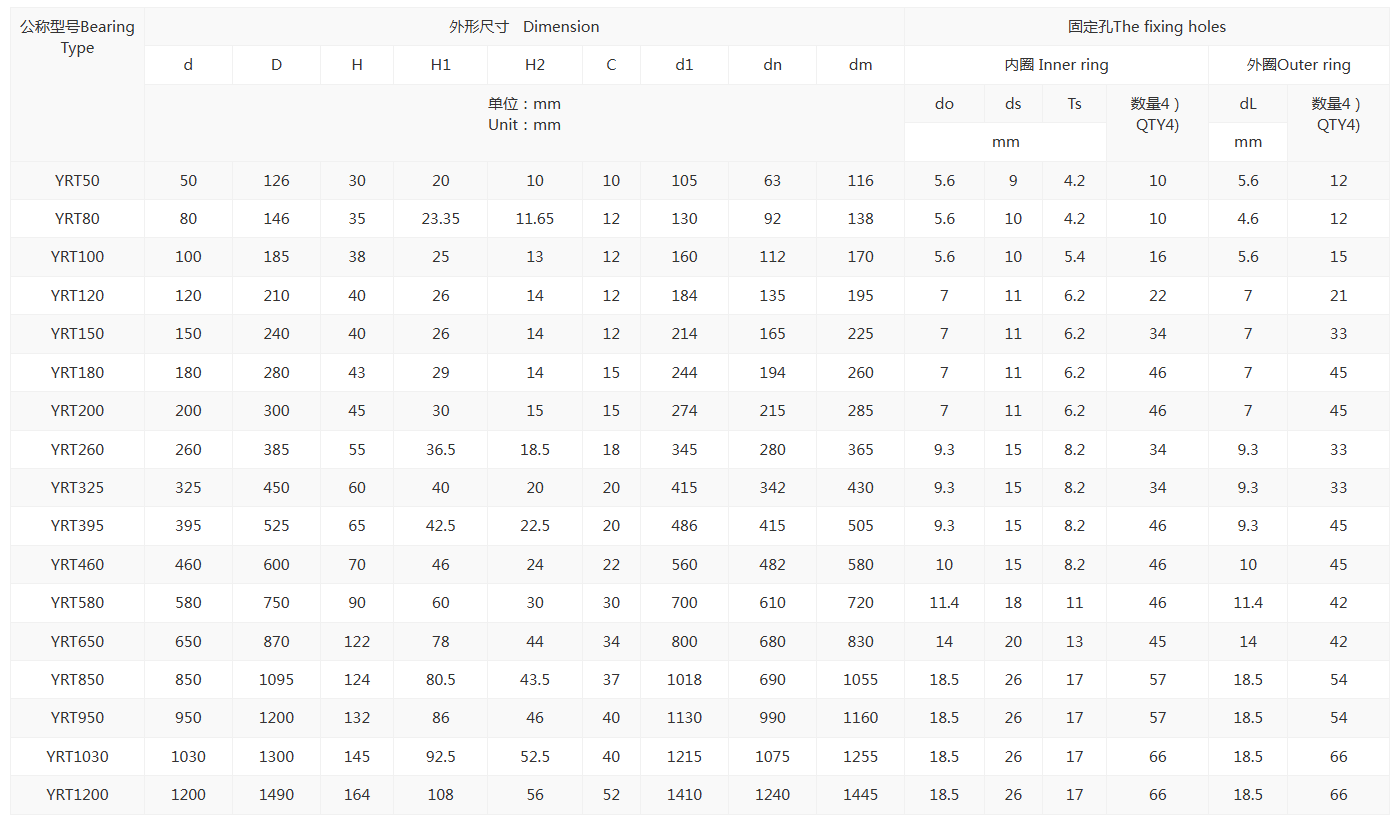
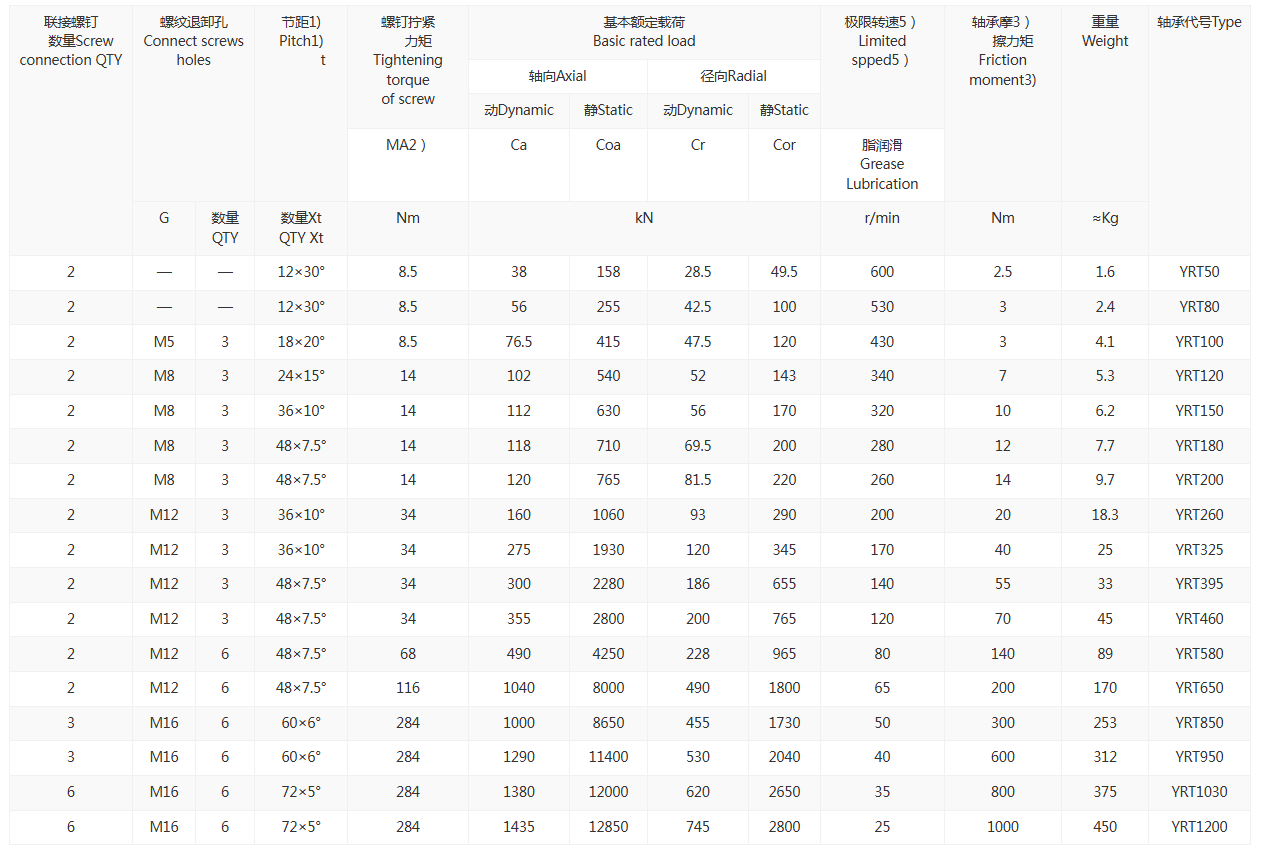
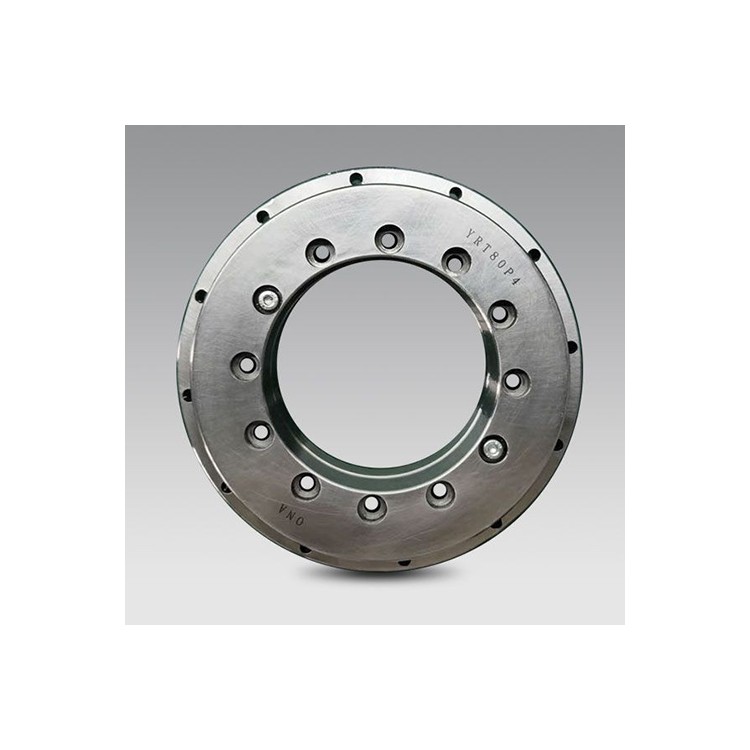
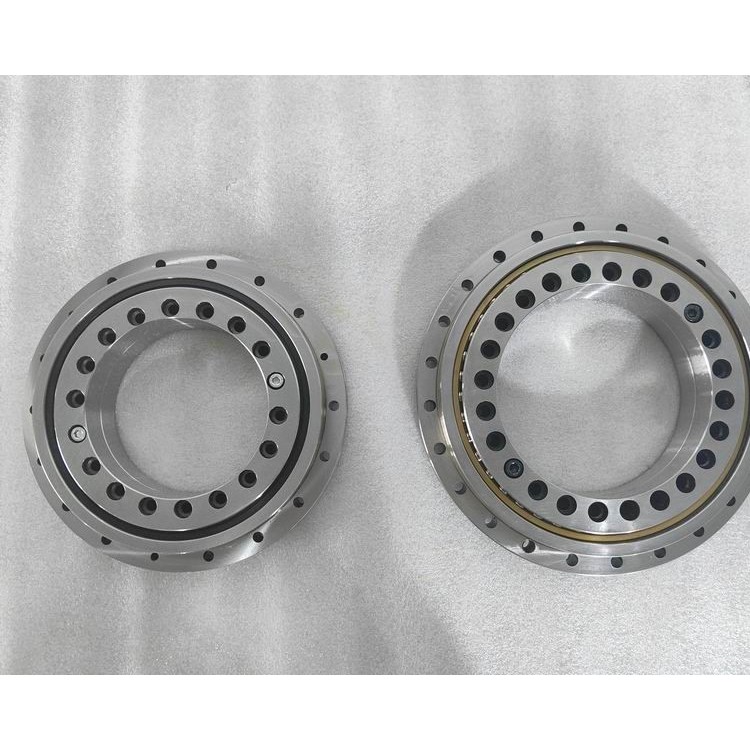
The 181 turntable bearing is a rotating mechanism with an outer ring rotating and an inner ring supporting, mainly divided into three series: Type, 8RT Type, and Deep T Type. These three series of bearings have the same installation dimensions, with differences in internal structure and similar performance. The series special oil bearings are all composed of three rows of paint, with two rows of oil-ward paint ensuring stable axial load-bearing capacity, and one row of radial rollers ensuring the bearing can withstand radial forces and overturning moments, suitable for rotating mechanisms with axial load-bearing. Turntable bearings are mainly used in the manufacturing industry of CNC machine tools. The I turntable bearing consists of a thrust/centrifugal ring, a thrust washer, two roller pin retainer assemblies, and a set of centrifugal round rolling elements. The collar and ring have evenly distributed screw holes for installation. This type of bearing has high axial and radial load-bearing capacity, high tilt rigidity, and high precision. It is suitable for rotating tables, collets, milling cutters, and bearing configurations in measurement and experimental applications. This type of bearing also has high requirements for the matching parts of the equipment. The torque of the installation screws must be controlled during installation. Application Range: Widely used in precision rotating tables, CNC rotating tables, vertical grinding machines, indexing heads, gear hobbing machines, milling cutters, workpiece shafts, and other precision devices.
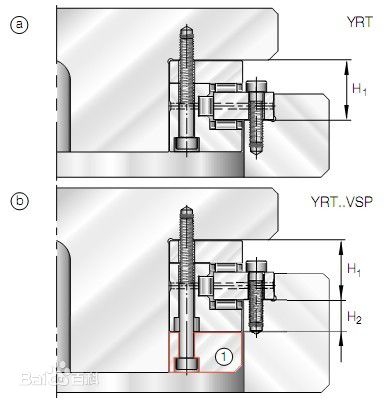
YRT turntable bearing installation section
1. Requirements for the mating structure are shown in the right figure. The screws securing the bearing components should be fastened during transport. For easier centering and installation, the securing screws can be loosened during installation. After installation, the securing screws should be tightened again or replace them with a locking screw. 2. L-section rings can be installed with or without additional support rings.
a) YRT bearing without support ring
b) For support rings with L-sectioned hoop, bearing code T...VSP, the entire surface of the L-sectioned hoop must be supported.
3. Assembly force must be transmitted through the installed bearing rings, never through the rolling elements.
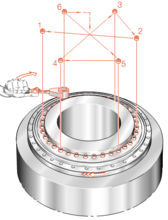
4. Apply a torque wrench to tighten the locating screws in a cross pattern, as shown in Figure 2.
5. Do not separate or exchange bearing components in the assembly and disassembly.
6. The starting friction torque is 3 to 3.5 times the friction torque listed in the size table.