



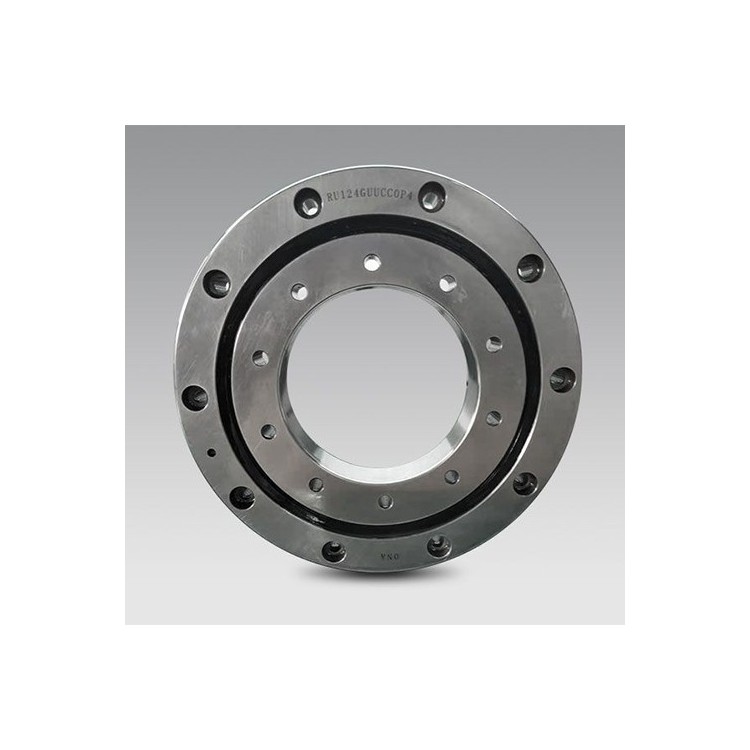













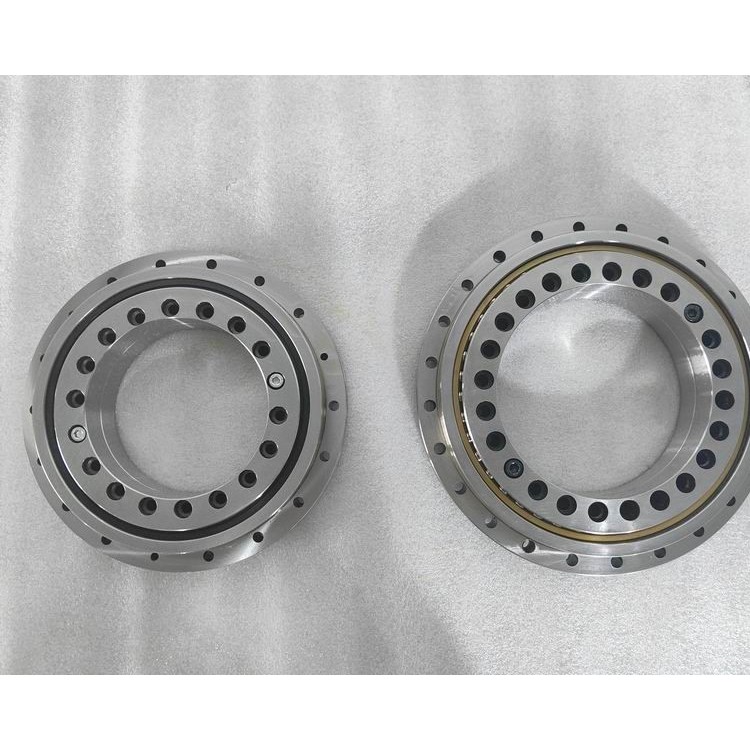
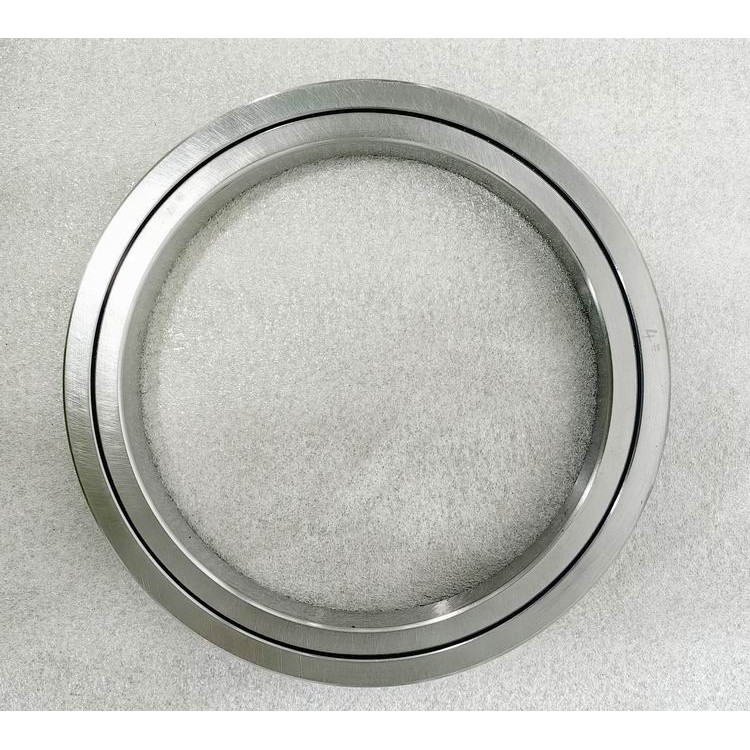
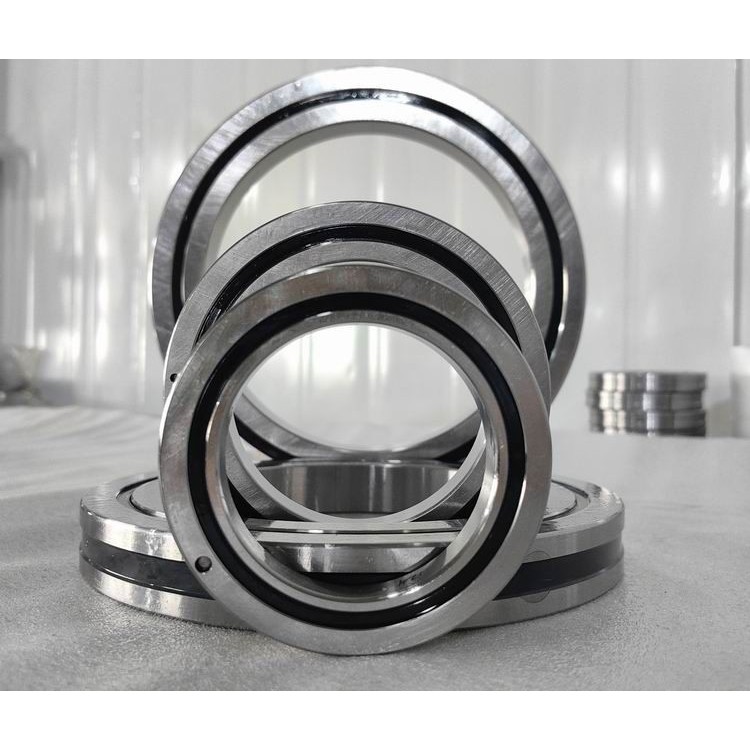
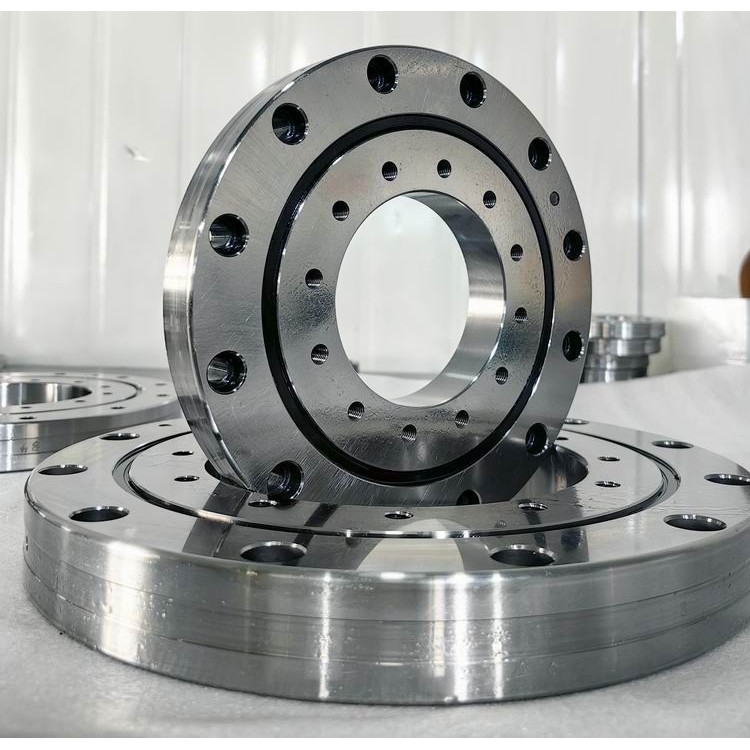
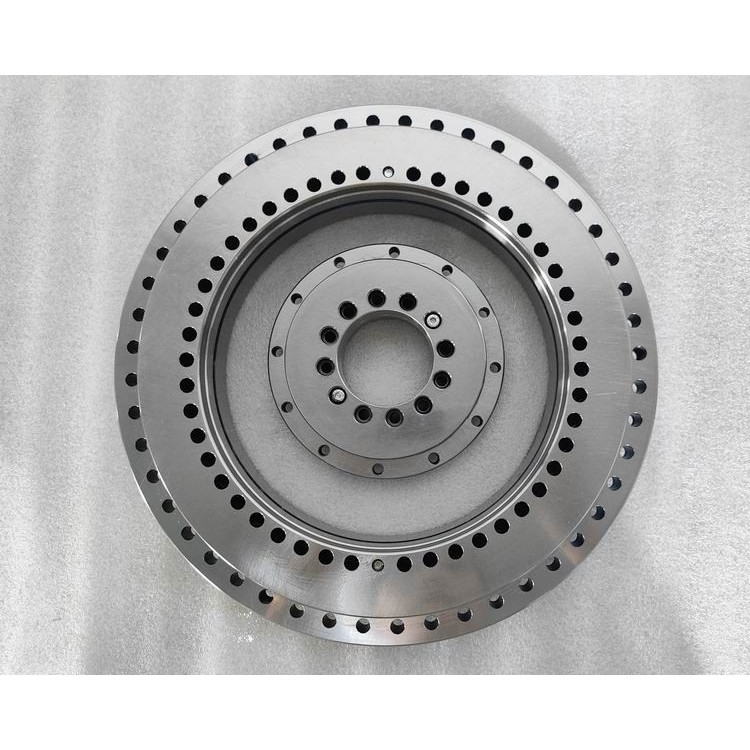
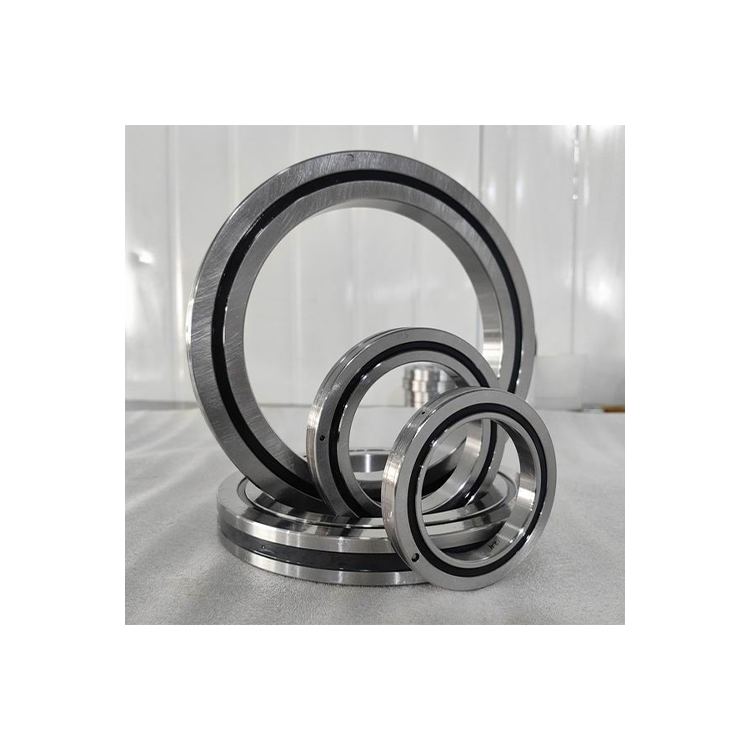
RU Series Crossed Roller Bearings (complete inner and outer rings, with mounting holes)
This series model does not require a fixed flange and bracket due to the machining of installation holes. Additionally, with the integrated inner and outer ring structure featuring a bracket, the installation has minimal impact on performance, thus ensuring stable rotation accuracy and torque.
Rotates on the outer and inner rings. Structural features: Crossed roller bearings, where cylindrical rollers are arranged perpendicularly to each other on a 90-degree V-groove rolling surface through隔板. Thus, crossed roller bearings can withstand radial, axial, and moment loads in multiple directions. The dimensions of the inner and outer rings are miniaturized, with the extremely thin form approaching the limit of miniaturization. They also possess high rigidity and precision up to P5, P4, and P2 levels. Therefore, they are suitable for the joint and swivel parts of industrial robots, swivel tables of machine centers, precision swivel workbenches, and therapeutic machines.
Equipment such as calculators, military, and IC manufacturing devices. Rotation accuracy: Liquid crystals arranged vertically in the bearing are equipped with isolation blocks, preventing the tilting of rollers and mutual friction between them, thus reducing the rotational torque. Additionally, compared to the previous steel plate retainers, there is no occurrence of roller contact on one side or locking. At the same time, due to the two-part construction of the inner (or outer) ring, the bearing clearance can be adjusted, allowing for high-precision rotational movement even when pre-loaded. Features: The divided inner (or outer) ring, after inserting the roller and spacer retainers, is fixed together with the cross pin ring to prevent separation, making the installation of the cross roller shaft ring simple. The roller-to-roller friction is eliminated through the spacer retainers, preventing the rollers from tilting, thus ensuring stable rotational torque. Since the rollers are arranged in a cross pattern, a single set of cross roller bearings can bear loads in all directions, increasing rigidity by 3 to 4 times compared to traditional models.




















