

Product Details

A professional company specializing in the design, manufacturing, and sales of air treatment equipment, offering products such as dehumidifiers, adjustable temperature and humidity heat pumps, coolers, explosion-proof centrifugal fans, and environmental protection equipment.


价 格Negotiable
最小起订1 Tai库存999 Tai
 Business Card
Negotiable

Negotiable
Negotiable

Negotiable
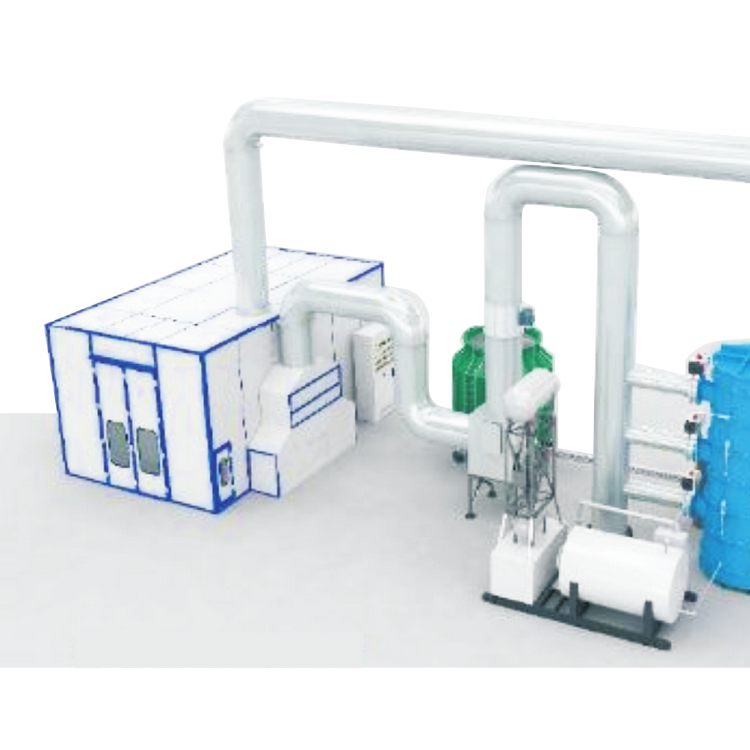
Painting exhaust treatment system
Negotiable
 Dust Removal Equipment
Negotiable
Special New-Arrival Dehumidificat
Negotiable
Dust Removal Equipment
Negotiable
Special New-Arrival Dehumidificat
Negotiable
 Lithium Battery Dehumidifier
Negotiable
Lithium Battery Dehumidifier
Negotiable
 Special New Wind Dehumidification
Negotiable
Special New Wind Dehumidification
Negotiable
 4-72 Explosion-proof Centrifugal
Negotiable
4-72 Explosion-proof Centrifugal
Negotiable
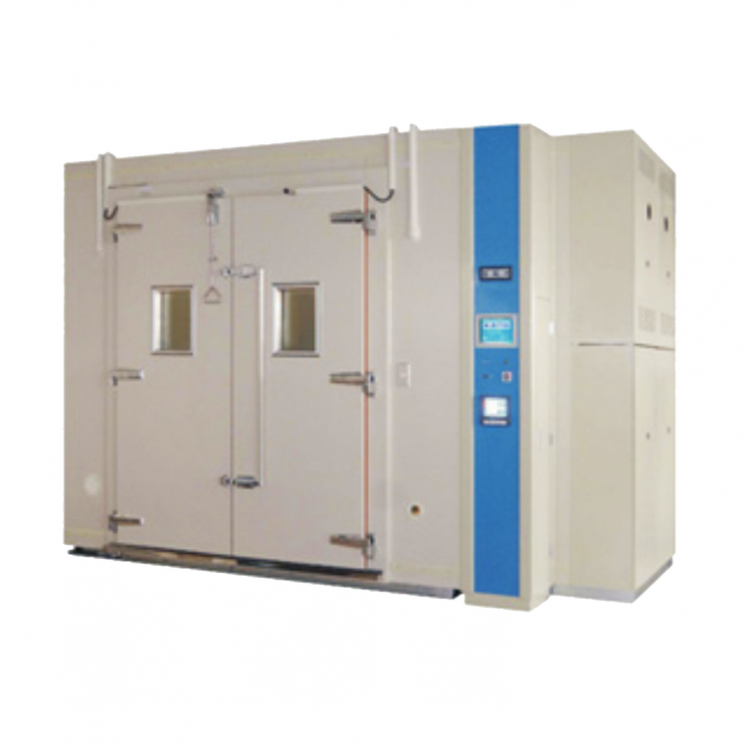 Constant temperature heating box
Negotiable
Constant temperature heating box
Negotiable
 Galvanized Sheet Coated Duct
Negotiable
4-79t Explosion-proof Centrifugal
Negotiable
Thermal Pump Variable Temperature
Negotiable
Galvanized Sheet Coated Duct
Negotiable
4-79t Explosion-proof Centrifugal
Negotiable
Thermal Pump Variable Temperature
Negotiable
Heat-pump Temperature and Humidity Control Unit
A heat pump is a device that transfers heat energy from a low-temperature heat source to a high-temperature heat source. Typically, the low-temperature heat source for heat pump systems is the surrounding medium, such as air, river water, seawater, or the working substances discharged from industrial production equipment, which are often at temperatures similar to the surrounding medium. A heat pump temperature and humidity control unit consists of a compressor, evaporator, throttle device, condenser, condensing heater, and electromagnetic four-way directional valve, forming a closed-loop system.
During summer air conditioning cooling, the compressor expels high-pressure steam under refrigeration conditions, which splits into two paths to enter the condenser heater and condenser. The refrigerant steam condenses into a liquid, then passes through a throttle device into the evaporator, where it absorbs heat and cools the treated air. After evaporation, the refrigerant steam is吸入 by the compressor through a reversing valve, thus completing the refrigeration cycle. In actual operation, the compressor can adjust the distribution of condenser heat to the condenser heater according to the actual thermal load by controlling the solenoid valve, prioritizing condenser heat as a heating and dehumidifying source, and reducing the power consumption of the condenser fan to achieve system energy-saving effects. When the ambient temperature is high, by opening the solenoid valve, part of the liquid refrigerant from the accumulator can be喷射 into the compressor to lower the internal working temperature of the compressor and improve the operating conditions of the refrigeration system. During spring and autumn seasons when the thermal and humidity loads are small but the refrigeration system still needs to be activated, by opening the solenoid valve, part of the high-pressure refrigerant steam from the compressor can be directed into the evaporator to ensure continuous operation of the refrigeration system.
During winter heating, first turn the electromagnetic four-way directional valve to the heat pump operating position. The high-pressure refrigerant vapor discharged by the compressor enters the condenser heater and evaporator in two paths. The latent heat released during the condensation of the refrigerant vapor heats the treated air, achieving the purpose of heating and dehumidifying. The liquid refrigerant, after condensation, flows through a throttle device in reverse and into the condenser, absorbing external heat and evaporating. The vapor, after passing through the directional valve, is吸入 by the compressor to complete the heating cycle. When this operation is running, system defrosting can be carried out in the following ways: by controlling the high-pressure refrigerant vapor discharged by the compressor to be injected into the condenser through an electromagnetic valve for defrosting. When the relative humidity of the treated air is lower than the set requirement, the humidifier located behind the condenser heater is opened to adjust the humidity of the treated air system, meeting the process requirements.
Product Features
Compared to existing technology, the features of this adjustable temperature and humidity heat pump unit are:
1. High heating efficiency: By installing a condensing heater in the pipeline, the compressor can adjust the distribution of the condensing heat of the heater by controlling the flow of the condensing heater solenoid valve and the condenser solenoid valve, based on the actual thermal load. This prioritizes the use of condensing heat as the heating and moisture-removing source, compared to electric heating, resulting in higher heating efficiency.
2. Reduce Energy Consumption, Save Energy: By using the condenser heater as a source of heat for dehumidification, the energy consumption of the condenser fan is reduced, saving a significant amount of electricity, and achieving the effect of system energy saving.
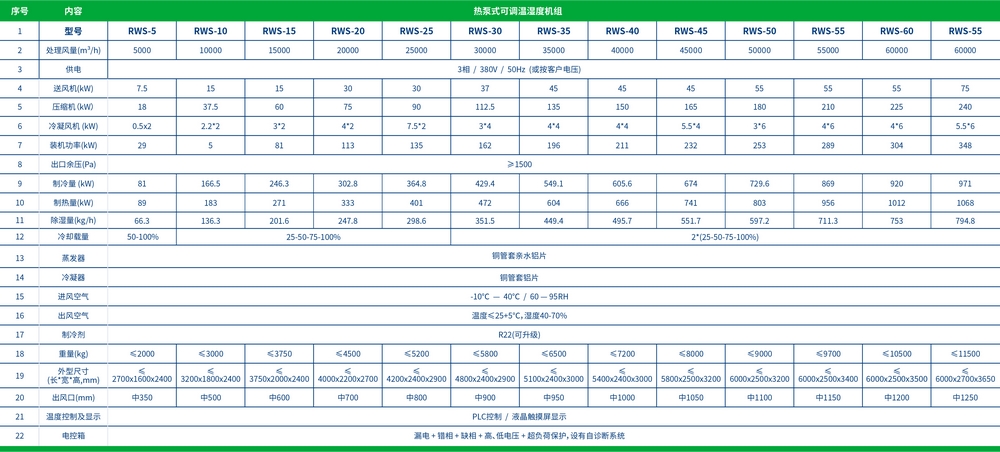
Performance Parameters

Phone Consultation