

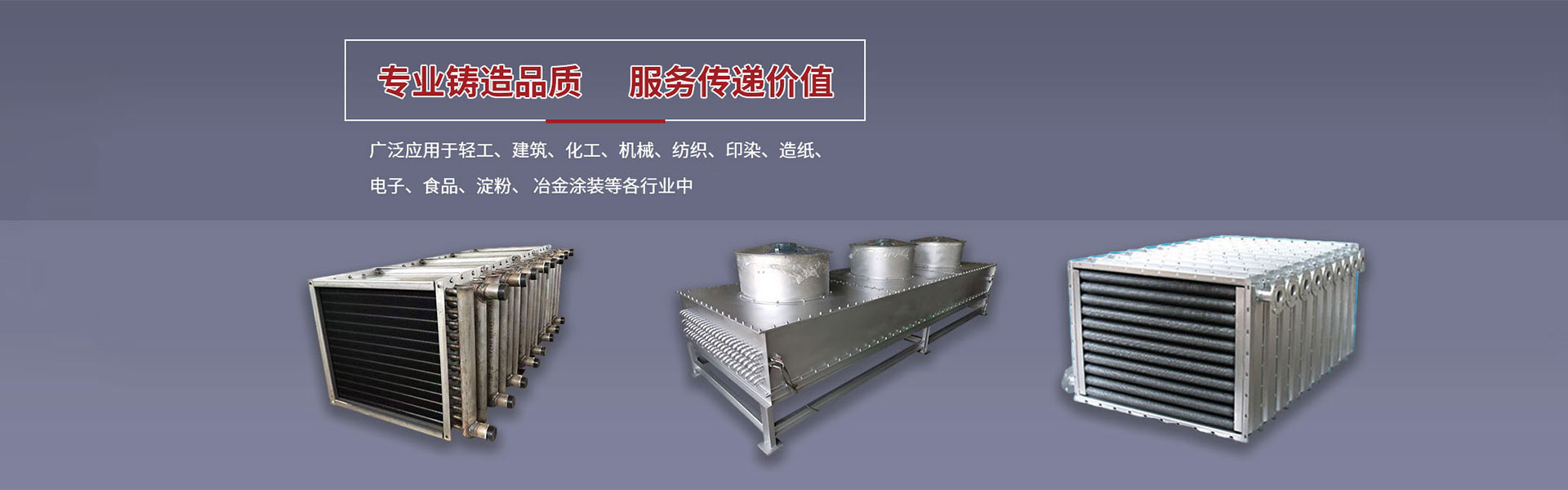


Dry, Textile, Rubber & PlasticRadiatorThese are the main equipment in heat exchange devices, such as cooling air with refrigerant, heating air with heat medium, or recovering waste heat from air with cold water. High-temperature water, steam, or high-temperature thermal oil can be introduced to heat the air, while saltwater or low-temperature water can be used to cool the air.
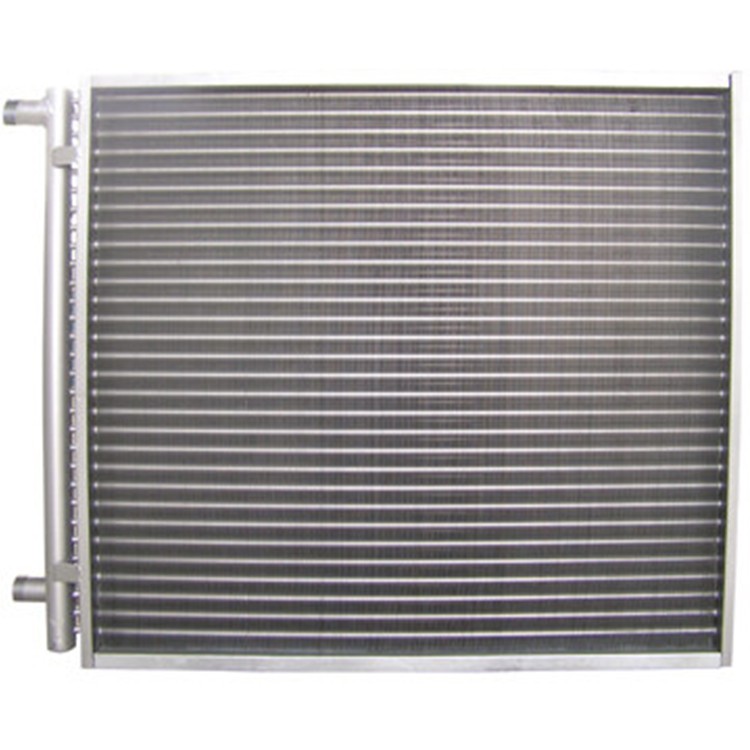
Dry, textile, and rubber-plastic radiator structures consist of heat dissipation pipes, inlet and outlet main pipes, and frames.
The heat dissipation pipes are composed of heat pipes, which are made up of a base pipe and fins. The quality of the heat pipes determines the heat exchange efficiency, the arrangement of the heat pipes affects air resistance, and the installation method of the heat pipes determines their ability to withstand temperature differences (expansion and contraction due to temperature changes).
Common heat sink pipe installation methods: Frame fixed type (SRZ, SRL, S type), frame supported type (GL, U type).
Frame fixed type, the heat dissipation tubes are directly welded to the frame box, resulting in simplicity; generally used for heat or cold media below 180℃; frame-supported type, the heat dissipation tubes pass through the frame perforated plate, welded to the connecting pipe (or elbow); generally used for heat media above 180℃.

