
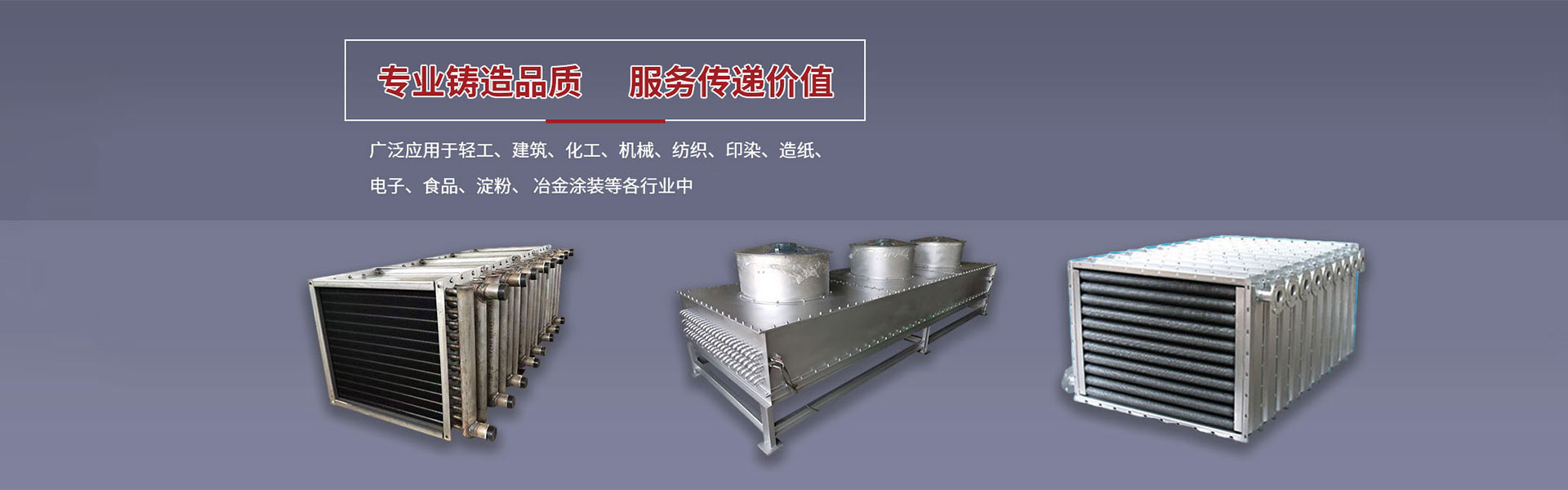
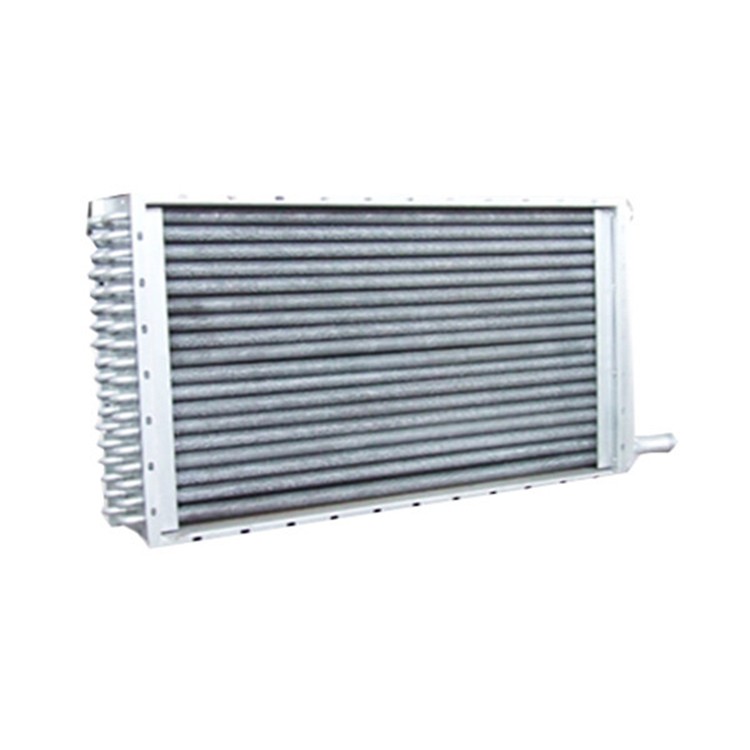
Dyeing and Printing, Leather, Tunnel VentilationRadiatorsIt is a type of industrial radiator. Its structure consists of finned tubes, inlet and outlet headers, and a frame. The finned tubes are made up of tube bundles, with the tubes comprising a base tube and fins. The quality of the tubes determines the heat exchange efficiency, the arrangement of the tubes affects air resistance, and the installation method of the tubes determines their ability to withstand temperature differences (expansion and contraction due to temperature changes).
Common heat dissipation tube installation methods: Frame fixed type (SRZ, SRL, S type), frame-supported type (GL, U type). Among them, the frame fixed type involves directly welding the heat dissipation tubes to the frame box, resulting in a simple setup, generally used for heat or cold media below 180°C; the frame-supported type involves passing the heat dissipation tubes through the frame's perforated plate and welding them to the connecting pipe (or elbow), generally used for heat media above 180°C.
Common Heat Sink Types: Steel Heat Sinks (steel tube with steel fins, galvanized), Steel-Aluminum Composite Heat Sinks (steel tube with aluminum fins), Copper Heat Sinks (copper tube with copper fins, tin-plated), Copper-Aluminum Composite Heat Sinks (copper tube with aluminum fins), Stainless Steel Heat Sinks (stainless steel tube with stainless steel fins, high-frequency welding).
Steel radiators require hot-dipped galvanizing, which is crucial for filling gaps, securing fins, conducting heat, and preventing corrosion; copper radiators rely on soldering.