

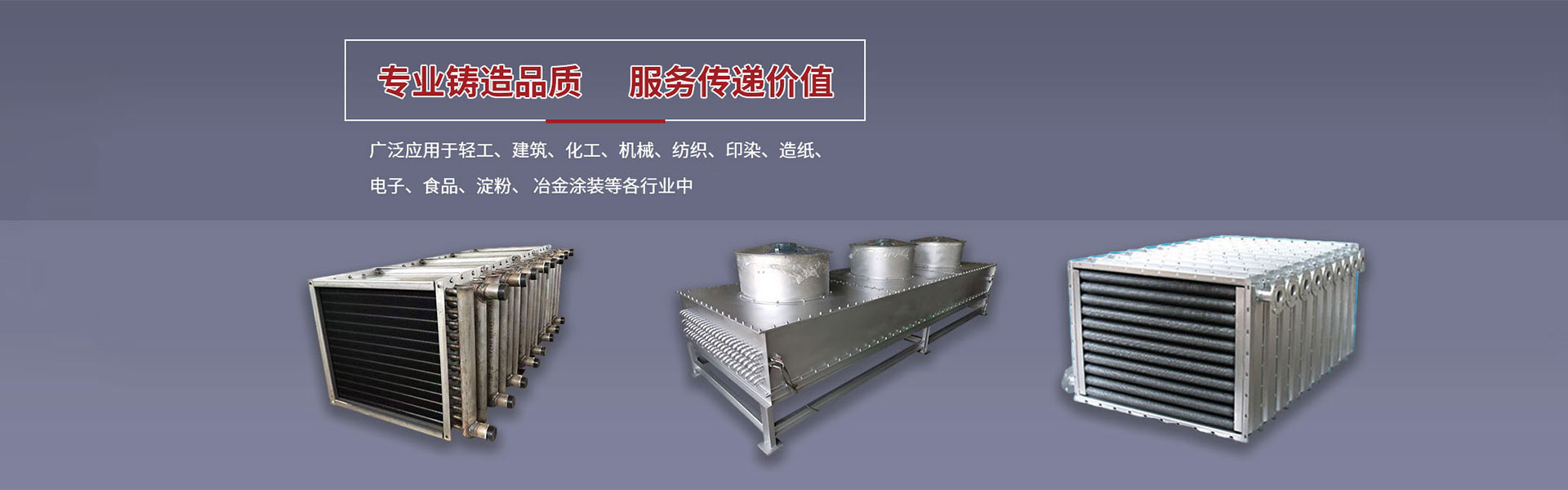


CoolerA type of heat exchange equipment used for cooling fluids. Typically, water or air is used as the coolant to dissipate heat. Mainly divided into tube bundle coolers, plate coolers, and air-cooled coolers. Coolers are widely used heat exchange devices in various industries such as metallurgy, chemical engineering, energy, transportation, light industry, and food processing.
It is suitable for various processes such as cooling, condensation, heating, evaporation, and waste heat recovery. Therefore, among the numerous types of heat exchangers, coolers and tubular heat exchangers still hold a significant position.
Coolers are primarily focused on wall-type, mixed-type, and regenerative heat exchangers. The working principle, heat transfer calculations, structural calculations, flow resistance calculations, and design procedures of coolers are all thoroughly illustrated with numerous diagrams and detailed examples in the book on heat exchangers.
Use Instructions
(1) When operating the cooler, open the drain valve on the cooling line to exhaust air. Close it once water is seen to prevent air blockage from affecting cooling efficiency.
(2) When shutting down the cooler for line cleaning, stop the cooling water flow and simultaneously open the cooling water drain valve to prevent equipment damage due to pressure build-up.
(3) When adjusting the oil product's post-cooling temperature, the water outlet valve should be controlled first. Using the inlet valve to control water flow may save cold water, but it can cause a short circuit in the water flow within the cooler or slow down the flow rate, leading to hot at the top and cool at the bottom, which affects the heat exchange efficiency. Therefore, it is not advisable to use the inlet control.

