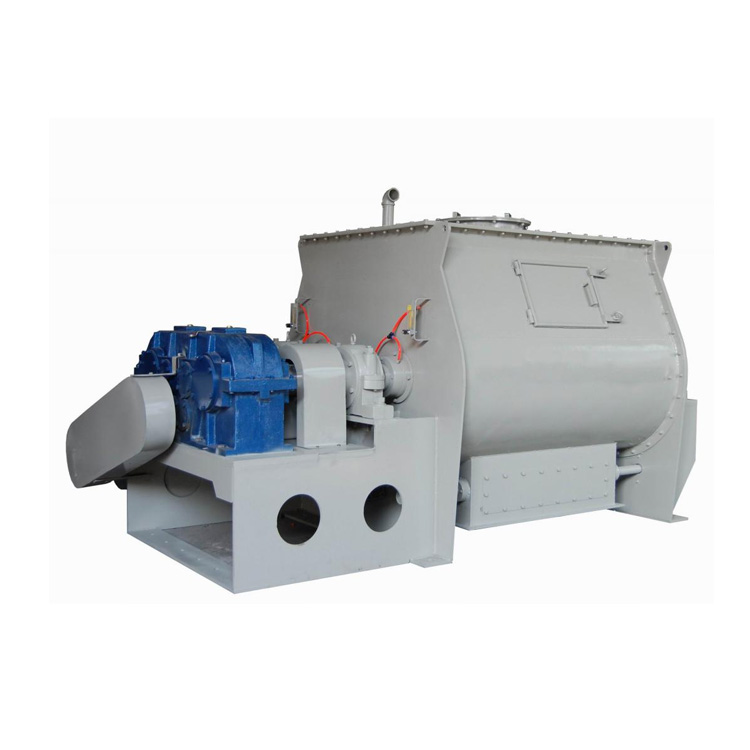

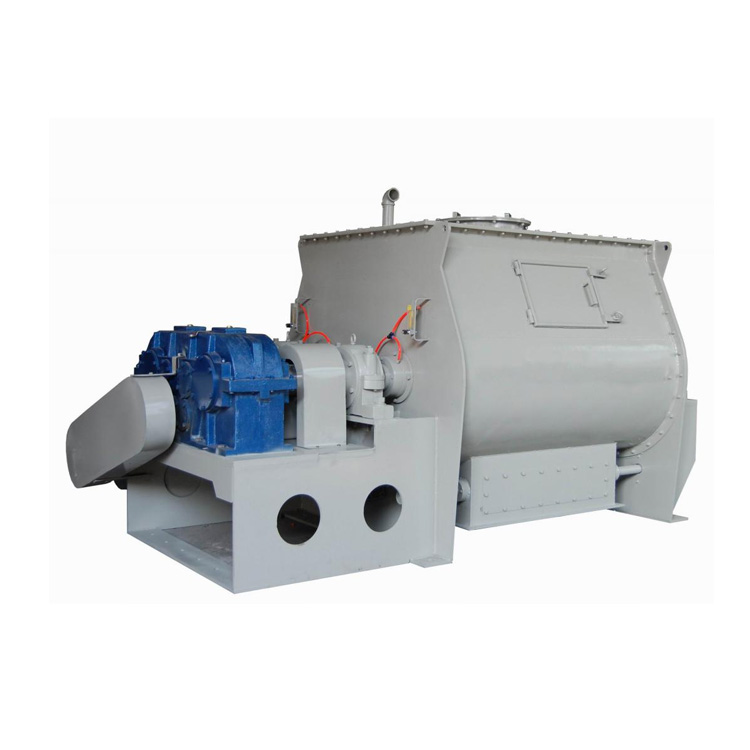










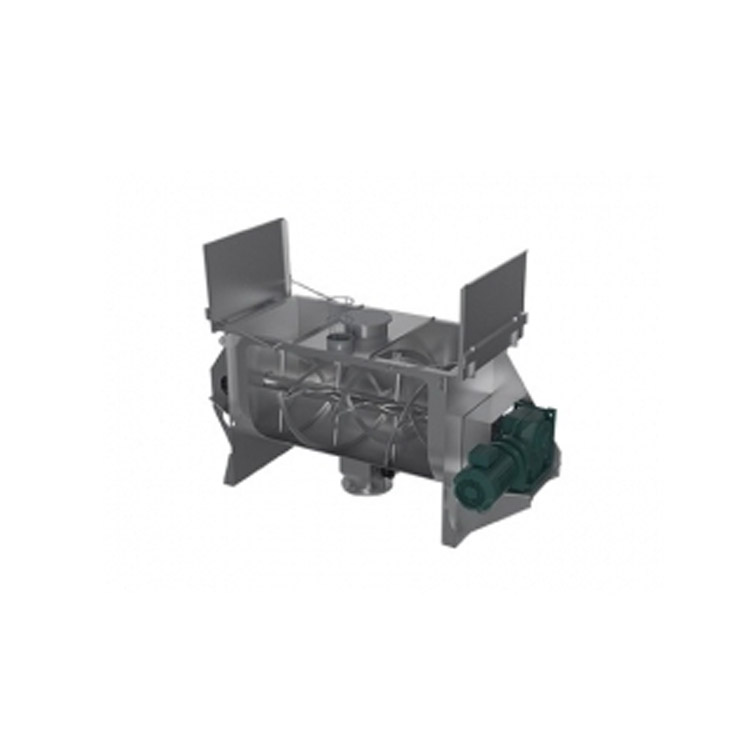
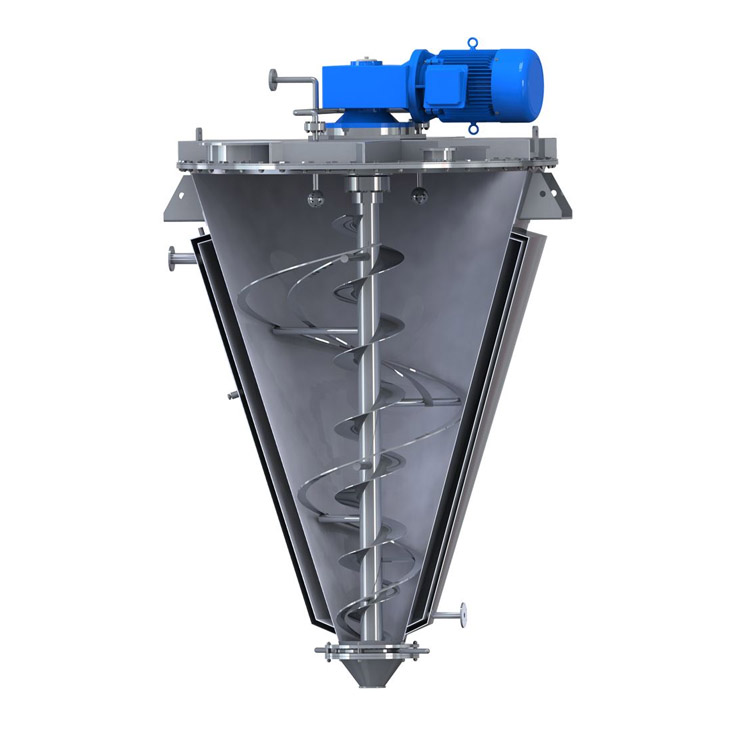
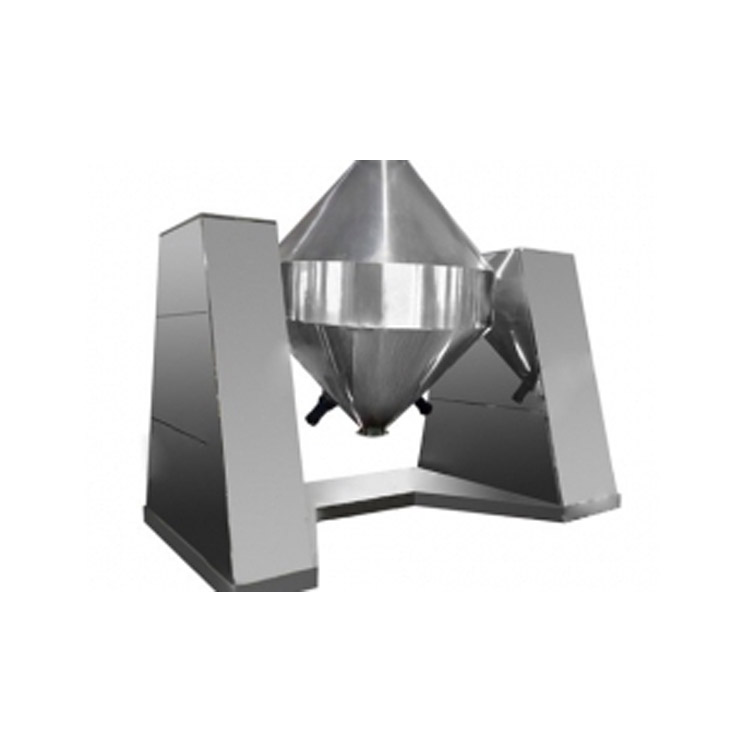
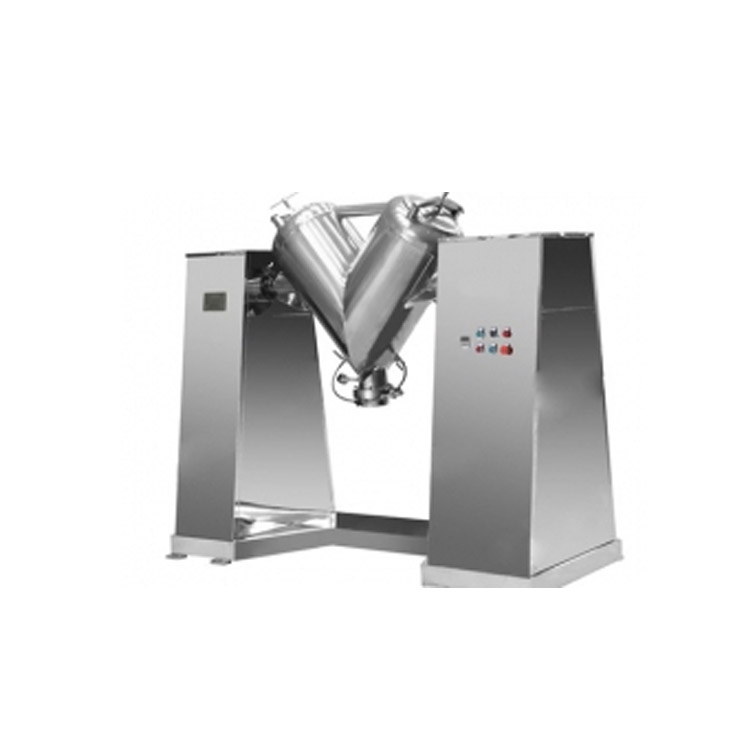
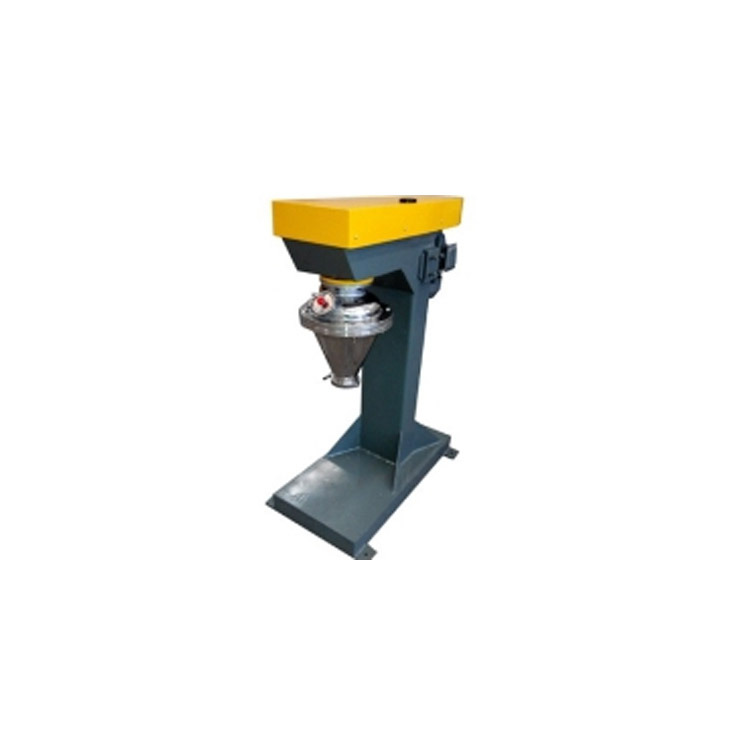
The gravity-free mixer is widely used in industries such as chemicals, dry powder mortar, pesticides, ceramics, food, feed, and batteries. It is suitable for mixing powders, granules, fibers, and other materials, featuring strong mixing force. It can quickly and evenly blend materials in a short period, particularly adept at handling mixtures of materials with significant differences in physical properties like density, fineness, and fluidity. It can also effectively blend materials with ratio differences up to 1:1000 to 10,000 or even higher.

Operating Principle:
The gravity-free mixer consists of a horizontal cylinder, a transmission mechanism, and twin-shaft paddle blades. During operation, the twin shafts rotate in opposite directions, driving the blades to cyclically flip the material along the axial and radial directions. Under the effect of high linear speed, the material is lifted into a weightless (i.e., gravity-free) state and then falls, achieving cross-mixing and uniformity during the lift and fall.
Optional Features:
Flexible material selection options
Gravity-free mixers can be customized with carbon steel, manganese steel, 304 stainless steel, 316L stainless steel, 321 stainless steel, and other steel materials; materials can also be combined. Different materials are distinguished during selection: those in contact with the material and those not in contact. The internal mixer can also be enhanced with functional coatings or protective layers for corrosion resistance, anti-adhesion, isolation, and wear resistance. Surface treatment of stainless steel includes sandblasting, polishing, mirror finishing, and can be applied to different parts of the equipment.
Section 2: Reliable Drive Configuration
Gravity-free mixers are equipped with drive units of varying capacities, powers, and output speeds, tailored to the properties of the material, the starting method, and the mixing method. The twin-shaft gravity-free mixers, due to the interlocking relationship of the internal blades, require a drive system with synchronization capability. With years of practical application experience, our company has selectively introduced two reliable and low-failure drive combinations suitable for different capacity requirements: the twin-gearbox synchronous assembly and the single-gearbox dual-output design.
Section 3: Mixing Device
The gravity-free mixer can adapt the double-axis paddle blades according to the properties of different materials. For instance, it can be equipped with wear-resistant stirring blades (the paddle blades can be made in two pieces, with a removable small blade on the base. When the small blade wears out, it can be directly replaced, offering an economical and quick solution), four-fluorine stirring blades, and saw-toothed stirring blades, etc.
The gravity-free mixer can be equipped with a high-speed crushing shaft inside the drum, which, in conjunction with the mixing material flow, serves to break apart the material.
Four. Excellent feeding device
Standard configuration of the gravity-free mixer includes a double-door flip gate with a large opening discharge valve, curved flip gate valve, perfectly fitting the cylinder's curved surface, ensuring thorough mixing without blind spots, resulting in more uniform blending of materials.
Equipment Selection:
Determine the volume of material mix for each batch, ranging from 0.1 to 20 cubic meters, and select the corresponding equipment specification.
2. Select equipment material: materials are divided into: parts in contact with materials and parts not in contact with materials; other equipment components maintain the original material.
Material selection is based on material properties, operating conditions, hygiene levels, and other factors. Common options include carbon steel, and 304/316L/321 stainless steel. After the material is chosen, surface treatment requirements are determined according to specifications.
3. Determine the driving capacity based on the material's specific gravity, fluidity, and other properties, as well as the startup standards.
Standard Start-up Levels: Full Load Start-up, No Load Start-up.
4. Based on the actual process, add auxiliary function components such as spray, heating/cooling, etc.
5. Specify the opening requirements for the design equipment, such as feed ports, cleaning ports, exhaust holes, etc.
6. Select the material discharge mode and drive method, including manual, pneumatic, and electric.
Important Note: Equipment selection is a critical stage. Please provide as much detail as possible about the materials and process arrangements so that our professionals can offer you excellent technical service.


Typical Parameters:
Model | Total Volume (m³) | Load Factor | Motor Power (kW) | RPM | Bottle Thickness (mm) | Equipment Weight (kg) |
MWZL-0.3 | 0.3 | 0.4-0.6 | 5.5 | 60 | 4 | 600 |
MWZL-0.5 | 0.5 | 0.4-0.6 | 7.5 | 60 | 5 | 800 |
MWZL-1 | 1 | 0.4-0.6 | 11 | 43 | 5 | 1150 |
MWZL-1.5 | 1.5 | 0.4-0.6 | 15 | 43 | 5 | 1500 |
MWZL-2 | 2 | 0.4-0.6 | 15 | 43 | 5 | 2800 |
MWZL-3 | 3 | 0.4-0.6 | 18.5 | 43 | 5 | 4200 |
MWZL-4 | 4 | 0.4-0.6 | 22 | 43 | 6 | 4500 |
MWZL-6 | 6 | 0.4-0.6 | 37 | 35 | 6 | 6000 |
MWZL-8 | 8 | 0.4-0.6 | 45 | 35 | 6 | 7000 |
MWZL-10 | 10 | 0.4-0.6 | 55 | 29 | 6 | 8000 |
MWZL-15 | 15 | 0.4-0.6 | 75 | 29 | 8 | 10000 |
MWZL-20 | 20 | 0.4-0.6 | 90 | 22 | 8 | 13000 |