










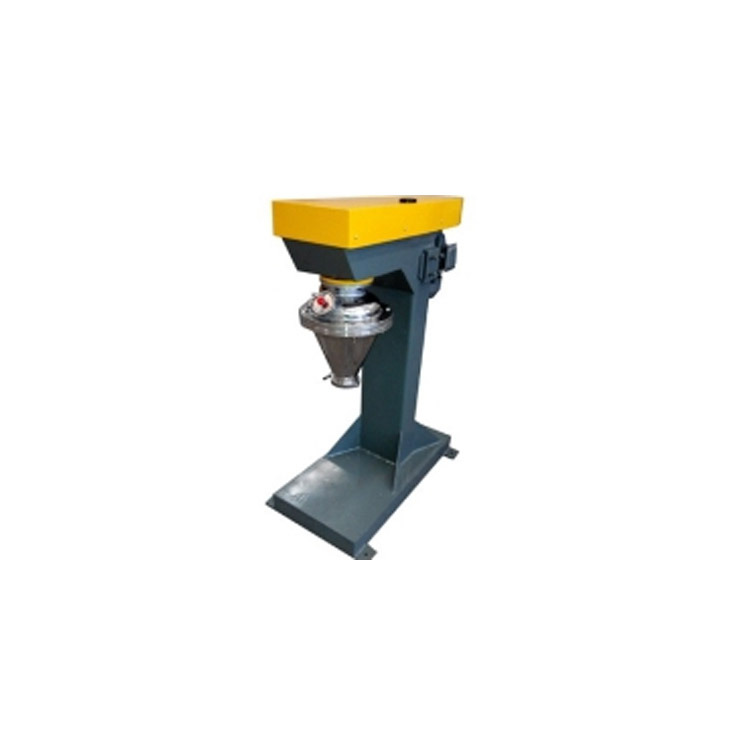
Equipment Introduction
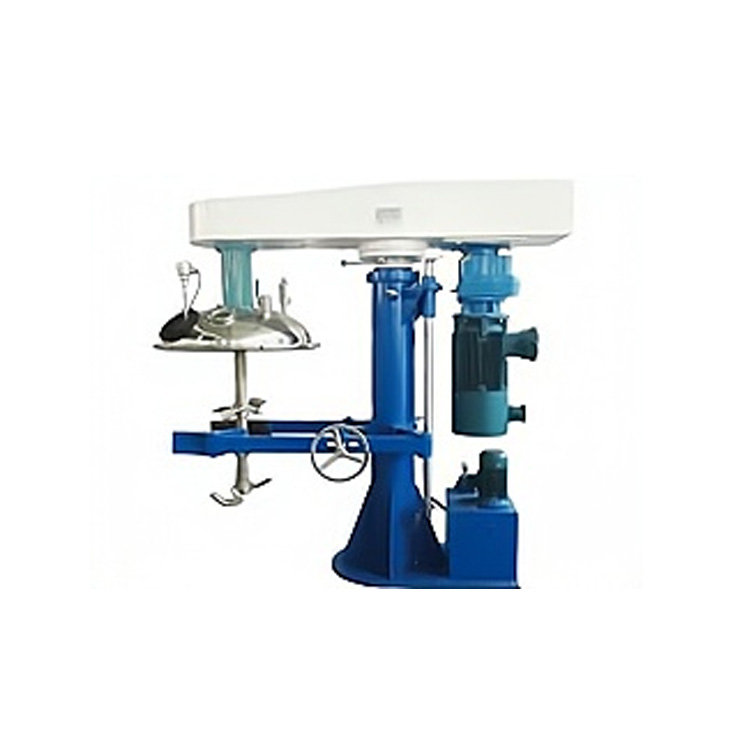
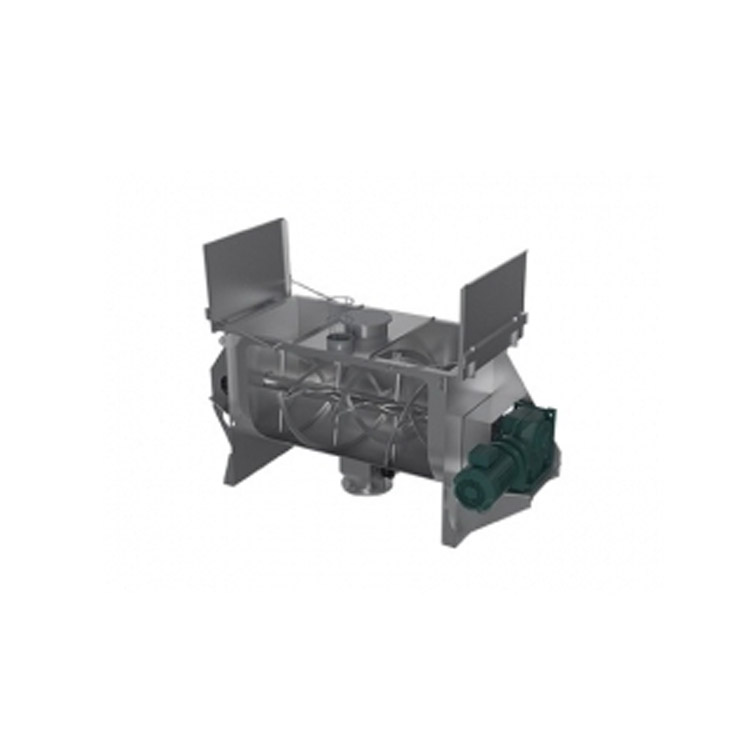
This equipment is a medium to low-speed single-axis mixer, typically powered by an electric motor and driven by a reducer. The mixing blades achieve high torque, propelling the material to move axially or radially. Accompanied by shearing, diffusion, convection, and impact, the material achieves a mixing effect in a short period of time.
The structural form and mixing characteristics of the agitator greatly determine the mixing effectiveness of the system. Therefore, the selection of the agitator directly impacts the overall mixing performance of the equipment. Wuxi Mikos specializes in the research, development, design, manufacturing, and sales of mixing equipment. All products provided by Mikos are integrated with extensive application experience, advanced mixing technology, reliable mechanical design, and superior processing quality. Mikos engineers select the appropriate agitator type, determine the size and installation method, by analyzing material properties, process requirements, and various parameters, to meet the operational needs of different customers and address their real-world requirements. The correct selection of an agitator will provide better mixing results, operational efficiency, and mechanical performance.
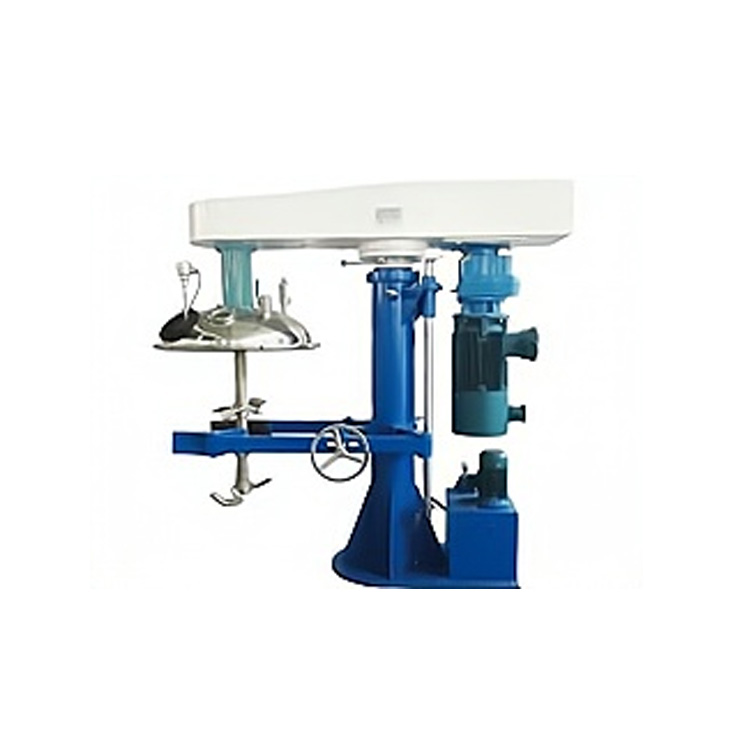
This equipment is equipped with a hydraulic system, utilizing cylinders as lifting actuators, allowing the mixer to vertically ascend and descend. It is an ideal large-scale equipment for batch production.

Working Principle
Impellers rotate in a fixed direction, powered by the drive unit, causing the material to undergo both axial and radial movements during rotation. The mixing process involves actions such as shearing, diffusion, convection, and impact, which effectively enable rapid stirring and blending of the material.
Additionally, to eliminate the swirling of the liquid within the mixing container and to enhance the upward and downward axial circulation of the material being mixed, ensuring a uniform mixture throughout the entire vessel, it is necessary to add several baffles or flow guides inside the container.
Common Processes
By selecting the appropriate stirrer, the application of mechanical external force can address process requirements such as gas-liquid, liquid-liquid, and solid-liquid absorption, dissolution, mixing, suspension, crystallization, extraction, and reaction.
Solubility: Solutions prepared by dissolving a solid or liquid in another liquid
Mixed: Uniformly blend materials from various dispersed systems to prepare a new material
Crystallization: Solutes precipitate in the form of crystals from the solution.
Reaction: Material is converted into products different from the reactants through chemical changes.
Extraction: The process of transferring a solute from one solvent to another

Applied Products
Biological, Food, Metallurgy & Mining, Petroleum & Chemicals, Paints, Inks, Dyes, Pigments, Resins, Adhesives, Environmental Protection, Water Treatment, Sludge, Pulp, Electronics, Battery Paste, Nanomodified Coatings, Biodiesel, Coating Paste, Extrusion Paste, Molding Paste, Textile Aids, Printing Paste, Fruit & Jam Juices, Soup Powders, Oil Field Chemicals, Surfactants, Asphalt, Food & Beverages, Biodiesel, Suspensions, Syrups
Component Parts
Drive motors, reducers, couplings, bearings, seals, impeller components, beams, hydraulic lifting systems, control systems, containers, and other auxiliary components
Blender options (various common types of blenders)

Our company produces over 100 types of mixers, ranging from the most common to various complex shapes or special-purpose mixers. They can be manufactured according to the specifications and dimensions of HG/T 3796.1-2005 standard, or customized according to the user's production process requirements. Paddle, propeller, turbine, screw blade, and anchor frame mixers are the most widely used in mixing equipment.
Purpose of Common Mixing Operations, Mixing Effects, and the Relationship with Mixer Selection
Operation Objective | Recommended Blender | Characteristics parameters for evaluating the mixing effect | The importance of recirculation flow or shear force |
Gas-liquid dispersion and gas-liquid absorption | Disk turbine, large-blade turbine, axial-flow turbine, etc. | Distributed time, bubble specific surface area, average droplet diameter or droplet diameter distribution, dispersion uniformity | Shear force is used to split bubbles; recirculating flow increases the number of times bubbles pass through the strong shear zone of the impeller. |
Homogeneous low-viscosity liquid blends (Easy-soluble Liquid Blend) | Propulsion, axial flow propellers, and turbines, etc. | Mixing Time, Mixing Index, Flip Count, Uniformity | Increasing recirculating flow can enhance mixing efficiency, with minimal impact from shear force. |
Homogeneous high viscosity liquid blend | Anchor box, screw conveyor, screw auger, large vane style, etc. | Mixing time, shearing speed, flip count, evenness | The circulation flow and shear rate both enhance the mixing effect. |
Liquid-liquid extraction | Axial propellers, straight-blade turbines, disk turbines, etc. | Extraction rate, extraction efficiency, droplet specific surface area, liquid film mass transfer coefficient, and total volume mass transfer coefficient | Shear force is used to split droplets, and the recirculating flow increases the number of times droplets pass through the strong shear zone of the impeller. |
Solid-liquid extraction | Propeller, axial flow propellers, etc. | Suspended state, solid-liquid concentration, specific surface area, dissolution rate | Increase recirculation flow and enhance mixing efficiency; shearing force unaffected. |
Solid-liquid suspension | Turbines: Propeller, Axial Flow, Curved Blade, etc. | Suspended state, critical suspension speed, solid-liquid concentration, specific surface area | Increase recirculation flow and enhance mixing efficiency; no impact on shear force. |
Solid-liquid solution | Propulsion, axial flow propellers, axial flow turbines, etc. | Solubility rate, liquid film mass transfer coefficient based on the surface area of solid particles, and total volume mass transfer coefficient | Increase recirculating flow and enhance mixing efficiency; shear force has some impact. |
Solid-liquid crystalline | Propeller, Open Turbine, Thruster with Guide Hull | Crystallization rate, grain size, and uniformity | Increase recirculating flow and enhance mixing efficiency; shear force determines the particle size of the crystals. |
Heat Transfer (Gas, Solid, Liquid) | Pusher, Axial Flow Turbine, Bruma King, Three-Blade Swept-Wing | Heat transfer efficiency, liquid film heat transfer coefficient, overall heat transfer coefficient | Increase recirculating flow and enhance mixing efficiency; no effect on shear force. |
Reactions (gas, solid, liquid) | Supply according to specific reaction condition requirements | Reaction time, heat transfer, mass transfer requirements, and flip frequency. For polymerization, conversion rate, relative molecular weight, and distribution are the key indicators. | Recirculation flow and shear force both affect the reflection. |
Optional Features
Tare Volume: 200L-10,000L (Custom Large Volume Available)
Power Range: 1.1KW-30KW (High Power Customization)
Power Source: 380/400/415/440/480V; 50/60Hz; 3P
Motor Types: Standard, Explosion-proof, Variable Frequency
Energy Efficiency Rating: GB2 (IE3), GB3 (IE2)
Protection Level: IP54, IP55, IP65
Lifting Type: Hydraulic Lifting
Speed Control Method: Variable Frequency Speed Control, recommend using imported brand variable frequency inverters.
Blenders: propeller, paddle, open turbine, disc turbine, pusher, propeller, ribbon, screw, anchor, frame, and other custom blenders
Work Environment: Atmospheric, Vacuum, Positive Pressure
Sealing Methods: Packing Sealing, Skeleton Oil Seal, Mechanical Seal
Cap: Standard Swing Lid, Sealed End Cap
Container Sleeves: No Sleeve, Full Sleeve, Spiral Baffle Sleeve, Semi-Circular Tube Sleeve, Honeycomb Sleeve
Built-in Components: Baffle, Diverter Tube, Inner Coiled Pipe
Heating Methods: Non-Heating, Electric Heating, Steam Heating, Heat Transfer Medium Circulation Heating
Container Fixation: Manual Fixation, Automatic Fixation
Material: 304, 316L, 2205, 2507, titanium, Hastelloy, titanium-molybdenum-nickel alloy, and coated lining
Operation Panel: Standard Button Cabinet, Intrinsically Safe Explosion-Proof Button Cabinet, Explosion-Proof Spill-Proof Button Cabinet, Standard Touch Screen, Explosion-Proof Touch Screen
Electrical Control: Relay Control, PLC Control, Vector Control, Temperature and Pressure Detection
Typical Parameters:
Model | Can Volume (L) | Agitation type | Power (kw) | RPM (revolutions per minute) |
MJB-200-H | 200 |
Multi-blade paddle The calculation data for viscosity, speed, and power, etc., for materials using other types of mixers is different. | 1.1 | 100 |
MJB-300-H | 300 | 1.5 | 85 | |
MJB-500-H | 500 | 2.2 | 76 | |
MJB-800-H | 800 | 3 | 67 | |
MJB-1000-H | 1000 | 4 | 63 | |
MJB-1500-H | 1500 | 5.5 | 59 | |
MJB-2500-H | 2500 | 7.5 | 59 | |
MLS-3000-H | 3000 | 11 | 53 | |
MJB-4000-H | 4000 | 15 | 53 | |