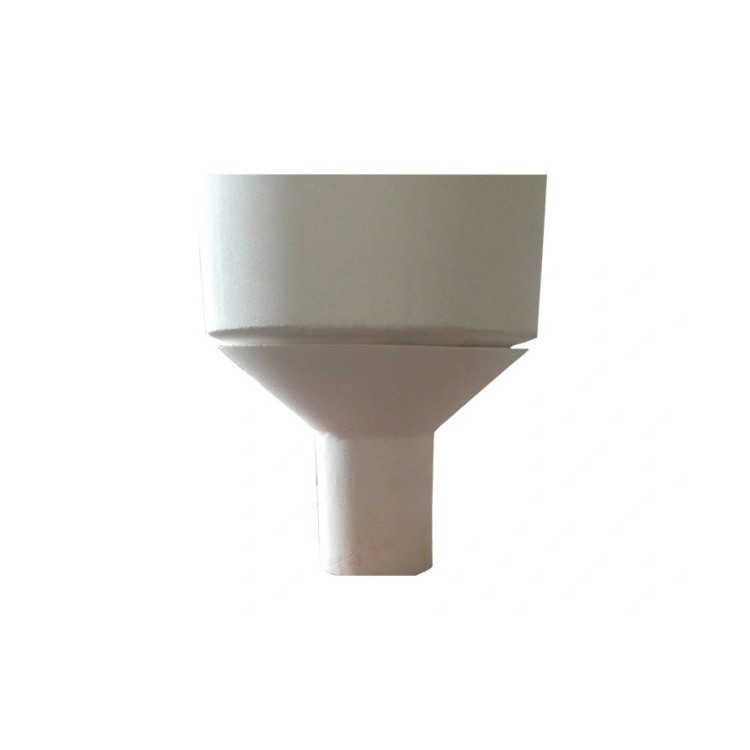














A crucible is a container used for melting metals or other materials at high temperatures, commonly made of refractory materials such as clay, alumina, and graphite. Crucibles come in various shapes, including arched, cylindrical, square, and rectangular, with arched crucibles being renowned for their excellent durability.
Material and Characteristics
The crucible material is diverse, with common types including:
Ceramic crucible: Easy to clean and maintain cleanliness, excellent chemical stability, resistant to erosion from acids, alkalis, salts, and carbon dioxide in the atmosphere, and good thermal stability.
Graphite Crucible: Resists high temperatures, has rapid heat conduction, but is susceptible to oxygen; typically, an alumina coating is applied to extend its service life.
Silicon carbide crucible: High hardness, high melting point, significant energy-saving effect, suitable for long-term use.
Corundum crucible: Made of high purity alumina, with a high melting point but susceptible to corrosion by strong alkalis.
Application Fields
Molten crucibles are widely used in various fields:
Laboratory Analysis: Used for the melting process of samples for metallic and non-metallic materials.
Industrial Applications: Such as metallurgy, chemical industry, and materials science fields.
High-Temperature Applications: Such as metal processing, glass melting, and gemstone purification in the jewelry industry.