



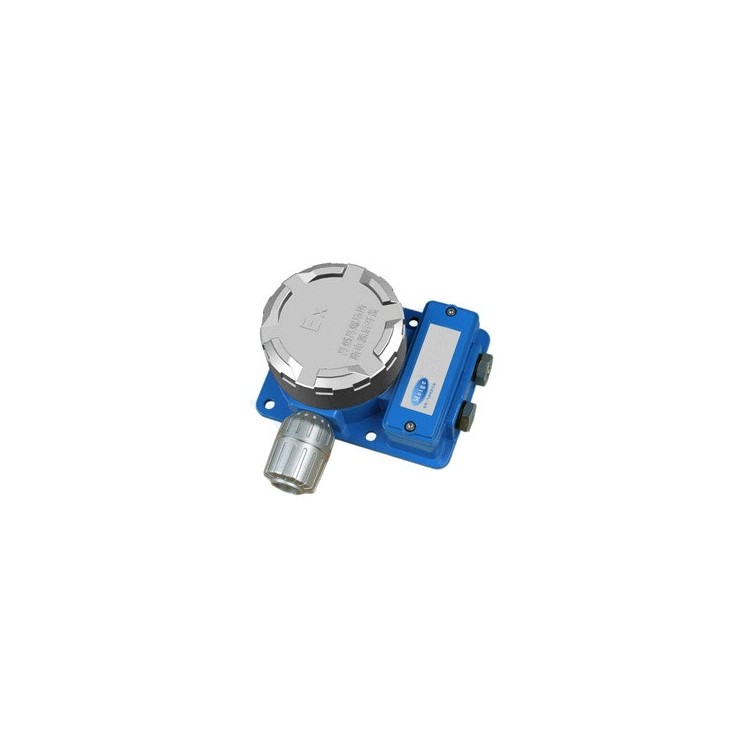















A hydrogen gas detection transmitter is a device used to measure hydrogen concentration in the air, primarily for industrial and environmental monitoring to ensure safety and stability of the production process. Below is a detailed introduction to the hydrogen gas detection transmitter:
Basic Functions and Working Principle
Hydrogen gas detectors utilize built-in high-sensitivity sensors to accurately measure hydrogen concentrations in the air and convert them into electrical signals for transmission and processing. Should the hydrogen concentration exceed the preset safety threshold, the detector will immediately activate the alarm system, emitting both audible and visual alarm signals. Additionally, alarm information can be wirelessly transmitted to a remote monitoring center, ensuring comprehensive and round-the-clock safety surveillance.
Technical Specifications and Application Scenarios
Detection Range: Typically 0~99.99%LEL or 0~100000ppm; specific range can be customized as required.
Detection Accuracy: Generally less than or equal to ±3%FS, with some equipment offering higher accuracy.
Response Time: Typically less than or equal to 30 seconds.
Signal Output: Common output signals include 4-20mA three-wire systems, RS485, and some equipment also supports relay outputs and audio-visual alarms.
Application Scenarios: Widely used in oil, chemical, environmental protection, gas distribution, warehousing, flue gas analysis, air treatment, and other fields, suitable for situations requiring fixed installation and on-site detection of gas concentrations.23
Maintenance and Calibration Methods
Hydrogen gas detection transmitters typically feature automatic tracking of zero point, full-scale, and temperature compensation functions. Some devices support full software calibration or user self-calibration. The calibration process is usually completed through simple button operations, ensuring the long-term stability and accuracy of the equipment.


















