

















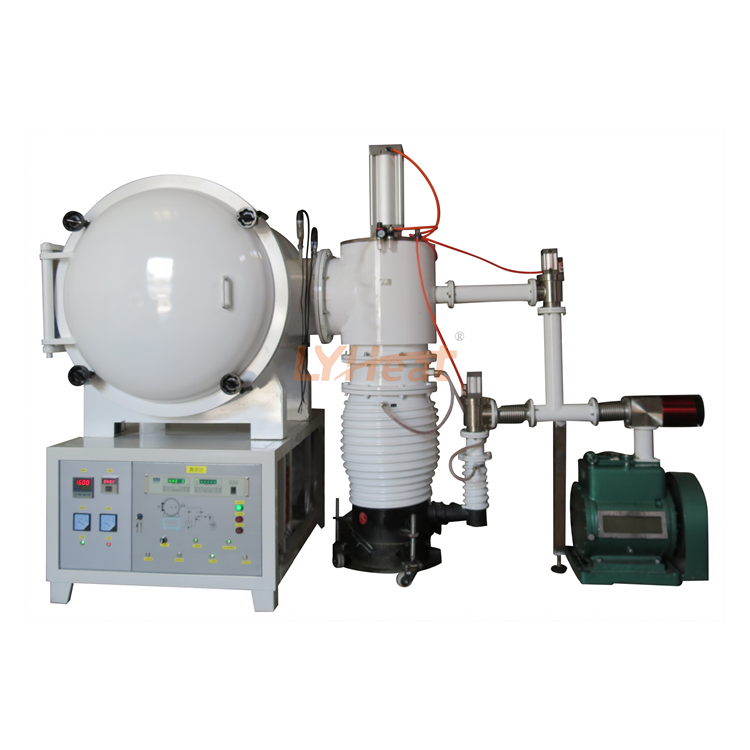
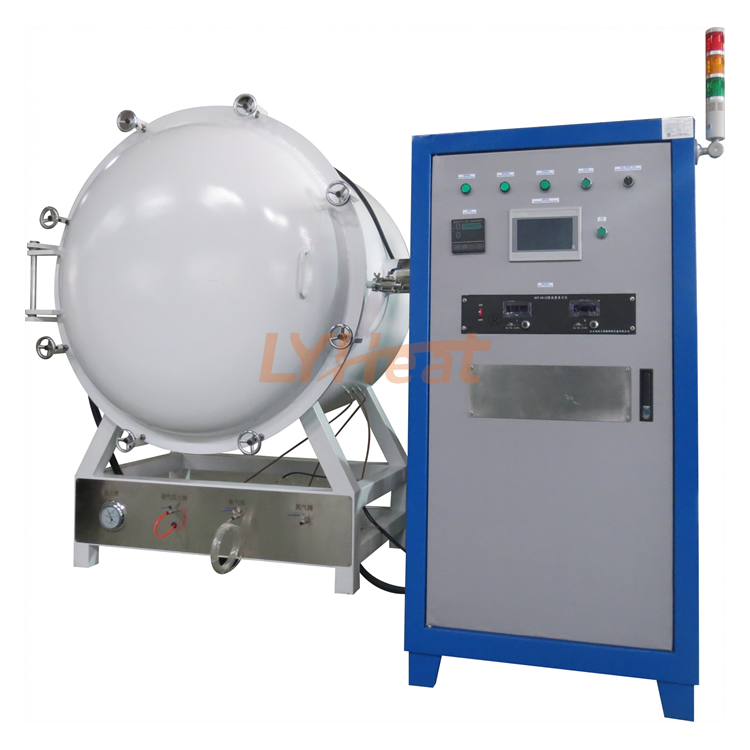
Equipment Brief Introduction
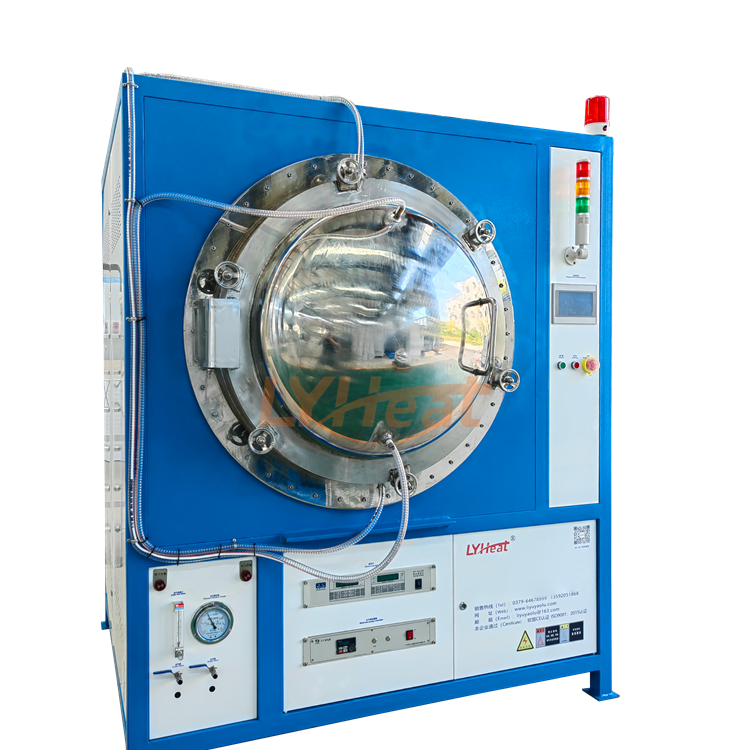
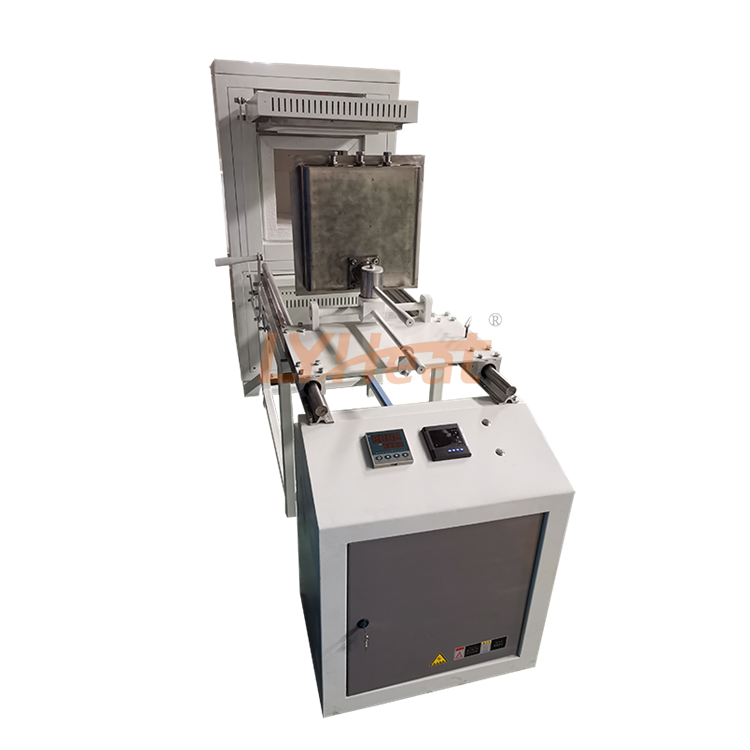
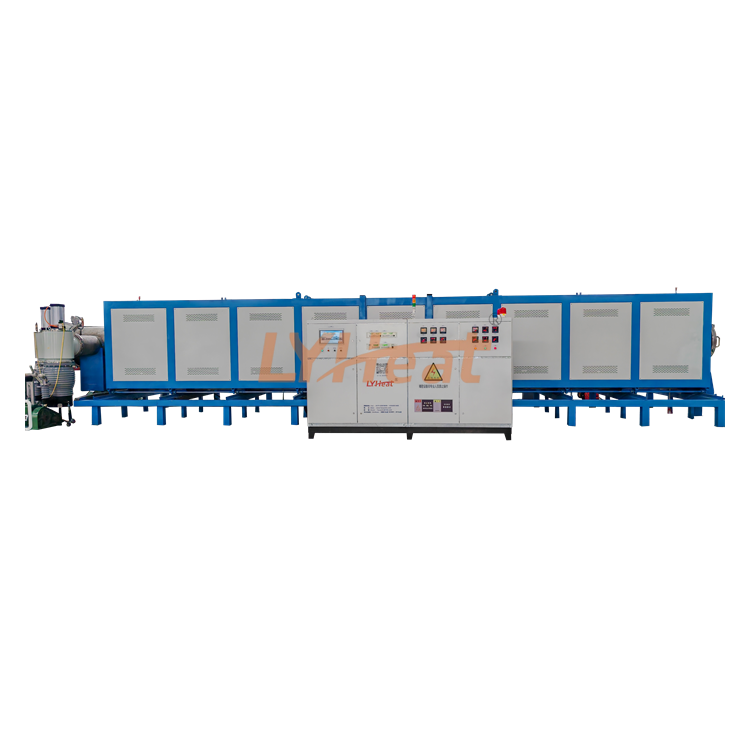
Molecular Pump High Vacuum Furnace LYL-20HFZVSeries vacuum furnace equipment is primarily used for vacuum sintering, quenching, and other processes of hard alloy, magnetic materials, ceramics, and powder materials. The high-temperature sintering process for materials ensures reliable thermal and insulation design. The new electrode structure eliminates the leakage phenomenon of high-temperature furnace electrodes, and the replaceable components in the heating system are easier to maintain and replace.
Main Application
This equipment is widely used in universities, research institutions, industrial and mining enterprises, and is an ideal device for experiments and production in powder, electronics, metallurgy, ceramics, sulfur, new glass materials, chemicals, metal sintering, and metal heat treatment.
Structural DescriptionStructure)
Stainless steel inner shell, welded by pressure vessel factory, ensuring airtight weld seams, free from gas leaks such as sand holes and cracks.
2. As required, constructed with a double-layer furnace shell, sealed with an O-ring silicone seal.
3. The furnace door seal is made with a wire-cutting flange, fitted with an O-ring of silicone, and locked with a handwheel.
4. Furnace chamber is square or round, and the furnace door can be electrically opened optionally.
5. The outer surface of the furnace shell is meticulously polished, exuding an elegant and generous appearance.
6. Aluminum Oxide Polycrystalline Fiber High-Temperature Furnace Chamber, Aesthetically Pleasing and Energy-Efficient
7. Use well-known electrical appliances to ensure safe operation.
8. Temperature control and detection are fully implemented
Single Platinum Rhodium (S-type) ≤ 1500℃
Dual platinum rhodium (Type B) ≤ 1800℃
Vacuum System DescriptionVaccum System)
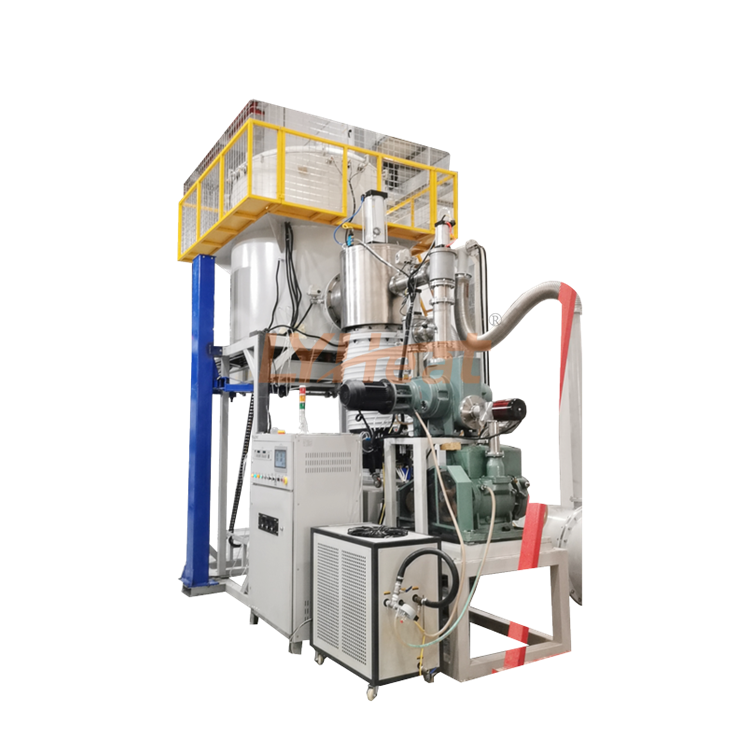
1. The vacuum system is a molecular pump unit, consisting of a molecular pump and a scroll pump: FF160 + TRP-24. It includes a molecular pump, scroll vacuum pump, gas-in valve, high vacuum gate valve (main valve), high vacuum gate valve (pre-pump valve), high vacuum gate valve (exit valve), preliminary stage pipeline gas-in valve, connecting pipeline, sealing rings, composite vacuum gauge, and power distribution cabinet, etc., forming a suction system.
2. This unit is not suitable for extracting gases that are corrosive to metals or reactive with the pump oil. It can serve as a high vacuum acquisition device for high-tech equipment such as vacuum smelting, vacuum sintering, vacuum heat treatment, vacuum coating, vacuum brazing, and space simulation experiments. The operating environment temperature is 5~40°C, with relative humidity not exceeding 85%, and the cooling water temperature is 25°C ± 5°C.
3. The vacuum level is related to the pumping capacity of the vacuum pump, the sealing of the chamber, and the degassing amount of the internal materials (such as the inner wall of the furnace, experimental devices, heat sinks, etc.). The ultimate pressure of this unit is 9.0×10^-4 Pa, and the ultimate pressure with an empty furnace and no load is 9.0×10^-3 Pa. The pumping time is approximately 1 hour.
4. The molecular pump cannot evacuate independently; it must be preceded by a primary pump to reduce the system pressure to within the startup pressure required by the diffusion pump, typically ≤10 Pa. This unit's primary pump is a vane-type TRP-24.
5. To prevent the vacuum oil in the feed pump from reversing into the main pump chamber upon shutdown, an electromagnetic valve must be fitted at the inlet of the preliminary vacuum, automatically isolating the system piping during shutdown.
6. Valves are all pneumatic, offering easy operation.
7. Upon initiating evacuation, this system is equipped with a pre-evacuation line. The gas to be evacuated is directly drawn out by the fore pump rather than passing through the molecular pump, which prevents contamination of the pump by the gas inside the evacuation vessel (moisture, volatile substances, impurities). Once the pressure inside the vessel drops to 10 Pa, close the pre-evacuation valve, open the baffle valve, and the molecular pump will commence normal evacuation of the vessel.
Corporate Qualifications & Honors
Quality Management System CertificationGB/T19001:2016/ISO 9001:2015; European UnionCECertification: "Luoyang City Model Enterprise for Civilization and Trustworthy Operation"“China Electric Furnace Industry Brands”;“Quality, Service, Reputation - AAA Corporation”Our products pass inspections by certified testing agencies, and third-party certification can be provided upon request.
Main Functions and Features
Wide temperature range of 800℃-1200℃ (optional)
2. Vacuum level up to 10-4 Pa (optional)
3. Energy-saving and electricity-efficient, environmentally friendly and pollution-free (high-purity composite alumina furnace material)/Ceramic polycrystalline fibers, lightweight, low heat retention, energy-efficient (average half-power operation)
4. Easy to replace Energy-saving and time-efficient (heating elements are resistance wire/silicon carbide rod/silicon molybdenum rod, with long service life and easy replacement)
5. Integrated control, easy to operate, and more user-friendly
6. High temperature control accuracy (superior instrument quality, temperature control accuracy ±)1The gauge can provide a third-party inspection certificate.
7. Excellent uniformity of furnace temperature (rational layout, balanced temperature field, no blind spots in the furnace cavity)
8. Smart temperature control with adjustable heating rate, automatic operation
9. Over-temperature, over-pressure, and over-flow automatic protection
10. Optional gas flowmeters include float and mass flowmeters, enabling manual and automatic control of gas flow, as well as the ability to shut off gas flow.
11. Broad Application Range: Universities, research institutions, industrial and mining enterprises for powder, military industry, electronics, metallurgy, ceramics, glass, machinery, new material development, special materials, refractory materials, construction materials, chemicals, metal sintering, and metal heat treatment, etc. for testing and production
12. Double-shell structure, air-insulated (with optional chilled water unit)
13. Exquisite and elegant stainless steel housing
14. Excellent reputation, numerous clients
15. Great value for money, comprehensive after-sales service, 1-year warranty, lifetime on-site repair.
Main Technical Specifications
Item | Indicator Value |
Rated Voltage | 220V/380V |
Design Temperature | 800℃,1000℃,1200℃ |
Rise Rate | ≤0.1-40℃/min (adjustable) |
Heating Element | Imported Resistor Wire / U-Shaped Silicon Carbon Rod |
Temperature Control Accuracy | ±1℃ |
Vacuum level | -0.1 mPa - 6.7 x 10^-3 Pa (optional) |
Flow meter | Float Ball Flow Meter (Mass Flow Meter Optional) |
Temperature Control Method | Smart control, PID adjustment, intelligent microcomputer control, multi-segment programmable temperature control curves, unattended operation (automatic heating, maintenance, power off upon door opening) |
Thermoelement | K(0-1300℃)/S(0-1600℃) |
Furnace chamber material | Ceramic Polycrystalline Fiber /Alumina fiber/Alumina fiber composite/High purity alumina fiber/Imported Fiber |
Air-permeable | Available for inert protective cooling gases such as nitrogen, argon, oxygen, and carbon monoxide. Optional for atmosphere closure without gas flow. |
Cooling Method | Double-shell design, with an air-insulating layer (optional chilled water unit for water-cooling system) |
Surface Temperature Rise | ≤30℃ |
Random gift | 2 heating rods, 2 rod holders, 1 crucible tongs, 1 pair of refractory gloves, 1 instruction manual and 1 certificate of conformity each |
Selection Guide
Model | Furnace chamber dimensions (depth x width x height/diameter x height mm) | Power Voltage (V) | Power (KW) | Temperature Control Accuracy |
LYL-18ZTL-1 | 300*300*300/300*300 | 380 | 12 | ±1℃ |
LYL-18ZTL-2 | 500*500*500/500*500 | 380 | 25 | ±1℃ |
LYL-18ZTL-3 | 700*500*500/500*700 | 380 | 30 | ±1℃ |
LYL-18ZTL-4 | 800*500*500/500*800 | 380 | 40 | ±1℃ |
LYL-18ZTL-5 | 800*800*800/800*800 | 380 | 90 | ±1℃ |
LYL-18ZTL-6 | 1200*800*800/800*1200 | 380 | 100 | ±1℃ |
LYL-18ZTL-7 | 1000*1000*1000/1000*1000 | 380 | 120 | ±1℃ |
LYL-18ZTL-8 | 1500*1000*1000/1000*1500 | 380 | 150 | ±1℃ |
LYL-18ZTL-9 | 2000*1000*1000/*1000*2000 | 380 | 180 | ±1℃ |
Temperature Category | 800°F-1200°F available upon request | |||
Custom-made, non-standard | According to customer requirements, customize experimental electric furnaces in various sizes, with the hearth available in either round or square shapes. | |||
Standard Accessories
Name | Image | Quantity | Description | |
High-Temperature Gloves |
| 1Double | Comfortable with warmth retention for hands; cut-resistant, wear-resistant, and heat-resistant (can withstand 350℃ for 60 seconds of contact heat, 100℃ for 180 seconds of contact heat) durable. | |
Heating Element | Silicon carbide rod |
| 2Please provide the Chinese content to be translated. | Silicon carbide components, with high operating temperatures, are hard and brittle. After shaping, they are used in applications such as silicon carbide rods and tubes, which can reach high heat temperatures under dry air conditions.15001000-1200°C under vacuum, long-term use temperature of 1350°C under nitrogen atmosphere |
Tongs for crucibles |
| 1Return | 1. A common chemical instrument, typically used to pick up crucibles. Generally made of stainless steel or hard, non-combustible, and non-oxidizable materials. 2. Use clean tongs. 3. When using tongs to pick up a hot crucible, preheat the tip of the tongs to prevent the crucible from cracking due to local cooling. After use, place the tongs with the tip facing up on the desk or a fiber glass mat. 4. After the experiment, the crucible tongs should be cleaned, placed in the equipment cabinet, and allowed to air dry. 5. Use the curved section for holding crucibles; for other uses, use the pointed tip. 6. Crucible tongs are not necessarily used in conjunction with crucibles; they can also be used alone. | |


Optional Accessories Listnal Accessories List)
Integrated control | Touchscreen Gauge | Remote Assistance Module |
Observation window | Exhaust ports and chimneys | Heating fan |
Crucible, mold | Door jam | Furnace bottom plate |
Blower | Thermocouple | Centralized Control Industrial Computer |
caster wheel | Multiple-point temperature measurement | Exhaust Emission Purification Equipment |
Special Note
Quality Assurance | One-year full machine warranty, excluding related consumables (excluding pad boards and heating elements); lifetime on-site maintenance service. |
Factory environment | 1. Indoor use 2. Environmental temperature is within ±5-45℃ range. 3. Relative ambient temperature surrounding does not exceed 85%. 4. No conductive dust, explosive gases, or gases that can severely damage metals and insulate corrosive gases are present around the stove. |
Safety Protection | 1. When initially using or restarting an electric furnace after a long period of disuse, it is necessary to dry out the furnace; otherwise, cracks in the furnace chamber may occur. Keep clean regularly and check if the electric furnace wiring is in good contact. 3. Do not exceed the rated temperature when using the electric furnace to prevent damaging the heating element. It is strictly prohibited to pour any flammable liquids or molten metals into the furnace. 4. During the working process, the temperature should generally not exceed 300℃ and the rate of temperature increase should be moderate, as the furnace chamber is cold at the beginning and requires a significant amount of heat to be absorbed. |
After-Sales Service | 1. We commit to resolving any technical inquiries from customers within one hour. 2. We promise to provide a test result within 1 working day for equipment returned for repair, complete the repair within 3 working days, and handle special materials on a case-by-case basis. 3. Within one week of returning the equipment to the customer, conduct a follow-up visit with the user and provide free technical consultation. |
Friendly Reminder | Do not operate the equipment at the rated temperature for extended periods to ensure its normal service life. 2. Carefully count and verify the quantity of goods and accessories upon receipt to avoid any inconvenience caused by shortages or omissions. 3. To extend the lifespan of the instrument, we recommend a heating and cooling rate of 10℃/min. 4. The cooling rate should not exceed 5°C/min. 5. This furnace does not have a vacuum-sealed structure, therefore it is not suitable for introducing flammable or explosive gases. 6. After a period of use, this furnace may develop minor cracks in the combustion chamber, which is a normal occurrence and will not affect its operation. It can be repaired with an alumina coating. |
Common Faults and Troubleshooting
Fault Phenomenon | Fault Cause | Exclusion Methods |
Turn on the control power switch, no power indicator is present. | Control circuit, fuse blown, power failure | Inspect for short circuits, eliminate if present, then replace the fuse. |
Equipment operates with voltage but no current. | Heating element fracture | Replace heating element |
Instrument PV displays the upper temperature limit for the corresponding type of thermocouple. | Thermocouple short circuit | Replace Thermocouple |
Power is normal, but the furnace cannot heat up. | Control main line damage | Notify maintenance personnel for inspection. |


















