



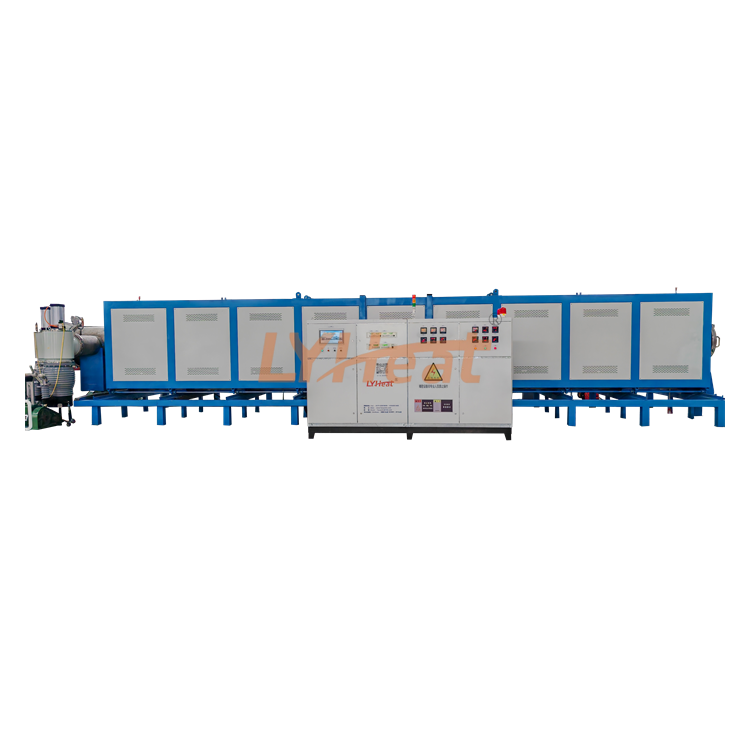














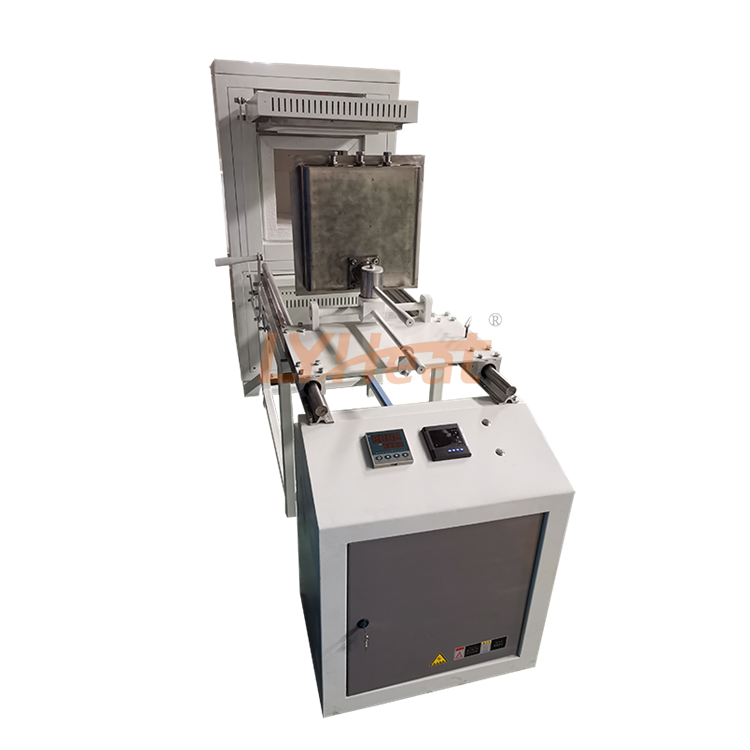
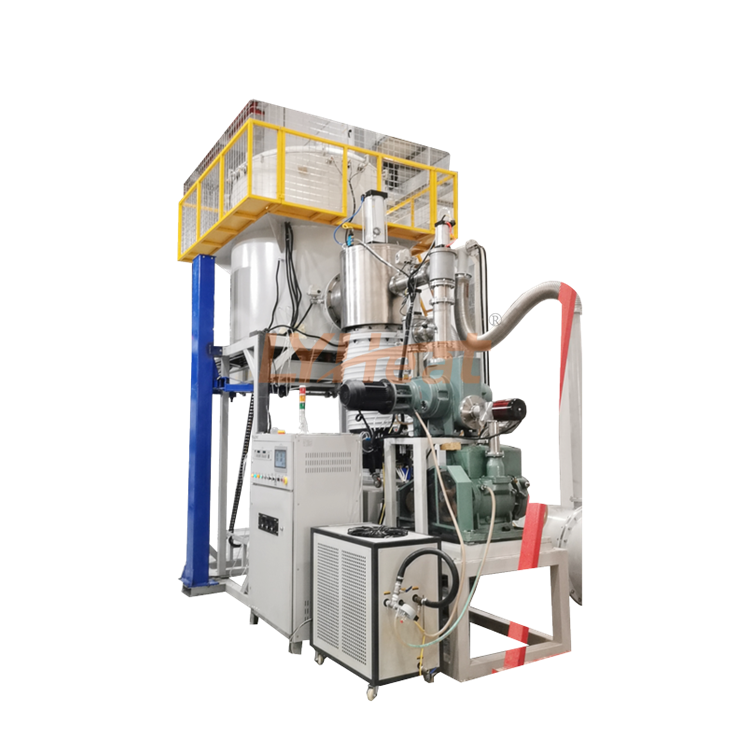
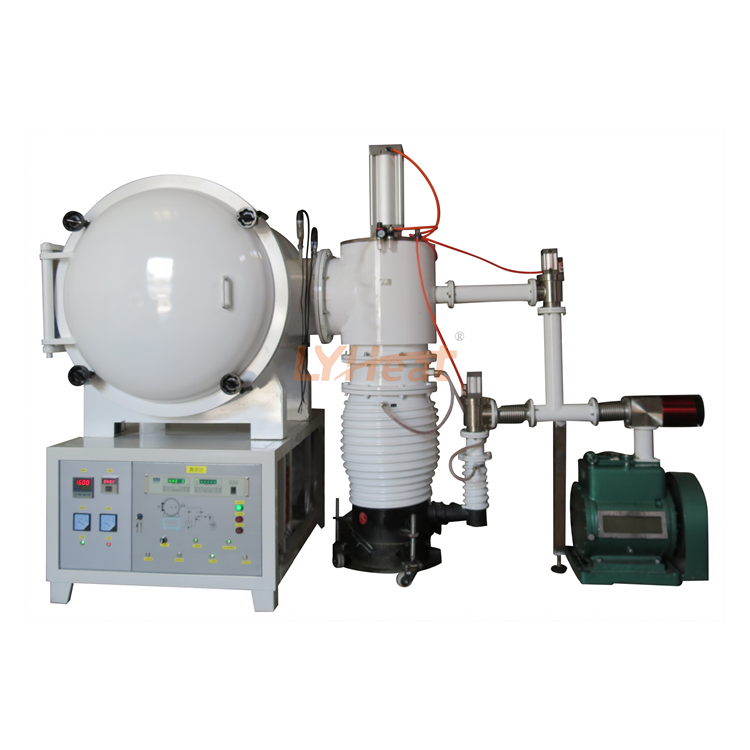
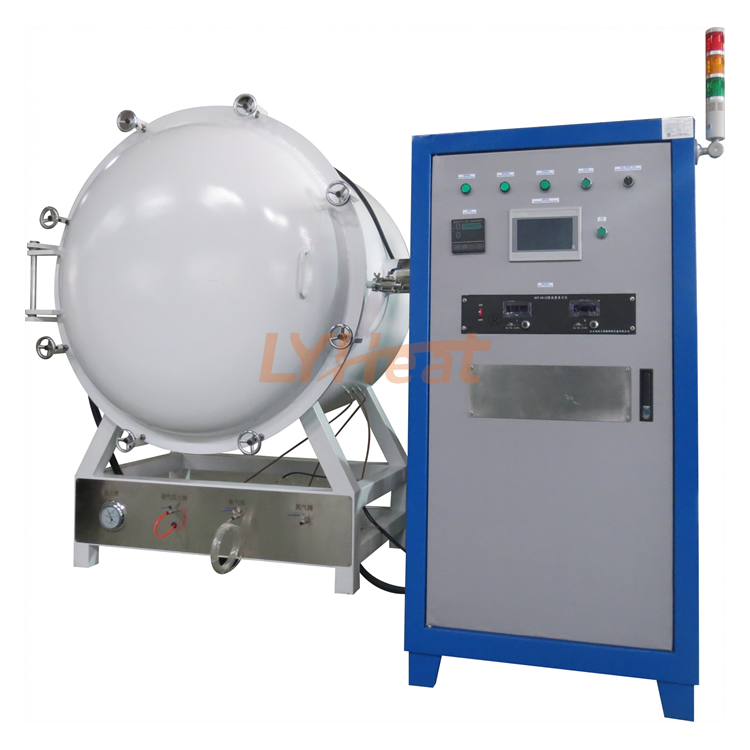
High-vacuum annealing furnace
Main Technical Specifications
Item | Indicator Value |
Rated Voltage | 220V/380V |
Design Temperature | 800℃,1000℃,1200℃,1400℃,1600℃,1700℃,1800℃ |
Rising temperature rate | ≤0.1-40°C/min (adjustable) |
Heating Element | Imported resistive wire/U-shaped silicon carbide rod/U-shaped silicon molybdenum rod |
Temperature Control Accuracy | ±1℃ |
Temperature Control Method | Microcomputer control, PID tuning, intelligent microcomputer control, multi-step programmable temperature control curves, no need for supervision (fully automatic heating, insulation, power off when door is opened) |
Thermometric Element | K(0-1300℃)/S(0-1600℃)/B(0-1820℃) |
Furnace lining material | Ceramic Polycrystalline Fiber /Alumina fiber/Alumina Fiber Composite/High-purity aluminum oxide composite fiber/Imported Fiber |
| Internal heat circulation | The furnace interior features a hot air mixing cycle, with a thermal fan installed at the top of the furnace, controlled by a variable frequency drive to regulate the fan's rotation speed. |
| Furnace door structure | Front door side-hinged |
Cooling Method | Double-wall shell with air insulation layer |
Surface Temperature Rise | ≤30℃ |
Random gift | 2 heating rods, 2 rod holders, 1 crucible tongs, 1 pair of heat-resistant gloves, 1 furnace base plate, 1 user manual, 1 certificate of compliance |
Selection Guide
Model | Furnace chamber dimensions (depth, width, height)mm) | Furnace Volume (L) | Power Voltage (V) | Power (kW) | Temperature Control Accuracy |
LYL-FANM-1 | 200*150*150 | 4.5 | 220 | 4 | ±1℃ |
LYL-FANM-2 | 300*200*120 | 7.2 | 220 | 6 | ±1℃ |
LYL-FANM-3 | 300*200*150 | 9 | 220 | 8 | ±1℃ |
LYL-FANM-4 | 300*200*200 | 12 | 220/380 | 10 | ±1℃ |
LYL-FANM-5 | 400*250*160 | 16 | 380 | 12 | ±1℃ |
LYL-FANM-6 | 400*300*300 | 36 | 380 | 14 | ±1℃ |
Temperature Category | 800℃-1800℃ Available for selection | ||||
Non-standard Custom Made | According to customer requirements, customize furnaces in various sizes. | ||||
Standard Accessories
Name | Image | Quantity | Description | |
High-Temperature Gloves |
| 1Double | Great comfort and keeps hands warm; cut-resistant, abrasion-resistant, and heat-resistant (can withstand 350°C; can touch heat for 60 seconds at 100°C, 180 seconds at 100°C) - durable and long-lasting. | |
Heating Element | Silicon carbide rod |
| 2Please provide the Chinese content that needs to be translated into American English. | Silicon carbide components, with high usage temperatures, are hard and brittle. After molding, they are used, such as silicon carbide rods and tubes, which can reach high heating temperatures under air-dry conditions.1500100-120°C, for vacuum conditions; 1000-1200°C under nitrogen atmosphere, long-term use at 1350°C |
Silicon Molybdenum Rod |
| 2Please provide the Chinese content that needs to be translated into American English. | Silicon molybdenum rods are heated to high temperatures in an oxidizing atmosphere, forming a dense quartz glass film on the surface to prevent further oxidation. Therefore, silicon molybdenum rods possess high-temperature oxidation resistance. In an oxidizing atmosphere, the temperature can reach1800°C, can be used as heating elements for industrial high-temperature furnaces in electronics, ceramics, magnetic materials, glass, metallurgy, refractory materials, etc. | |
Tongs for crucibles |
| 1Please provide the Chinese content you would like translated. | 1. A common chemical instrument, typically used for holding crucibles. Generally made of stainless steel or hard, non-combustible, and non-oxidizable materials. 2. Use clean tongs. 3. When handling a hot crucible with tongs, preheat the tips of the tongs first to prevent the crucible from cracking due to localized cooling. After use, place the tongs with the tips facing up on the table or a asbestos pad. 4. After the experiment, clean the crucible tongs and place them in the lab equipment cabinet for drying storage. 5. Use the bent section for holding crucibles; use the pointed end for other applications. 6. Crucible tongs may not always be used with crucibles, but can also be used alone. | |


Optional Accessories Listnal Accessories List)
Integrated control | Touchscreen Gauge | Remote Assistance Module |
Observation window | Exhaust holes and chimneys | Heating Fan |
Crucibles, pots | Door block | Furnace bottom plate |
Blower | Thermocouple | Centralized Control Industrial Computer |
caster wheel | Multiple temperature measurement | Exhaust Emission Treatment Device |
Special Note
Quality Assurance | One-year full machine warranty, excluding related consumables (excluding pad boards and heating elements); lifetime on-site repair service. |
Factory environment | 1. Indoor use 2. Environmental temperature is within ±5-45℃ range. 3. The relative humidity of the surrounding environment does not exceed 85%. 4. No conductive dust, explosive gases, or gases that can severely damage metals and cause insulation corrosion are present around the stove. |
Safety Protection | 1. When initially using or resuming use after a long period of disuse, the furnace must be seasoned to prevent the furnace chamber from cracking. 2. Keep the equipment clean and regularly inspect the electrical furnace connections for good contact. 3. When using the electric furnace, the temperature must not exceed the rated temperature to prevent damage to the heating element. It is forbidden to pour any flammable liquids or melted metals into the furnace. 4. During the working process, the temperature should generally not exceed 300℃ and the heating rate should be moderate. This is because, initially, when the furnace is cold, it requires a significant amount of heat to absorb. |
After-sales Service | 1. We promise to address any technical inquiries from our clients within 1 hour. 2. We promise to issue the test results for equipment returned for repair within 1 working day, complete the repair within 3 working days, and handle special materials on a case-by-case basis. 3. Within one week after returning the equipment to the customer, conduct a follow-up visit with the user and provide free technical consultation. |
Friendly Reminder | Do not operate the equipment at the rated temperature for extended periods to ensure its normal service life. 2. Carefully count and verify the quantity of goods and accessories upon receipt to avoid any inconvenience caused by under shipment or shortages. 3. To extend the lifespan of the instrument, we recommend a heating and cooling rate of 10℃/min. Cooling rate should not exceed 5℃/min. 5. This furnace does not have a vacuum-sealed structure, therefore it is not suitable for introducing flammable or explosive gases. 6. After a period of use, the furnace chamber may develop minor cracks, which is a normal occurrence and will not affect its operation. These can be repaired using an alumina coating. |
Common Faults and Troubleshooting
Fault Phenomenon | Fault Cause | Exclusion Method |
Turn on the control power switch, no power indicator is displayed. | Control circuit, fuse blown, power outage | Inspect for short circuits, eliminate if any, then replace the fuse. |
Equipment operates with voltage but no current. | Heating element fractured | Replace heating element |
Instrument PV displays the upper temperature limit of the corresponding type thermocouple. | Thermocouple short circuit | Replace thermocouple |
Power is normal, but the furnace cannot heat up. | Control main circuit damage | Notify maintenance staff for inspection |


















