
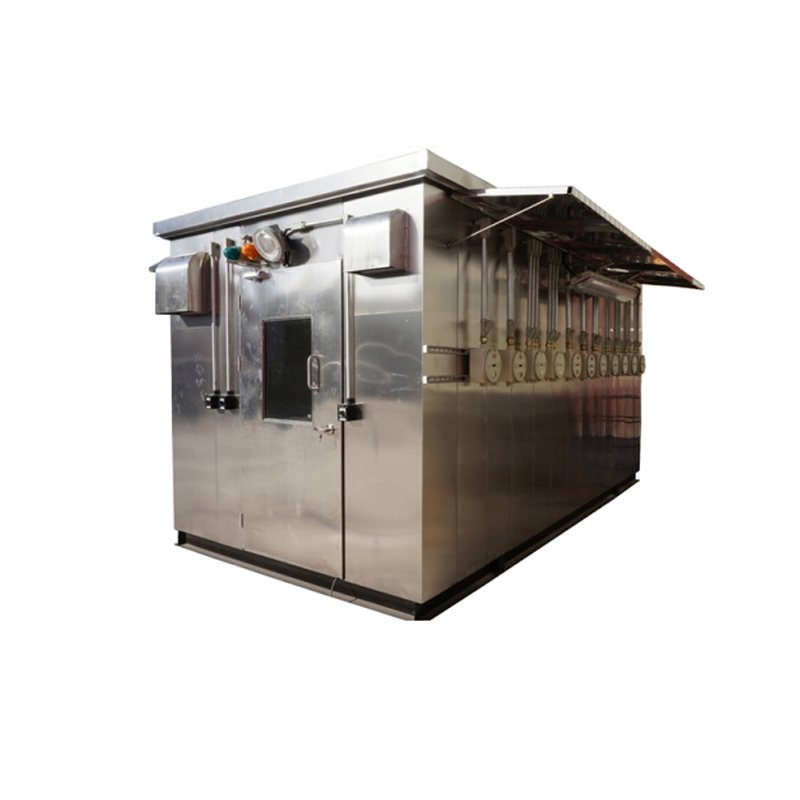












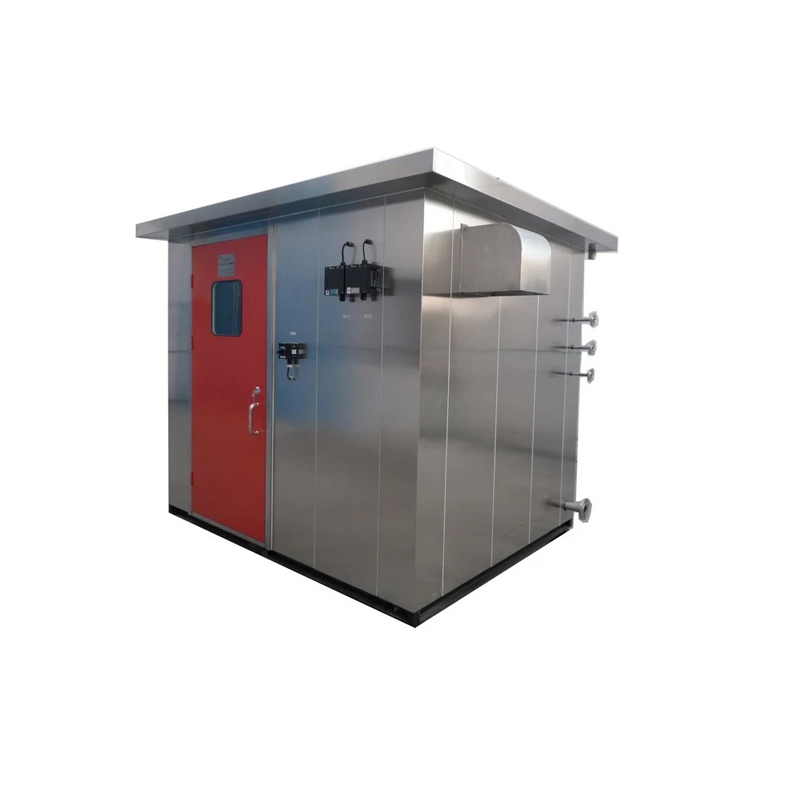
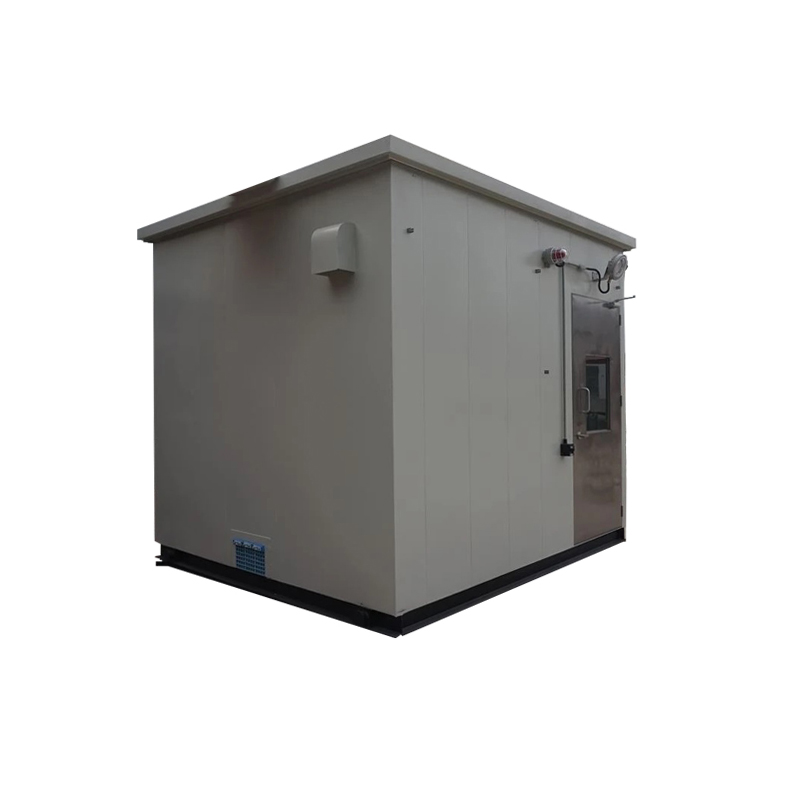
Explosion-proof analytical booth dimensions and specifications:
Manufactured according to customer requirements. Generally, the external dimensions of the explosion-proof analysis cabin are indicated as 3000mm (length) × 3000mm (width) × 3000mm (height).
The explosion-proof analysis cabin is a non-standard product. Its size can be determined based on the number, type, complexity of the system, and space for operation and maintenance, with ample room to spare. Due to restrictions from long-distance transportation conditions, its dimensions are generally as follows:
Length: Outdoor main structure 2.5 to 6.5m (Due to standard steel sizing, lifting, and transportation structural strength considerations, the length of a single analysis cabin should not exceed 6.5m. If 6.5m is required, a modular structure can be used, constructed separately and assembled on-site, or two analysis cabins can be utilized instead).
Width: The main outdoor structure is 2.5m wide, and the width should not exceed 3.0m (due to road transportation width restrictions, it is not advisable to exceed 3.0m).
Height: Outdoor main body 2.5~3.0m (subject to height restrictions when passing over flyovers and tunnels), indoor clear height 2.2~2.8m.
Explosion-proof analytical cabin structure material:
⑴ Frame, base, and roof
The frame, base, and roof of the analysis cabin are made of metal components, welded from section steel, which should have sufficient strength and rigidity to ensure the cabin remains undamaged during loading, lifting, shifting, and transportation. The main frame of the base should be constructed with 12# to 20# channel steel, and two 10# to 12# channel steels or I-beams should be used as support beams beneath the floor joists. All the main frame, floor joists, and support beams should be welded together to prevent the floor from trembling when maintenance personnel move inside. The roof frame and main beams should be made of 10# to 12# channel steel, with 8# to 10# channel steel used as support beams for the main beams and roof joists in the width direction. All should be welded together to prevent warping and deformation. The roof should have a certain slope, with a minimum pitch of 4%, and can be in an A-shape or one-side slope structure; flat roofs are not allowed to prevent water accumulation.
Interior and exterior wall panels, as well as interior and exterior ceiling panels
Exterior wall panels should be made from 1.5mm to 2.0mm steel plates. The Π-type panel assembly structure can be used to form the exterior wall. If welding technology is feasible, ribbed galvanized steel plate welding structures can also be used for the exterior wall. For Π-type panel assembly structures, stainless steel plates (304SS, it is recommended to use stainless steel wire drawing film panels) should be used. Galvanized steel plates can also be used; in this case, surface spraying treatment is required, with the spray color being white or gray.
Interior wall panels and ceilings should be made of 1.5mm to 2.0mm steel plates. The materials for the electrical substation should use galvanized steel plates or cold-rolled steel plates, and stainless steel plates can also be used upon customer request. Surface coating treatment is required when using galvanized steel plates or cold-rolled plates, with the ceiling coated in white glossy paint and the interior wall panels in white matte paint. The roof panels must have an effective waterproof design, which can be achieved through either a clip-type assembled waterproof design or a flat welding-type waterproof design. The materials are made of 1.5mm to 2.0mm stainless steel plates, ensuring long-lasting corrosion resistance for the roof surface. The external roof load-bearing capacity is ≥250kg/m2 (the weight of two people) without deformation.
Insulation layer
Filling fire-retardant insulation materials (such as mineral wool) between interior and exterior walls, as well as between interior and exterior ceilings. The thickness of the insulation layer is generally 70-75mm (3in), and should be thickened to 80-85mm in extremely cold or hot regions.
④Flooring
The flooring should be anti-slip metal sheet, preferably made of 4-6mm steel plate. The material can be patterned stainless steel plate, patterned galvanized steel plate, or hot-rolled steel plate, as per customer requirements. Surface coating treatment is required for galvanized steel plate or hot-rolled plate, with the coating color usually gray, followed by an anti-static plastic sheet.
Avoid dead corners and grooves inside the cabin where gases may accumulate. Appropriate manual or automatic exhaust vents should be installed at both high and low points of the cabin to prevent gas buildup. The sample pretreatment unit, gas cylinders, standard gas bottles, and laboratory manual sampling points should be located outside the cabin.
Explosion-proof analysis booth power distribution system:
The lighting, ventilation fans, air conditioners, and repair outlets in the analysis cabin are powered by industrial power.
Explosion-proof analytical cabin safety system
Combustible gas detectors should be selected with integrated detection probe and signal transmitter structures. Toxic gas detectors must be equipped with a toxic gas alarm when the sample or surrounding environment contains toxic components, and the alarm requirements should be the same as those for combustible gas detectors.
Micro-pressure transmitter analysis booths are installed with different numbers of micro-pressure transmitters based on the internal volume to detect positive pressure inside the booth. The principle for the signal provided by the micro-pressure transmitters to the PLC controller is 3 out of 2, meaning the PLC controls the power supply to non-explosion-proof electrical equipment inside the analysis booth via pressure signals. It is mandatory that if there are 3 micro-pressure transmitters inside the booth, and 2 or more simultaneously indicate pressure below the safe value, the PLC will issue a command to cut off the power supply to the non-explosion-proof electrical equipment inside the analysis booth. Acoustic and visual alarm devices, sirens, and rotating strobe lights are installed outside the booth.
The explosion-proof alarm control box is equipped with a small programmable logic controller (PLC or processor), featuring various indicator lights and buttons on the panel. Its function is to control the safety detection alarm system, enabling on-site alarms (both inside and outside the cabin), control room alarms, and interlock functions (such as starting fans and opening instrument air for exhaust ventilation).
South Feng Mei Run specializes in manufacturing: explosion-proof control boxes, explosion-proof control cabinets, explosion-proof electrical control boxes, explosion-proof electrical equipment control boxes, explosion-proof electrical control units, explosion-proof electrical control cabinets, BXK explosion-proof control boxes, explosion-proof button control boxes, stainless steel explosion-proof control boxes, explosion-proof power supply control boxes, explosion-proof anti-corrosion control boxes, explosion-proof instrument control boxes, explosion-proof valve control boxes, PLC explosion-proof control boxes, dust explosion-proof control boxes, explosion-proof touch screen control boxes, aluminum alloy explosion-proof control boxes.