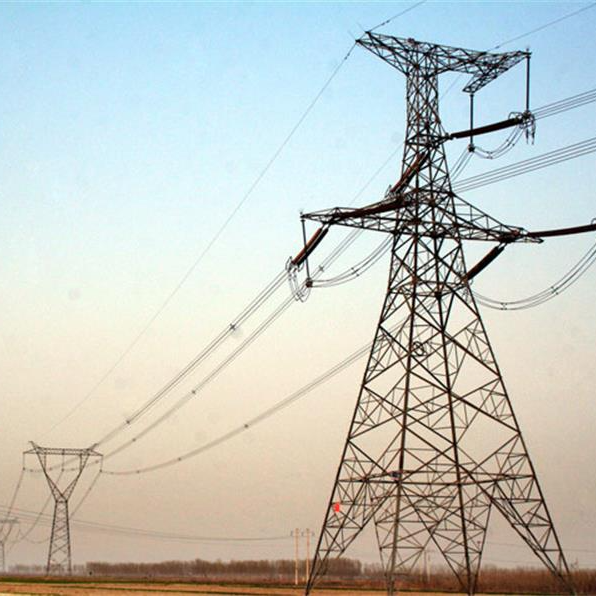















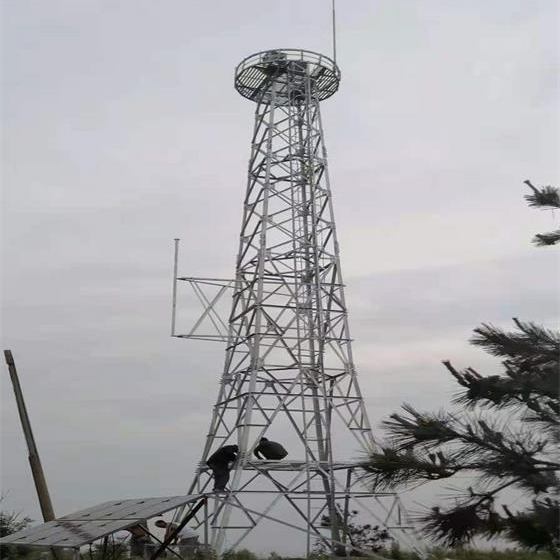
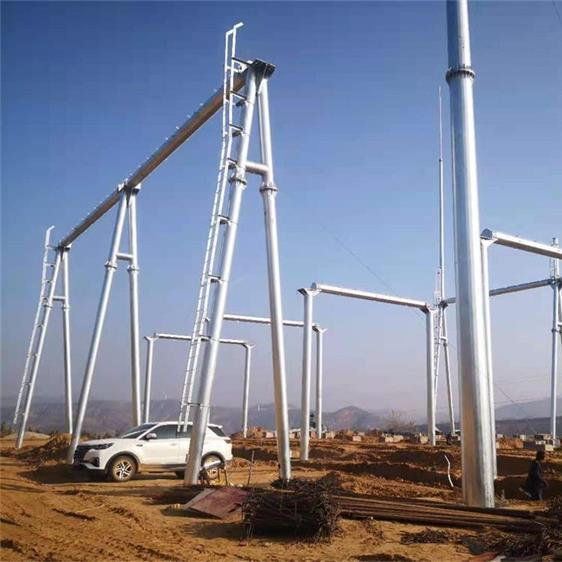
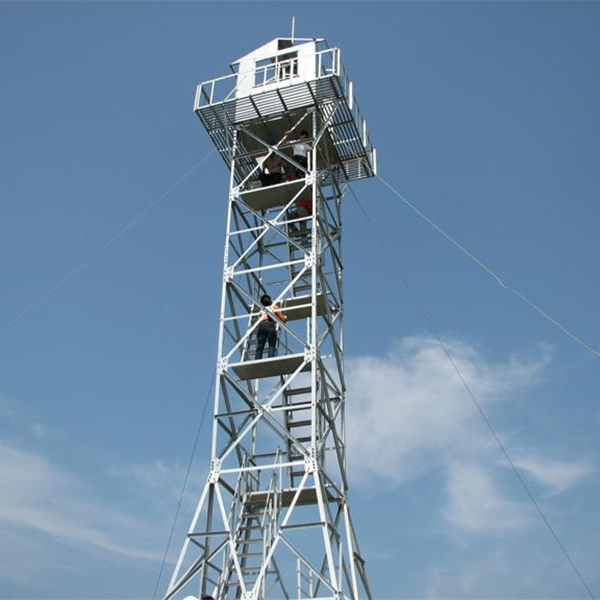
Power towers are the core infrastructure that supports high-voltage transmission lines and facilitates long-distance power transmission, acting as the critical "bridge" between the generation end and the consumer end of the power system.
Core Features
- Supporting conductorBy suspending high-voltage transmission lines with insulator strings, ensure a safe distance between the conductors and the ground, other buildings, and conductors of different phases to prevent short circuits or electric shock risks.
- Transmission of electricityConnect power stations, sub-stations, and power-consuming areas to establish an inter-regional power transmission network, realizing the allocation and supply of power resources.
- Adapt to the environmentCapable of construction in various terrains such as plains, mountains, hills, and coastal areas, ensuring stable power transmission in complex environments.
Main Types
According to structural forms and application scenarios, power towers are mainly divided into the following categories:
- Straight TowerLarge quantities, used for straight-line sections of the line, only bearing the self-weight of the conductor and vertical, horizontal loads such as wind, with a relatively simple structure.
- Tension TowerAt online turns, sections, or terminations, the design can withstand wire tension, limiting the fault range of the line, and boasts higher structural strength.
- Corner TowerPosition specifically for directional changes of the line, categorized into Small Bend Tower, Medium Bend Tower, and Large Bend Tower, depending on the bend angle.
- Terminal TowerInstalled at the starting point (such as a power station) or the ending point (such as a substation) of transmission lines, these connections link the lines to the equipment within the station and must withstand significant longitudinal tension.
Structural Features
- MaterialSteel products are primarily offered, including angle steel towers and steel pipe towers, which boast high strength, lightweight, corrosion resistance (require anti-corrosion treatment), and easy construction. Some low-voltage power lines also utilize reinforced concrete towers.
- HeightThe height varies from several dozen to over a hundred meters, depending on the transmission voltage level, the safety distance of the conductors, and the topographical conditions. Generally, the higher the voltage level, the taller the tower.
- StabilityThe foundation is cast in concrete, extending deep underground to form a stable support. In some mountainous areas, the foundation is reinforced with anchor rods and cables to withstand natural disasters such as strong winds, ice cover, and earthquakes.