










Equipment Introduction
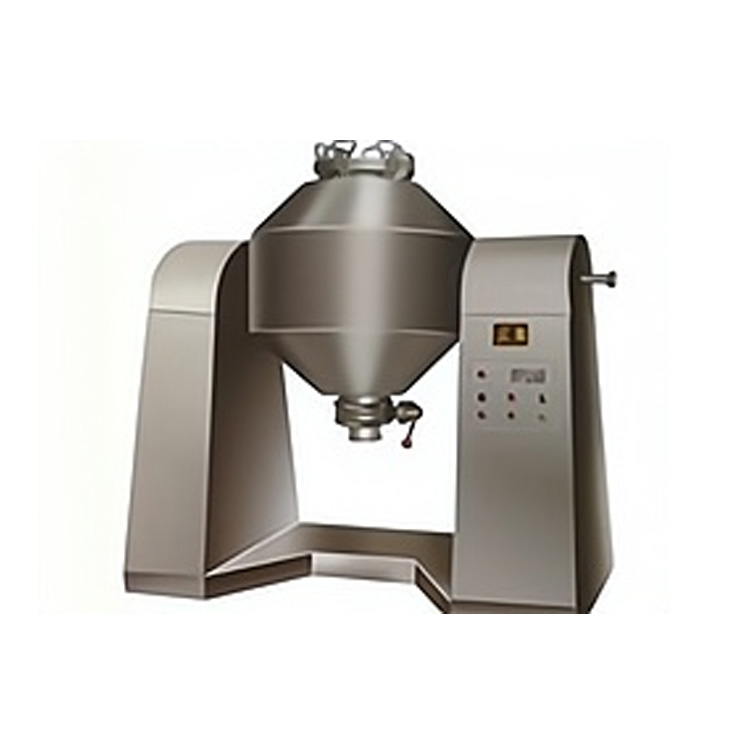
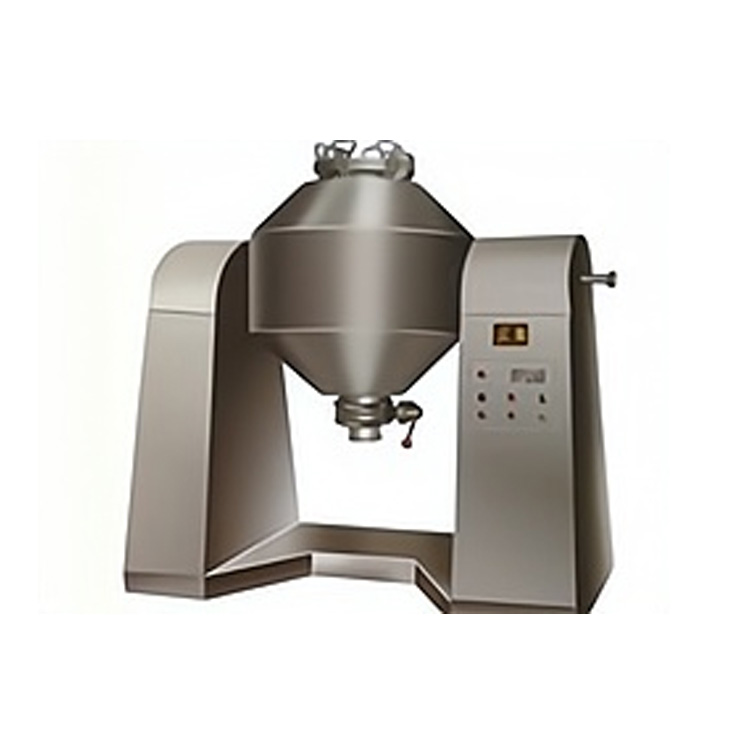
The Bi-conical Rotating Vacuum Dryer is a drying machine that completes the mixing and drying process in one step, based on the Bi-conical Blender, with additional functions such as heating, vacuum, and condensate recovery systems.
Heat medium (such as hot water, hot oil, steam) is introduced into the sealed annular space of the drum, where the heat is transferred to the material to be dried through the inner shell. The material is in a vacuum state, causing the steam pressure to drop and the moisture (solvent) on the surface of the material to reach saturation and evaporate, which is then promptly extracted and condensed by a vacuum pump.
The heat medium and vacuum system of the conical vacuum dryer are connected to the equipment via rotating joints, ensuring sealed and reliable operation.

Working Principle
Hot medium (such as hot water, hot oil, steam) is introduced into the enclosed sandwich layer, where the heat is transferred to the dried material through the inner shell.
Under power-driven rotation, the tank slowly rotates, causing the material inside to continuously mix, thereby achieving the purpose of enhanced drying.
Vacuum degassing during mixing keeps the material in a vacuum state, causing the vapor pressure to drop and the moisture (solvent) on the material surface to reach saturation and evaporate, which is then promptly removed by the vacuum pump and condensed for recovery. The moisture (solvent) within the material continuously permeates to the surface, evaporates, and is expelled, with these three processes continually occurring to achieve drying in a short period of time.

Performance Features
High thermal efficiency, over 2 times higher than general ovens.
2. Indirect heating; materials remain uncontaminated.
3. Solvent recovery, clean and environmentally friendly, recyclable.

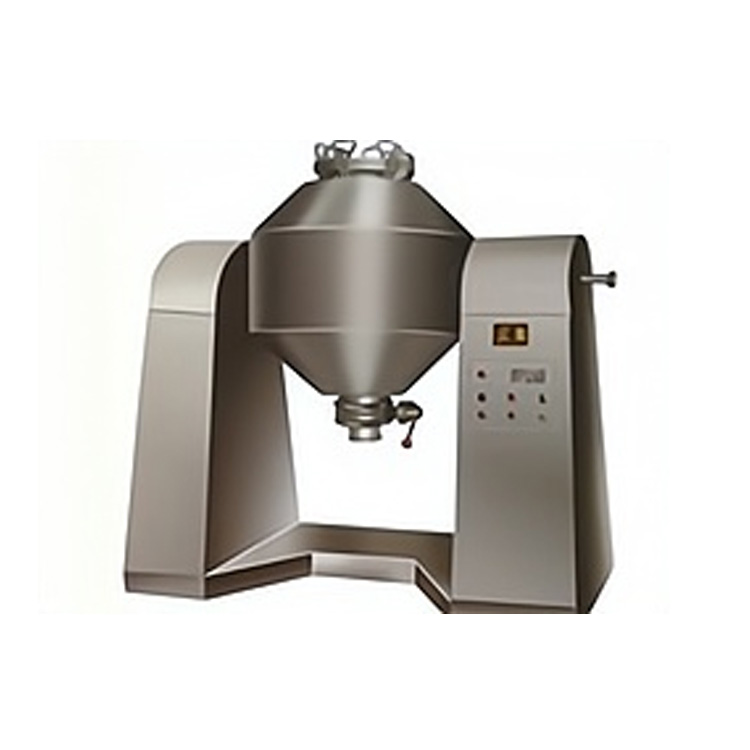
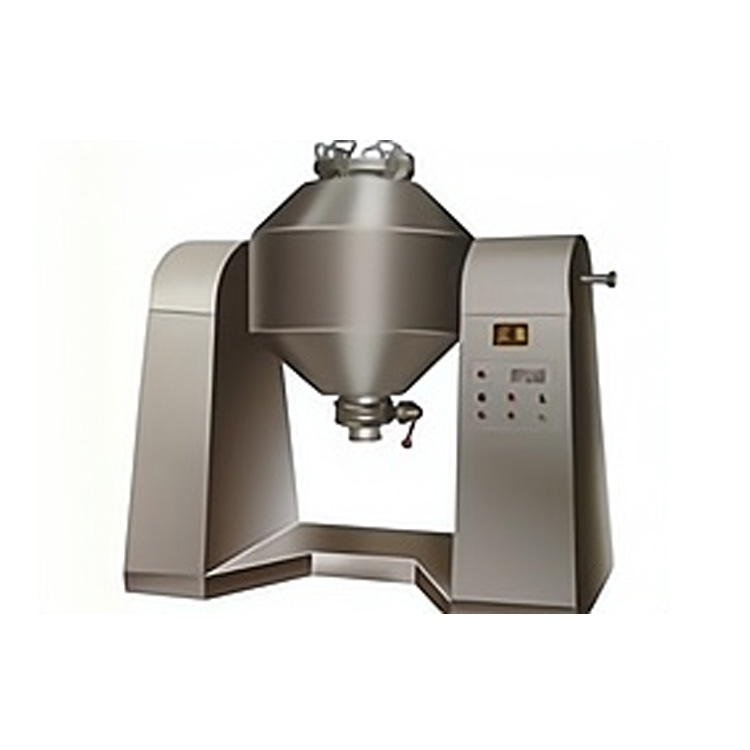
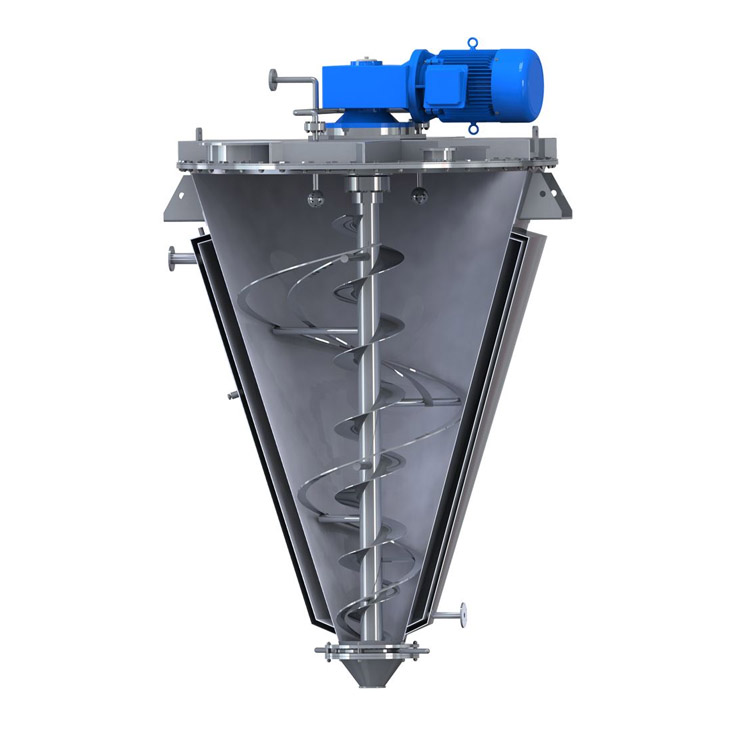
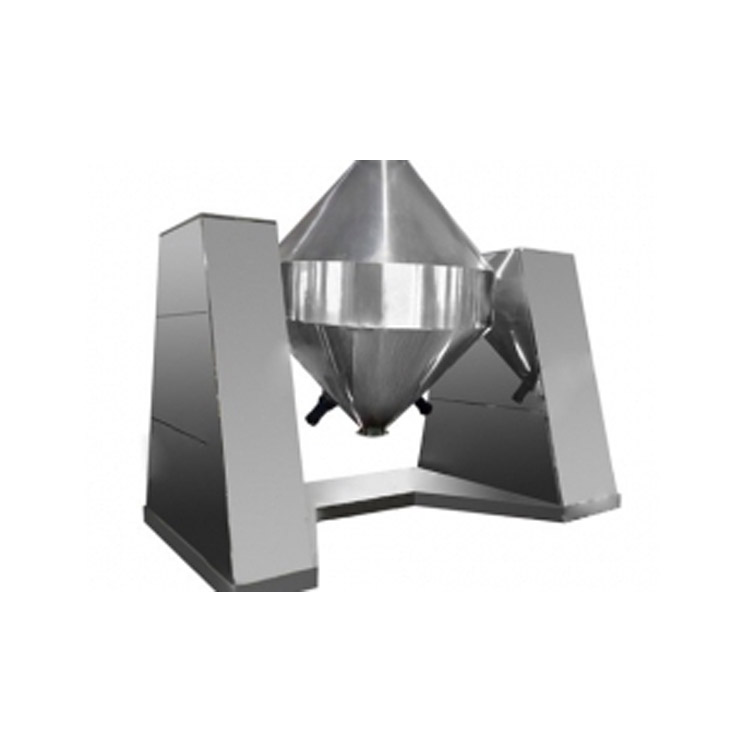
Image: Bi-conical rotary dryer unit (without condensate recovery)
Typical Parameters
Model | Design Volume (L) | Work Volume (L) | Power (kw) | RPM (rpm) | Heating Surface (㎡) | Vacuum Pump Power (kW) |
MSZG-100 | 100 | 40 | 0.75 | 4-6 | 1.16 | 2 |
MSZG-350 | 350 | 140 | 1.1 | 2 | 2 | |
MSZG-500 | 500 | 200 | 1.5 | 2.63 | 3 | |
MSZG-750 | 750 | 300 | 2.2 | 3.5 | 3 | |
MSZG-1000 | 1000 | 400 | 3 | 4.61 | 5.5 | |
MSZG-1500 | 1500 | 600 | 4 | 5.58 | 7.5 | |
MSZG-2000 | 2000 | 800 | 5.5 | 7.5 | 11 | |
MSZG-3500 | 3500 | 1400 | 7.5 | 11.2 | 15 | |
MSZG-5000 | 5000 | 2000 | 11 | 14.1 | 18.5 |